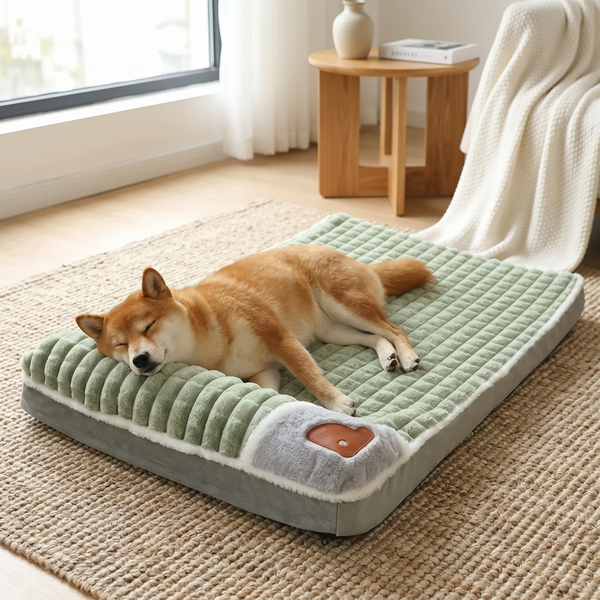
If your dog is shivering, your first instinct is to worry — and that instinct is often right. The Kennel Club identifies cold exposure as the most common cause of shivering in UK dogs, but the behaviour can also signal pain, anxiety, illness, or neurological conditions that require veterinary attention. What looks like a simple chill could be your dog's way of telling you something is wrong — and knowing which type of shivering you're dealing with is the first step toward fixing it.
The Dogs Trust notes that shivering is one of the most misunderstood canine behaviours — owners often dismiss it as excitement or attention-seeking when it's actually a physiological response to dropping body temperature, stress hormones, or physical discomfort. Short-haired breeds, senior dogs, puppies, and underweight animals are particularly vulnerable to cold-induced shivering, and in severe cases, prolonged exposure can progress to hypothermia — a life-threatening drop in core body temperature that requires emergency treatment.
This guide covers everything UK pet owners need to know about dog shivering — from the seven most common causes and how to distinguish cold from pain, to UK temperature thresholds for safe outdoor time, breed-specific risk factors, hypothermia warning signs, and a complete prevention plan for keeping pets warm at home. We'll also explain why electric-free warmth is the safest option for unsupervised pets, including the CozyPaws™ Self-Warming Pet Pad, which uses thermal reflective technology to capture and return your pet's own body heat — no cords, no electricity, no overheating risk. The RSPCA recommends ensuring all pets have a warm, draught-free resting area throughout winter — and the right bedding makes all the difference.
Table of Contents
- Why Is My Dog Shivering? 7 Common Causes
- How to Tell If Your Dog Is Shivering from Cold
- How Cold Is Too Cold? UK Temperature Thresholds for Pets
- Breeds Most Vulnerable to Cold Weather
- Hypothermia in Pets: Warning Signs Every Owner Must Know
- 7 Ways to Keep Your Pet Warm and Stop the Shivering
- Why Electric-Free Warmth Is Safer for Pets
- Cats and Cold: What Every Cat Owner Should Know
- Winter Warmth Safety Checklist
- Frequently Asked Questions
Why Is My Dog Shivering? 7 Common Causes
Dog shivering is a physiological response — muscles rapidly contracting and relaxing to generate heat or to cope with stress. The PDSA warns that while cold is the most frequent trigger, shivering can also indicate pain, anxiety, or serious illness — and telling the difference is critical for your pet's wellbeing.
| Cause | What You'll See | When to Worry |
|---|---|---|
| Cold exposure | Shivering that stops once your dog is warmed — curling up, seeking heat sources, reluctance to lie on cold floors | If shivering continues for more than 15–20 minutes after warming |
| Anxiety or fear | Shaking during thunderstorms, fireworks, car journeys, or vet visits — often with panting, pacing, or hiding | If accompanied by destructive behaviour or inability to settle for hours |
| Pain or illness | Trembling with lethargy, reduced appetite, reluctance to move, or vocalising when touched | Any unexplained shivering in a warm environment — see your vet |
| Old age | Increasing sensitivity to temperature drops, more time seeking warm spots, shivering in rooms that didn't bother them before | Progressive worsening over weeks — may indicate joint pain or thyroid issues |
| Low blood sugar | Trembling with weakness, especially in toy breeds and puppies — often after missed meals or exercise | If accompanied by confusion, staggering, or collapse — seek emergency vet care |
| Excitement | Brief shaking when greeting owners, anticipating walks, or during play — tail wagging, high energy | Rarely concerning — subsides within minutes |
| Neurological conditions | Persistent, rhythmic tremors unrelated to temperature, emotion, or activity — may affect specific body parts | Any repetitive tremor that doesn't stop — requires veterinary investigation |
In most UK households, cold exposure is the dominant cause — particularly during autumn and winter when homes cool overnight and dogs rest on uninsulated floors. A CozyPaws™ Self-Warming Pet Pad placed in your dog's bed eliminates cold-surface shivering entirely by reflecting their own body heat back to them without any electricity.
How to Tell If Your Dog Is Shivering from Cold
Not all shivering means your dog is cold — but cold-induced shivering has distinct patterns that set it apart from anxiety, pain, or illness. Here's how to tell the difference:
Signs Your Dog Is Cold
- Shivering that starts after exposure to cold air, rain, or cold surfaces — and stops once warmed
- Curling into a tight ball to conserve body heat
- Seeking warm spots — next to radiators, on sunny patches, under blankets, or pressed against you
- Cold ears, paw pads, and tail tip when touched
- Reluctance to lie on hard or tiled floors
- Tucking the tail and hunching the body to reduce heat loss
Signs It's NOT Just Cold
- Shivering in a warm room with no obvious temperature trigger
- Trembling with loss of appetite, vomiting, diarrhoea, or lethargy
- Shaking that gets worse rather than better over hours
- Localised tremors in one leg or area rather than full-body shivering
- Shaking combined with whimpering, limping, or flinching when touched
Pro Tip: The quickest cold check — feel your dog's ears. If the ear tips are noticeably cold to the touch, your dog is losing body heat faster than they're generating it and needs a warmer resting spot immediately.
How Cold Is Too Cold? UK Temperature Thresholds for Pets
The Blue Cross advises that cold tolerance varies significantly between breeds, but general UK temperature thresholds help every owner make safer decisions about outdoor time and indoor comfort:
| Outdoor Temperature | Risk Level | Recommended Action |
|---|---|---|
| Above 10°C | ✅ Safe for all | Normal walks and outdoor time for all breeds |
| 5–10°C | ✅ Low risk | Most dogs comfortable; monitor short-haired and toy breeds |
| 1–4°C | ⚠️ Moderate risk | Shorten walks for vulnerable dogs; consider a coat for thin-coated breeds |
| 0°C (freezing) | ⚠️ High risk | Short walks only; small, senior, and thin-coated dogs need extra protection |
| -1 to -5°C | ❌ Dangerous | Brief toilet breaks only; all dogs at hypothermia risk without protection |
| Below -5°C | ❌ Very dangerous | Minimise all outdoor time; hypothermia and frostbite risk for every breed |
These thresholds apply to outdoor time — but indoor temperatures matter just as much. UK homes frequently drop to 12–15°C overnight when heating switches off, and tiled or laminate floors can feel significantly colder than the air temperature. A dog sleeping on an uninsulated floor at 13°C is losing body heat through direct contact all night — the same mechanism that makes pavement feel freezing in winter even when the air isn't bitterly cold.
Wind chill and rain dramatically increase the effective cold. A 5°C day with rain and wind can feel like freezing to a wet dog. Always dry your pet thoroughly after wet walks before allowing them to rest.
Breeds Most Vulnerable to Cold Weather
While any dog or cat can feel the cold, certain breeds face higher risk due to coat type, body size, fat reserves, or age-related factors. The RSPCA recommends that owners of cold-vulnerable breeds take extra precautions from October through March in the UK.
| Breed | Why They're Vulnerable | Key Risk |
|---|---|---|
| Chihuahua | Tiny body mass with large surface-area-to-weight ratio — loses heat extremely quickly | Rapid hypothermia in cold rooms |
| Greyhound / Whippet | Very thin single coat with almost zero body fat insulation | Shivering even indoors in cool weather |
| Italian Greyhound | Smallest sighthound — combines thin coat with minimal body mass | Among the most cold-sensitive of all breeds |
| Yorkshire Terrier | Fine silky coat provides minimal insulation; small body cools fast | Shivering on cold floors and draughty rooms |
| French Bulldog | Short muzzle impairs thermoregulation; thin coat offers little warmth | Temperature regulation difficulties year-round |
| Staffordshire Bull Terrier | Short, thin coat despite muscular build — UK's most common cold-sensitive breed | Needs a coat outdoors below 5°C |
| Dachshund | Low ground clearance — belly exposed to cold surfaces during walks and rest | Cold floor contact causes rapid heat loss |
| Chinese Crested | Hairless variety has almost no natural insulation | Requires clothing indoors during winter |
| Senior dogs (all breeds) | Reduced muscle mass, slower metabolism, poorer circulation, and often arthritis | Cold worsens joint stiffness and pain |
| Sphynx / Peterbald (cat) | Hairless — zero fur insulation; relies entirely on external warmth | Needs warmth year-round, not just winter |
| Siamese / Oriental Shorthair (cat) | Fine single coat and slim build — evolved in warm climates | Seeks heat sources constantly in UK homes |
| Senior cats (all breeds) | Reduced activity, thinner coat, poorer circulation, and arthritis | Needs accessible warmth — may struggle to jump to warm spots |
If your pet falls into any of these categories, a warm resting surface isn't a luxury — it's a health necessity. A CozyPaws™ Self-Warming Pet Pad placed in their bed, crate, or favourite resting spot provides continuous warmth from the moment they lie down — and because it uses their own body heat rather than electricity, it's safe for the breeds most likely to be left unsupervised while owners are at work. For a detailed breakdown of sizes, placement, and how the thermal technology works, see our complete guide to the Self-Warming Pet Pad.
Hypothermia in Pets: Warning Signs Every Owner Must Know
Hypothermia occurs when your pet's core body temperature drops below 37°C (98.6°F) — normal range for dogs and cats is 38–39.2°C. The Battersea warns that hypothermia can progress rapidly from mild shivering to a life-threatening emergency, particularly in small, elderly, or wet animals.
Stages of Hypothermia
Mild (36–37°C): Shivering, seeking warmth, cold ears and paws, slightly reduced energy. Most common in UK homes when heating fails or pets sleep on cold floors overnight. Reversible with warming at home.
Moderate (32–36°C): Intense shivering that may suddenly stop (a dangerous sign — the body is running out of energy to shiver), muscle stiffness, lethargy, slow shallow breathing, and cold skin. Requires veterinary attention.
Severe (below 32°C): Shivering stops completely, fixed dilated pupils, very slow heart rate, pale or blue gums, loss of consciousness. This is a veterinary emergency — without treatment, organ failure and death can follow.
Emergency First Aid for Hypothermia
- Move your pet indoors to a warm room immediately
- Wrap them in warm (not hot) blankets or towels — ideally warmed in a tumble dryer for a few minutes
- Place warm water bottles wrapped in a towel against their body — never directly against skin
- Do not use a hairdryer, heat lamp, or electric blanket — rapid external heating can cause burns and dangerous blood pressure changes
- Offer lukewarm (not hot) water if your pet is conscious and able to drink
- Contact your vet immediately — even mild hypothermia can have delayed complications
The best treatment for hypothermia is prevention. A warm, draught-free sleeping area with insulated bedding keeps your pet's core temperature stable throughout the night — exactly what a self-warming pad is designed to provide.
Keep Your Pet Warm — No Electricity Needed →
7 Ways to Keep Your Pet Warm and Stop the Shivering
The Blue Cross recommends making winter warmth adjustments before the cold arrives — not after your pet has already started shivering. Prevention is always cheaper and less stressful than treatment, and most measures take minutes to implement.
1. Insulate Their Sleeping Area
Cold floors are the single biggest cause of overnight shivering in UK homes. Tiled kitchens, laminate hallways, and unheated conservatories draw heat directly from your pet's body through contact. Place a CozyPaws™ Self-Warming Pet Pad inside their bed or on the floor where they sleep — the thermal reflective core captures their body heat and returns it, creating a warm microclimate that lasts as long as they rest on it. No electricity, no plugs, no risk.
2. Move the Bed Away from Draughts
Beds positioned near exterior doors, single-glazed windows, or under letterboxes lose heat to draughts that your pet can feel even when you can't. Reposition to an interior wall, away from windows and doors. Even a warm bed in a draughty spot loses its effectiveness.
3. Dry Your Dog After Wet Walks
A wet dog loses body heat up to 25 times faster than a dry one. Towel-dry your pet thoroughly after every rainy or muddy walk, paying particular attention to the belly, chest, and between the toes. Keep a dedicated drying towel by the door throughout winter.
4. Use a Coat for Vulnerable Breeds
Short-haired breeds (Greyhounds, Staffies, Frenchies, Whippets) benefit significantly from a fitted dog coat during walks below 5°C. The coat should cover the chest and belly — the areas with the least natural insulation — and fit snugly without restricting movement.
5. Adjust Walking Times and Duration
In sub-zero temperatures, shorten walks and schedule them during the warmest part of the day — typically late morning to early afternoon. Avoid early morning and late evening walks when temperatures drop sharply. For senior dogs or dogs with joint stiffness that worsens in cold weather, see our guide to morning stiffness and joint relief.
6. Provide Calming Warmth for Anxiety-Related Shivering
Dogs that shiver during storms, fireworks, or periods of separation aren't cold — they're stressed. But warmth still helps: a warm, enclosed resting space triggers the same calming response as swaddling. Combine a self-warming pad with an CozyPaws™ Dog Anxiety Vest for compression and warmth together. For ongoing anxiety issues, our separation anxiety guide covers long-term management strategies.
7. Monitor Senior Pets More Closely
Older dogs and cats lose the ability to regulate body temperature efficiently. They shiver more easily, recover from cold more slowly, and are less likely to move to warmer spots on their own. Check on senior pets regularly during cold spells, and ensure their bed is warm, accessible, and positioned at ground level — especially for arthritic pets who can no longer jump onto elevated surfaces. A CozyPaws™ Calming Donut Bed with a self-warming pad inside creates a deeply insulated nest that retains heat and provides bolster support for stiff joints.
Pro Tip: Layer a self-warming pad inside a crate or existing bed for maximum heat retention — the pad reflects body heat upward while the bed walls trap warm air around your pet, creating a pocket of warmth that stays several degrees above room temperature.
Why Electric-Free Warmth Is Safer for Pets
Electric heated beds and heat pads are popular winter solutions, but they introduce risks that many pet owners don't consider until something goes wrong. The core advantage of self-warming technology is safety — here's how the options compare:
| Factor | CozyPaws™ Self-Warming Pad | Electric Heated Bed | Hot Water Bottle |
|---|---|---|---|
| Heat source | Pet's own body heat reflected back via thermal core | Mains electricity through heating element | Hot water — cools over time |
| Overheating risk | ✅ Impossible — cannot exceed pet's body temperature | ⚠️ Thermostat failure can cause burns | ⚠️ Burns risk if too hot or if pet chews through cover |
| Electrical safety | ✅ Zero electricity — no cords to chew | ❌ Cables present chewing and fire risk | ✅ No electricity |
| Unsupervised use | ✅ Safe 24/7 — in crates, cars, anywhere | ❌ Not recommended unsupervised | ❌ Cools within 2–4 hours; needs refilling |
| Warmth duration | Continuous — active while pet rests on it | Continuous while plugged in | 2–4 hours maximum before cooling |
| Maintenance | ✅ Machine-washable removable cover | ⚠️ Typically spot-clean only | ✅ Easy to refill but degrades over time |
| Annual cost | One-time purchase — zero running cost | £40–80 + electricity ongoing | £5–10 per bottle; replace annually |
For pet owners who work full-time, travel, or simply want peace of mind overnight, the self-warming pad is the only option that delivers continuous warmth with zero supervision required. There are no cables to chew, no thermostat to malfunction, and no possibility of overheating — the pad physically cannot produce more heat than the pet's own body generates. For our in-depth review of the technology, sizing, and placement strategies, see our Self-Warming Pet Pad complete guide.
Cats and Cold: What Every Cat Owner Should Know
Cats Protection confirms that cats absolutely feel the cold — despite the common myth that their fur keeps them warm in all conditions. Cats maintain a body temperature of 38–39.2°C, and when environmental temperatures drop below 7°C, most cats begin conserving heat by curling up, seeking warm surfaces, and reducing activity.
Signs Your Cat Is Cold
- Sleeping in a tight ball rather than stretched out
- Seeking warm spots obsessively — radiators, laptop keyboards, sunny windowsills, your lap
- Cold ears and paw pads when touched
- Sleeping more than usual and reduced activity
- Shivering or visible trembling — less common in cats than dogs, and a more serious indicator
- Reluctance to leave the house (outdoor cats) or avoiding cold rooms (indoor cats)
Why Cats Need Warmth More Than You Think
Cats are descended from desert-dwelling ancestors and are naturally adapted to warm environments. UK winters — particularly in draughty Victorian and Edwardian homes — can challenge even thick-coated breeds. Senior cats are especially vulnerable: they sleep up to 20 hours per day and often lack the energy or mobility to seek warmer spots when their current resting area cools. Battersea recommends providing multiple warm resting options at ground level for elderly cats who can no longer jump to elevated warm spots.
A CozyPaws™ Self-Warming Pet Pad placed on a windowsill, inside a cat bed, or on their favourite chair gives cats the constant, consistent warmth they instinctively seek — without competing with radiators or running up electricity bills.
Pro Tip: Cats instinctively choose the warmest spot in any room. Place the self-warming pad where your cat already naps — they'll adopt it immediately because it's warmer than the bare surface they're currently using.
Winter Warmth Safety Checklist
Use this checklist throughout the cold months to keep every pet in your household safe and warm:
Daily Cold Weather Checks
- ✅ Feel your pet's ears and paw pads — cold tips mean they need a warmer resting spot
- ✅ Check that their bed is positioned away from draughts, windows, and exterior doors
- ✅ Dry your dog thoroughly after every wet or snowy walk
- ✅ Ensure fresh water is available — pets drink less in cold weather, increasing dehydration risk
- ✅ Monitor senior pets for increased stiffness, reluctance to move, or excessive sleeping
- ✅ Check outdoor cats have access to warm shelter and aren't locked out overnight
- ✅ Wipe paws after walks to remove road salt and antifreeze residue
Never use a human electric blanket for pets. Human electric blankets are not designed for animals — they overheat, lack chew-resistant cables, and create a genuine fire and burn risk when used with unsupervised pets. Pets who chew, scratch, or urinate on electric blankets can receive fatal electric shocks. Always use pet-specific warming products designed for unattended use.
When to See a Vet
- Shivering that doesn't stop after 20 minutes in a warm environment
- Shivering combined with lethargy, vomiting, diarrhoea, or loss of appetite
- Gums that appear pale, white, or blue instead of healthy pink
- Body temperature below 37°C (if measured with a pet thermometer)
- Stiffness, disorientation, or difficulty walking after cold exposure
- Shivering that occurs regularly in warm rooms — may indicate pain, neurological, or hormonal conditions
- Sudden increase in cold sensitivity — could signal thyroid, kidney, or circulatory problems
Frequently Asked Questions
Why is my dog shivering but not cold?
If the room is warm and your dog is still shivering, the most common non-cold causes are anxiety (storms, fireworks, separation), pain (injury, arthritis, illness), low blood sugar (especially in toy breeds), or excitement. If shivering in warm environments happens regularly or is accompanied by other symptoms like lethargy or appetite loss, consult your vet to rule out underlying health conditions.
Should I be worried if my dog is shivering?
Brief shivering after exposure to cold or during excitement is normal and usually stops once the trigger passes. You should be concerned if shivering persists for more than 20 minutes after warming, occurs in a warm environment, is accompanied by other symptoms (lethargy, vomiting, weakness), or worsens over time. When in doubt, contact your vet — it's always better to check and be reassured than to miss an early warning sign.
How can I tell if my dog is too cold at home?
Feel their ears and paw pads — if these extremities are noticeably cold, your dog is losing body heat. Watch for curling into a ball, seeking warm spots, reluctance to lie on floors, and visible shivering. If your home drops below 15°C overnight, dogs sleeping on uninsulated floors are likely feeling the cold even if they don't shiver visibly.
Do dogs shiver more as they get older?
Yes. Senior dogs lose muscle mass, have slower metabolisms, and often develop conditions like arthritis and hypothyroidism that reduce their ability to generate and retain body heat. A dog that was comfortable in cool rooms at age five may start shivering at age ten. Providing insulated, warm bedding becomes increasingly important as your dog ages.
Can cats shiver from the cold?
Yes, though cats shiver less visibly than dogs. When a cat is truly cold, you're more likely to see behavioural changes — sleeping in a tight ball, seeking heat sources obsessively, reduced activity, and cold ears. Visible shivering in a cat is a more serious indicator than in a dog and should prompt immediate warming and monitoring. Cats that shiver despite being in a warm room should see a vet.
What temperature should I keep my house for pets?
Most dogs and cats are comfortable at 18–22°C. Below 15°C, short-haired breeds, puppies, kittens, and senior pets will begin to feel the cold. If your heating switches off overnight and the house drops below 15°C, ensure your pet has insulated bedding — a self-warming pad maintains a comfortable microclimate regardless of room temperature.
Is a self-warming pad safe to leave with my pet unsupervised?
Yes — a self-warming pad contains no electricity, no batteries, and no heating elements. It works by reflecting your pet's own infrared body heat back to them through a thermal reflective core. It physically cannot overheat beyond your pet's body temperature, and there are no cords to chew or thermostats to fail. It is safe for crates, cars, carriers, and unsupervised overnight use.
My dog shivers during fireworks — will a warming pad help?
Warmth alone won't stop anxiety-related shivering, but it contributes to a calming environment. A warm, enclosed den — a crate covered with a blanket, with a self-warming pad inside — provides the combination of security, warmth, and compression that helps many anxious dogs settle. For severe noise anxiety, pair the pad with a compression vest and consult your vet about additional support.
How does a self-warming pet pad work without electricity?
The pad contains a thermal reflective core layer that captures the infrared radiation naturally emitted by your pet's body and redirects it back upward. This creates a progressively warmer surface that reaches a stable, comfortable temperature within minutes of your pet lying down — similar to how a survival blanket works for humans. No plugs, no batteries, no running costs.
When should I take a shivering dog to the vet?
See your vet if shivering doesn't resolve within 20 minutes in a warm environment, occurs in warm conditions with no obvious trigger, is accompanied by other symptoms (lethargy, appetite loss, vomiting, diarrhoea, limping), affects multiple episodes per week, or represents a new behaviour that your dog hasn't shown before. Sudden changes in cold sensitivity can indicate thyroid, kidney, or neurological conditions.
Ready to Stop the Shivering for Good?
Say goodbye to:
- ❌ Worrying whether your pet is cold during the night
- ❌ Leaving electric heated beds plugged in unsupervised
- ❌ Refilling hot water bottles every few hours
- ❌ Seeing your senior dog shivering on cold kitchen floors
- ❌ Expensive vet visits for hypothermia that could have been prevented
Say hello to:
- ✅ Constant, electric-free warmth that activates the moment your pet lies down
- ✅ Thermal reflective technology that cannot overheat — ever
- ✅ Safe for unsupervised use, crates, carriers, and car journeys
- ✅ Machine-washable, anti-slip, and ready for winter in seconds
- ✅ A warm, settled pet that sleeps through the night
The CozyPaws™ Self-Warming Pet Pad
Features:
- Thermal reflective core — captures and returns your pet's own body heat
- Zero electricity — no cords, plugs, or batteries
- Anti-slip base — stays in place on all floor types
- Machine-washable removable cover
- 4 sizes: S (up to 3 kg), M (up to 6 kg), L (up to 12 kg), XL (up to 25 kg)
- Rated 4.9/5 by 64 UK pet owners
- 30-day money-back guarantee
Shop the Self-Warming Pet Pad — Free UK Delivery →
Questions about keeping your pet warm or choosing the right size pad? Contact our pet care team at support@thecozypaws.co.uk or leave a comment below.