Over half of UK homes now feature hard flooring — laminate, porcelain tile, engineered hardwood, or luxury vinyl. These surfaces are practical, easy to clean, and look great. But if you share your home with a dog, you have almost certainly watched them scramble for grip, splay their legs on a freshly mopped kitchen floor, or flat-out refuse to cross the hallway. Dog slipping on hard floors is one of the most common pet concerns UK owners search for, and it is far more than a funny moment — repeated slipping causes real joint damage, muscle strain, and deep-seated anxiety that can change a dog's behaviour for years.
This guide covers everything UK dog owners need to know about preventing slips and falls indoors. You will learn how paw grip actually works at the anatomical level, the five most common reasons dogs lose traction, which breeds face the highest risk, and the specific health consequences of ignoring the problem. More importantly, you will get a step-by-step grooming routine that restores grip, a floor-by-floor safety breakdown, practical home modifications, special guidance for senior dogs, and a training plan for nervous walkers. Every recommendation is backed by UK veterinary charities and animal welfare organisations.
Whether you are watching a Labrador slide across your kitchen or a rescue Greyhound freeze at the edge of the carpet, the solutions are straightforward — and most of them take less than ten minutes a week. If overgrown paw fur is part of the picture, our complete guide to safe LED paw trimming at home covers the full technique in detail.
What's Inside This Guide:
- Why Dogs Slip on Hard Floors: How Paw Grip Really Works
- The 5 Most Common Causes of Dogs Slipping Indoors
- Which Dog Breeds Struggle Most on Hard Floors?
- Health Risks: What Happens When Dogs Keep Slipping and Falling
- The Anti-Slip Paw Grooming Routine That Actually Works
- Floor-by-Floor Safety Guide: Laminate, Tile, Hardwood and Vinyl
- Home Modifications That Prevent Slipping and Falls
- Senior Dogs and Slippery Floors: Extra Care for Older Pets
- How to Train Your Dog to Walk Confidently on Hard Floors
- Frequently Asked Questions
1. Why Dogs Slip on Hard Floors: How Paw Grip Really Works
Dogs evolved to walk on natural terrain — soil, grass, gravel, and leaf litter. Every surface they encountered for thousands of years was irregular and slightly yielding. Their paw pads developed accordingly: the textured, slightly rough undersurface of a healthy pad works like a tyre tread, deforming around micro-irregularities in the ground to create friction. The slight natural moisture on a pad — dogs have eccrine sweat glands exclusively in their paw pads — adds to this grip, creating a thin adhesive film between soft pad and rough ground.
A dog's paw has six distinct pads. The four small digital pads sit beneath each toe. The larger metacarpal pad (front paws) or metatarsal pad (rear paws) sits centrally and bears the majority of the dog's weight during movement. The carpal pad, positioned higher on the wrist, acts as a brake during descents. Each pad consists of a thick, keratinised outer layer covered in small conical papillae — tiny textured bumps that function exactly like the tread on a running shoe. These papillae are what create traction on every step.
Hard flooring breaks this system in two ways. First, the surface is unnaturally smooth. Laminate, polished porcelain, and sealed hardwood present a friction coefficient roughly 40–60 per cent lower than natural ground. The papillae have nothing to grip. Second, the surface does not yield. When a paw pad presses into soil, the ground deforms slightly, increasing the contact area and creating grip through interlocking. On laminate, the floor does not give at all — the pad has only its own texture to work with, and on a surface this smooth, that texture is not enough.
Now add paw fur to the equation. Breeds with furnishings — Poodles, Cocker Spaniels, Goldendoodles, Golden Retrievers, Shih Tzus — grow hair between and around their pads. When this fur is trimmed short, the textured pad surface contacts the floor directly. When it grows long, the fur covers the pads entirely, and the dog is effectively walking on hair against a polished surface. It is the canine equivalent of wearing socks on a freshly waxed floor. According to the RSPCA, regular paw grooming — including trimming hair between the pads — is an essential part of routine dog care, not an optional extra.
Understanding this anatomy matters because it reveals the single most effective intervention: if you restore direct pad-to-floor contact by trimming paw fur and maintaining pad health, you eliminate the primary cause of indoor slipping for the vast majority of dogs. The CozyPaws™ LED Pet Paw Trimmer was designed specifically for this job — its built-in LED light illuminates the fur-pad boundary so you can trim safely without nicking the pad surface underneath.
2. The 5 Most Common Causes of Dogs Slipping Indoors
Not every dog slips for the same reason. Identifying which cause applies to your dog determines which solution will actually work. Here are the five most common culprits, ranked by how frequently UK vets and groomers encounter them.
Cause 1: Overgrown Paw Fur Covering the Pads
This is by far the most common and most fixable cause. Any breed with medium-to-long coat will grow fur between and over the paw pads if left untrimmed. Within four to six weeks, this fur forms a smooth layer that completely covers the textured pad surface. The dog loses all natural traction. You can identify this cause easily: flip your dog's paw over. If you cannot see the central pad clearly because fur is covering it, overgrown paw fur is contributing to the slipping. Dogs with this issue also frequently lick and chew at their paws because trapped moisture and debris cause irritation — our complete guide to dog paw licking covers this connection in depth.
Cause 2: Long Nails Altering Foot Posture
When a dog's nails grow beyond the pad line, they hit the floor first on every step. This pushes the toes upward and backward, tilting the paw so that only a fraction of the pad surface contacts the ground. The dog loses both grip surface area and the ability to spread their toes for stability. You can hear this problem — if your dog's nails click on the floor when they walk, the nails are too long. Ideally, nails should not touch the ground when the dog stands on a flat surface.
Cause 3: Dry, Smooth, or Cracked Paw Pads
Healthy paw pads are slightly rough and flexible, like the rubber sole of a good hiking boot. When pads become dry, they lose their natural texture. The papillae flatten and smooth out, reducing grip dramatically. This happens frequently in winter when central heating dries indoor air, and in summer when hot pavements harden and crack the pad surface. Dogs who walk primarily on smooth indoor surfaces — without regular exposure to varied outdoor terrain — also develop smoother pads over time because the papillae have nothing to wear against.
Cause 4: Wet or Freshly Cleaned Floors
Laminate flooring becomes significantly more slippery when wet. A thin film of water between a smooth pad and a smooth floor creates an almost frictionless surface — the same hydroplaning effect that causes car accidents in rain. This does not just apply to mopped floors. A dog coming indoors with wet paws after a rainy walk can slip on laminate or tile that appeared perfectly safe ten minutes earlier. Even the residue from floor cleaning products can reduce traction for hours after the visible moisture has evaporated.
Pro Tip: After mopping hard floors, keep your dog off them for at least 30 minutes. Even quick-dry floor cleaners leave a micro-film that reduces paw grip far more than the moisture itself.
Cause 5: Underlying Medical Conditions
Sometimes slipping is not about the paw or the floor — it is about what is happening inside the dog. Arthritis reduces a dog's ability to stabilise their joints on contact. Hip dysplasia alters gait and weight distribution. Neurological conditions like degenerative myelopathy (DM) progressively weaken the hind legs, making it physically impossible to maintain traction. Vestibular disease causes sudden balance loss. If your dog has started slipping on floors they previously walked across confidently, and grooming or floor modifications make no difference, a veterinary assessment is the essential next step.
3. Which Dog Breeds Struggle Most on Hard Floors?
Any dog can slip on a polished floor, but certain breeds face significantly higher risk due to their size, weight distribution, paw structure, or genetic predisposition to joint conditions. The Royal Kennel Club identifies several breeds as being predisposed to hip dysplasia, which compounds the slipping problem considerably.
| Breed | Weight Class | Primary Risk Factor | Slipping Severity |
|---|---|---|---|
| Labrador Retriever | 25–36 kg | Heavy build + hip dysplasia predisposition | High |
| Golden Retriever | 25–34 kg | Heavy paw fur + hip/elbow dysplasia | High |
| German Shepherd | 22–40 kg | DM predisposition + sloped back | High |
| Goldendoodle | 15–30 kg | Dense paw furnishings covering pads | High |
| Cocker Spaniel | 12–16 kg | Heavy paw feathering + fast movement | Moderate–High |
| Rottweiler | 35–60 kg | Extreme weight + cruciate risk | High |
| Great Dane | 45–90 kg | Massive weight on small pad area | Very High |
| Bernese Mountain Dog | 35–55 kg | Heavy build + profuse paw fur | High |
| French Bulldog | 8–13 kg | Compact body + spinal vulnerability | Moderate |
| Dachshund | 5–14 kg | Long spine + IVDD risk from falls | Moderate |
At the other end of the spectrum, some breeds naturally cope better with hard floors — though no dog is immune to slipping on a wet or highly polished surface.
| Breed | Why They Cope Better | Paw Advantage |
|---|---|---|
| Whippet / Greyhound | Light body weight, minimal paw fur | Pads stay exposed naturally |
| Border Terrier | Small, agile, tight coat on paws | Good pad-to-floor contact |
| Staffordshire Bull Terrier | Short coat, broad pads, low centre of gravity | Large pad surface area relative to weight |
| Beagle | Moderate weight, short paw fur | Well-proportioned pads for body size |
| Jack Russell Terrier | Very light, athletic, minimal furnishings | Excellent natural traction |
Breed is not destiny. A Goldendoodle with trimmed paw fur and well-maintained pads will out-grip a Beagle with overgrown nails. The breed tables tell you where to focus your preventive effort — heavy, hairy-pawed, or joint-vulnerable breeds need more frequent paw grooming, more home modifications, and more vigilant monitoring than lighter, short-coated dogs.
4. Health Risks: What Happens When Dogs Keep Slipping and Falling
The occasional slip on a kitchen floor is unlikely to cause lasting harm. But when slipping happens repeatedly — multiple times a day, every day, across months or years — the cumulative damage is real and progressive. Understanding these risks is the strongest argument for addressing the problem now rather than waiting for something to go wrong.
Joint Strain and Ligament Damage
Every time a dog slips, the joints absorb an uncontrolled force that they were not braced for. The stifle joint (knee) is especially vulnerable. Repeated micro-strain on the cranial cruciate ligament — the canine equivalent of the ACL — can weaken the fibres over time until a partial or complete rupture occurs. Cruciate surgery in the UK typically costs between £2,000 and £4,000 per knee, with a recovery period of 8–12 weeks. According to the PDSA, joint injuries from repeated strain are one of the leading triggers for early-onset arthritis in dogs under five years old.
Muscle Soreness and Compensation Injuries
Dogs who slip regularly change the way they move. They shorten their stride, tense their muscles before each step, and shift their weight rearward to avoid committing to a step that might slide. This constant bracing creates chronic muscle tension — particularly in the shoulders, lower back, and hindquarters. Over weeks, the tension causes soreness, reduced mobility, and visible reluctance to move. Some dogs develop a hunched posture or begin favouring one side, creating asymmetric wear on joints and soft tissue.
Spinal Stress and IVDD Risk
The spine is designed to absorb vertical forces — the impact of running and jumping — not the lateral shearing forces that occur during a slip. When a dog's legs splay outward on a slippery floor, the spine is forced into an unnatural lateral stretch. For breeds already predisposed to intervertebral disc disease (IVDD) — Dachshunds, French Bulldogs, Corgis, Basset Hounds — this can trigger disc herniation, a painful and potentially paralysing condition that often requires emergency surgery.
Fear, Anxiety, and Behavioural Changes
This is the consequence that owners most often underestimate. Dogs form strong negative associations through single-event learning. One bad slip — legs splaying, body crashing to the floor, momentary panic — can create a lasting fear of that surface. The Dogs Trust notes that signs of stress in dogs include refusing to enter certain rooms, freezing at floor transitions, trembling, panting, and avoidance behaviours. A dog who was once confident crossing the kitchen may begin taking elaborate detours to stay on carpeted routes, or may refuse to come when called if it means crossing a hard floor. This is not stubbornness — it is genuine fear. A calming donut bed placed on a non-slip surface in the room can give anxious dogs a safe anchor point they can reach without crossing large stretches of exposed floor.
Worsening Existing Conditions
Dogs already living with arthritis, hip dysplasia, or degenerative myelopathy are in a vicious cycle on hard floors. The condition makes them less stable, which makes them more likely to slip, which worsens the condition. The Guide Dogs charity specifically recommends non-slip flooring modifications as a frontline intervention for any dog diagnosed with arthritis — not as a convenience, but as a medical necessity.
5. The Anti-Slip Paw Grooming Routine That Actually Works
Modifying your floors is important (we will cover that in sections 6 and 7), but the single most effective intervention targets the paw itself. A dog with properly trimmed paw fur, short nails, and conditioned pads will grip significantly better on every hard surface in your home — and the entire routine takes less than ten minutes once a week.
Step 1: Trim Paw Fur to Expose the Pads
This is the most important step. Using a quiet, LED-equipped trimmer, carefully trim the fur growing between and around each paw pad until the textured pad surface is fully visible and makes direct contact with the floor. The CozyPaws™ LED Pet Paw Trimmer runs at just 35dB — quieter than a library — with a built-in LED light that illuminates the boundary between fur and pad so you can see exactly where to trim, even on dark-furred paws. The 18mm ceramic blade with rounded tips prevents nicks, and the IPX7 waterproof rating means you can rinse it clean after every session.
Work with each paw held pad-side up. Trim fur flush with the pad surface — the goal is to expose the full textured area of every pad without cutting into the pad itself. On breeds with heavy furnishings like Goldendoodles, Cocker Spaniels, and Bernese Mountain Dogs, you may need to trim every two to three weeks to maintain exposed pads. On shorter-coated breeds, once a month is typically sufficient.
Pro Tip: When trimming, work from the outside edges of the pad inward. This approach naturally follows the fur growth direction and gives you the cleanest line between fur and pad with the least resistance.
Step 2: Keep Nails at the Correct Length
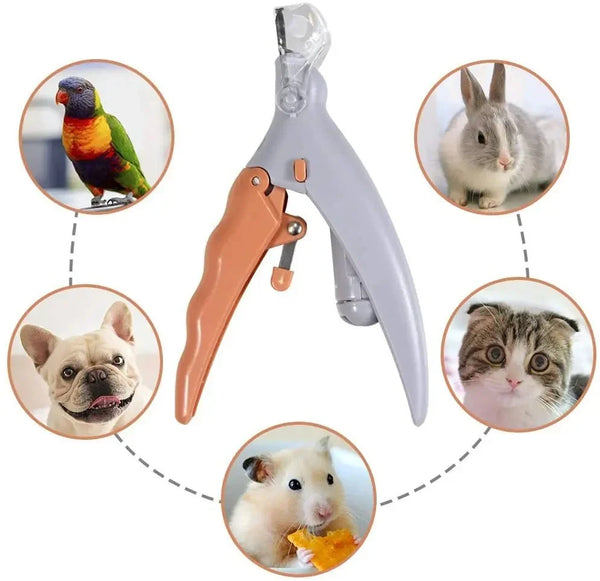
After trimming paw fur, check nail length. With your dog standing on a hard, flat surface, nails should not touch the floor. If they do, they are altering foot posture and reducing pad contact. Use a CozyPaws™ LED Pet Nail Clipper to trim back to the correct length — the LED light illuminates the quick on even the darkest nails, preventing painful over-cuts. Most dogs need nail trimming every three to four weeks, though dogs who walk primarily on soft ground (grass, carpet, earth) may need it more frequently because pavement walking naturally files nails down.
Step 3: Condition the Paw Pads
Trimmed pads that are dry and cracked will still slip. After grooming, apply a thin layer of CozyPaws™ Nose & Paw Balm to each pad. The balm restores moisture and flexibility to the keratinised surface, keeping the papillae soft and textured — exactly the condition they need to be in for maximum grip. In winter, when central heating dries indoor air and cold outdoor temperatures crack pad surfaces, conditioning after every walk makes a noticeable difference. Our guide to cracked dog paws covers the full pad health protocol for every season.
Step 4: Set a Weekly Schedule
Consistency matters more than perfection. Set a standing weekly appointment — same day, same time — for a quick paw check. Flip each paw, assess fur coverage and pad condition, and trim or condition as needed. The entire routine, once established, takes 5–10 minutes. Dogs who learn to associate the routine with a calm environment and a treat afterward quickly stop resisting.
6. Floor-by-Floor Safety Guide: Laminate, Tile, Hardwood and Vinyl
Not all hard floors are equally dangerous for dogs. Each surface type has a different friction profile, responds differently to moisture, and requires a different set of modifications. Use the table below to assess your home room by room and prioritise the highest-risk areas first.
| Floor Type | Slip Risk (Dry) | Slip Risk (Wet) | Key Danger | Best Fix |
|---|---|---|---|---|
| Laminate | High | Very High | Smooth melamine surface offers almost zero grip; water makes it ice-like | Non-slip runners in corridors; paw fur trimming; immediate spill cleanup |
| Polished Porcelain Tile | High | Very High | Glazed surface is extremely smooth; grout lines too narrow to aid grip | Textured rugs at transitions; paw balm for pad texture; avoid polished finishes in new installations |
| Natural Stone (Slate, Limestone) | Low–Moderate | Moderate | Textured surface helps, but sealed stone becomes smooth | Use matte sealants; paw fur trimming |
| Sealed Hardwood | Moderate–High | High | Polyurethane finish creates a glossy, low-friction surface | Area rugs with non-slip backing; matte finish refinish if due for resurfacing |
| Engineered Wood | Moderate–High | High | Similar to hardwood but thinner wear layer; often more heavily sealed | Same as hardwood; runners in high-traffic areas |
| Luxury Vinyl Tile (LVT) | Low–Moderate | Moderate | Generally better grip than laminate, but quality varies widely | Choose textured/embossed finishes; maintain paw grooming routine |
| Ceramic Tile (Matte) | Low | Moderate | Matte finish provides reasonable grip when dry; wet surfaces still risky | Quick-dry mats at entry points; paw drying after walks |
The Wet Floor Problem
Notice the pattern in the table: nearly every floor type jumps at least one risk level when wet. This means managing moisture is as important as managing the floor surface itself. Three situations create dangerous wet floors in UK homes: mopping (keep dogs out of the room until fully dry), rain-wet paws (dry paws at the door before allowing access to hard-floored rooms), and water bowls (place bowls on a non-slip mat with a raised lip to contain splashes). A CozyPaws™ Portable Dog Paw Cleaner at your front door lets you remove mud and water from paws in seconds, so your dog enters the house with clean, drier paws that grip significantly better on any hard surface.
Choosing Safer Flooring for New Installations
If you are renovating or installing new flooring in a home with dogs, prioritise matte or textured finishes over high-gloss. Luxury vinyl tile with an embossed wood-grain texture typically offers the best combination of pet-friendliness, durability, and grip. Avoid high-gloss laminate entirely — it is the single worst flooring choice for a household with dogs, especially large or senior breeds.
7. Home Modifications That Prevent Slipping and Falls
Even with perfect paw grooming, most UK homes have at least a few spots where dogs consistently struggle. Strategic modifications in these high-risk zones can eliminate the problem entirely without replacing your floors.
Runners and Rugs in High-Traffic Corridors
The single most effective home modification is placing a washable runner along any corridor your dog uses regularly. Hallways — especially long, narrow ones with laminate — are where most indoor slipping accidents happen because dogs build speed on carpet and then hit the hard surface at pace. A runner with non-slip rubber backing along the full length gives your dog a continuous grip surface. Choose machine-washable options — with a dog in the house, you will be washing them regularly.
Transition Mats at Floor Changes
The boundary between carpet and hard floor is a danger zone. Dogs moving confidently on carpet suddenly lose traction when they step onto tile or laminate. Place a non-slip mat that bridges the transition — overlapping both surfaces by at least 30 cm on each side. Doorways between bedrooms (usually carpeted) and hallways or kitchens (usually hard-floored) are the priority locations.
Pro Tip: Place a non-slip mat at every point where your floor surface changes. Doorways between carpeted rooms and tiled or laminate areas are where most indoor slipping accidents happen — dogs hit the transition at speed and lose grip instantly.
Non-Slip Mats at Feeding Stations
Dogs eating or drinking from bowls on hard floors often scramble for grip as they lean forward. A heavy rubber mat beneath the food and water bowls solves this and also catches spills that would otherwise make the surrounding floor slippery.
Ramps for Furniture and Vehicles
If your dog jumps on and off a sofa, bed, or car boot that sits on a hard floor, the landing creates a high-impact slip risk. A padded ramp with a non-slip surface gives them a controlled ascent and descent. This is especially important for breeds predisposed to spinal issues (Dachshunds, Corgis, French Bulldogs) and for any dog over seven years old.
Strategic Bed Placement
Your dog's bed should sit on a non-slip surface — either on carpet or on a non-slip mat placed on hard floor. Dogs rising from sleep have cold, stiff muscles and reduced coordination. If the first thing they do upon waking is scramble for grip on laminate, they start every day with a slip risk and a spike of stress. Position the bed so the dog can stand up, stretch, and take their first few steps without encountering a slippery surface.
8. Senior Dogs and Slippery Floors: Extra Care for Older Pets
For dogs over eight years old, slippery floors shift from an inconvenience to a genuine health hazard. Age-related changes stack on top of each other — weaker muscles, stiffer joints, reduced pad texture, slower reflexes — until even a floor the dog navigated easily as a younger animal becomes an obstacle course. The Blue Cross estimates that up to 80 per cent of dogs over eight show some signs of arthritis, and slippery floors directly aggravate every symptom.
How Age Changes Paw Grip
As dogs age, the paw pads gradually lose their natural texture. The keratinised papillae flatten, the pad surface becomes smoother, and the natural moisture production decreases. At the same time, older dogs tend to be less active, which means less natural wear on the pads from varied terrain — the very wear that keeps the pad surface rough and grippy. The result is a pad that looks normal from the outside but has lost a significant proportion of its traction capability.
Arthritis and the Slipping Cycle
Arthritis makes joints stiff and painful, which reduces a dog's ability to stabilise quickly when they feel themselves slipping. The Blue Cross recommends covering hard floors with non-slip surfaces as a priority modification for any dog diagnosed with joint disease. According to Canine Arthritis Management, the home environment is one of the five pillars of arthritis care — and floor safety is the most impactful environmental change most owners can make. Dogs with arthritis who also struggle with morning stiffness face the highest risk — cold, stiff joints on a slippery surface first thing in the morning is a formula for falls. Our guide to morning stiffness and joint relief covers management strategies specifically for this situation.
Degenerative Myelopathy and Neurological Decline
Degenerative myelopathy (DM) is a progressive spinal cord condition most common in German Shepherds, Corgis, Boxers, and Chesapeake Bay Retrievers. The PDSA describes DM as causing progressive weakness in the hind legs, starting with mild incoordination and eventually progressing to an inability to walk. Dogs with DM lose proprioception — the awareness of where their feet are — which means they cannot correct a slip once it begins. On hard floors, this turns every step into a potential fall. Non-slip flooring throughout the home is considered essential, not optional, for dogs diagnosed with DM.
The Senior Dog Anti-Slip Protocol
For dogs over eight, adapt the standard grooming routine with these additions:
- Increase paw fur trimming frequency to every two weeks — senior paw fur grows at the same rate, but the consequences of overgrowth are more severe when balance is already compromised. The quiet 35dB motor of the CozyPaws™ LED Pet Paw Trimmer is especially important for senior dogs, who are often more noise-sensitive.
- Apply paw balm after every outdoor walk — senior pads recover more slowly from cold, heat, and abrasive surfaces.
- Invest in an orthopaedic bed on a non-slip surface — a CozyPaws™ Orthopaedic Pet Bed supports ageing joints while the dog sleeps, and placing it on carpet or a thick non-slip mat ensures safe, stable rising.
- Eliminate all unnecessary hard-floor exposure — if your dog's food bowl, water bowl, and bed are all on hard floor, move at least the bed onto carpet or a non-slip mat. The fewer times per day a senior dog has to navigate a slippery surface, the lower the risk.
9. How to Train Your Dog to Walk Confidently on Hard Floors
Some dogs are not just slipping — they are terrified. They freeze at the edge of the carpet, refuse to enter the kitchen, or flatten themselves against the nearest wall when they have no choice but to cross a tiled hallway. This fear is genuine and treatable, but it requires patience, the right technique, and an understanding of why forcing the issue makes everything worse.
Why Forcing Does Not Work
Dragging a fearful dog across a slippery floor, carrying them across repeatedly, or scolding them for refusing to move creates a stronger negative association with the surface. The dog learns that hard floors are not just scary in themselves — they are also associated with human pressure and loss of control. The fear deepens. According to the PDSA, sudden reluctance to walk on previously tolerated surfaces can also indicate pain or a developing medical condition, so ruling out a physical cause with your vet is always the first step.
Desensitisation for Adult Dogs
The goal is to rebuild a positive association with the floor surface, working at the dog's pace. Start by placing a non-slip runner across the hard floor so the dog can cross the room entirely on a grippy surface. Once they are comfortable using the runner, gradually narrow it — fold it in half lengthwise, then use a narrower mat — so more of each step contacts the hard floor. Pair every crossing with a high-value treat delivered on the far side. Over days or weeks, the dog learns that crossing the hard floor leads to good things, and that they can maintain grip even when part of the surface is exposed.
Puppy Socialisation on Hard Floors
Puppies who are exposed to varied floor surfaces during the critical socialisation window (3–14 weeks) generally develop confidence on hard floors for life. If you have a puppy, deliberately include supervised play sessions on laminate, tile, and hardwood during this period. Use a non-slip mat as a base and let the puppy venture onto the surrounding hard floor under their own curiosity. Never force them onto the surface — let them explore at their own pace with treats scattered on the floor as motivation.
Rescue Dogs and Floor Fear
Rescue dogs often arrive with no prior experience of hard flooring. Dogs raised in kennels, outdoor runs, or rural environments may never have encountered laminate or tile. Their first experience of a slippery surface can be genuinely shocking. Treat this as a fresh socialisation challenge — follow the desensitisation protocol above, but expect the process to take longer. An anxiety calming vest can help reduce overall stress levels during training sessions, making the dog more receptive to positive associations.
When to Get Professional Help
If your dog's fear of hard floors is severe — they refuse to eat, show signs of panic (drooling, trembling, attempts to escape), or the fear is generalising to other surfaces — consult a certified animal behaviourist. Your vet can refer you to an APBC-accredited or ABTC-registered practitioner who can design a structured behaviour modification plan specific to your dog's history and triggers.
10. Frequently Asked Questions
Why does my dog slip on laminate floors?
The most common reason is overgrown paw fur covering the paw pads. Fur growing between and over the pads creates a smooth barrier that prevents the textured pad surface from contacting the floor. Laminate is already one of the smoothest flooring types available, so any reduction in paw grip becomes immediately apparent. Trim the paw fur to expose the pads, check nail length, and ensure the pads are conditioned and not overly smooth or cracked.
How do I stop my dog from slipping on hard floors?
Address both sides of the equation. On the paw side: trim paw fur to expose the pads, keep nails short so they do not alter foot posture, and condition pads with a paw balm to maintain texture. On the floor side: place non-slip runners in corridors, mats at floor transitions, and rubber-backed rugs in rooms where your dog spends the most time. Keep hard floors dry, especially after mopping or when your dog comes indoors with wet paws.
Is it normal for puppies to slip on hard floors?
Yes, to a degree. Puppies are still developing coordination, muscle strength, and proprioception (awareness of where their body is in space). Their paw pads are also softer and smoother than adult pads. Most puppies improve naturally as they grow, provided they have regular exposure to hard surfaces during the socialisation period. However, persistent slipping beyond five to six months of age, or slipping accompanied by weakness or abnormal gait, warrants a veterinary check.
Can slipping on floors cause hip dysplasia in dogs?
Slipping does not cause hip dysplasia, which is a genetic condition determined before birth. However, repeated slipping can significantly worsen hip dysplasia symptoms by stressing the already malformed joint, accelerating cartilage deterioration, and increasing pain and inflammation. For breeds predisposed to hip dysplasia, preventing slips from puppyhood onward is an important protective measure.
Should I trim my dog's paw fur for better grip?
Absolutely. Trimming paw fur to expose the pad surface is the single most effective grip-restoration measure for any dog on hard floors. The textured paw pad is your dog's natural traction system — when fur covers it, the system cannot function. Use a quiet, LED-equipped trimmer to safely trim fur flush with the pad surface every two to four weeks, depending on your dog's coat growth rate.
Are some floor types safer for dogs than others?
Yes. Matte ceramic tile and textured luxury vinyl tile (LVT) offer the best grip for dogs among common UK flooring types. Sealed hardwood and engineered wood are moderate risk. High-gloss laminate and polished porcelain tile are the most dangerous, especially when wet. If you are choosing new flooring for a home with dogs, prioritise matte or textured finishes and avoid high-gloss options entirely.
Why is my senior dog suddenly slipping on floors they used to walk on fine?
Sudden changes in traction ability in older dogs are often caused by developing arthritis (stiffening joints reduce the ability to stabilise), muscle loss (less strength to correct a slip), pad surface changes (pads become smoother with age), or neurological conditions like degenerative myelopathy. Any sudden or progressive change in your senior dog's ability to walk on familiar surfaces deserves a veterinary assessment to identify and manage the underlying cause.
Do dog grip socks actually work?
Dog grip socks (also called traction socks or non-slip booties) can provide short-term relief for some dogs, particularly seniors with medical conditions. However, many dogs dislike wearing them, they can shift during movement creating a new trip hazard, and they do not address the underlying cause. They are best used as a temporary measure while more sustainable solutions — paw grooming, floor modifications, and medical treatment for underlying conditions — are put in place.
How often should I trim my dog's paw fur to prevent slipping?
For breeds with heavy paw furnishings (Goldendoodles, Cocker Spaniels, Golden Retrievers, Bernese Mountain Dogs), trim every two to three weeks. For breeds with moderate paw fur growth, once a month is sufficient. For short-coated breeds that rarely grow significant paw fur, a monthly check is enough — you may find trimming is needed only every six to eight weeks. Senior dogs of any breed should be checked and trimmed every two weeks regardless of coat type.
When should I take my dog to the vet for slipping?
See your vet if: slipping started suddenly with no change in grooming or flooring; your dog is also showing stiffness, limping, or reluctance to exercise; the hind legs appear weak or are crossing over during movement; your dog is dragging their back feet or scuffing their nails; slipping is worsening progressively over weeks despite grooming and floor modifications; or your dog is showing signs of pain when moving. These patterns can indicate arthritis, hip dysplasia, degenerative myelopathy, IVDD, or vestibular disease — all of which require professional diagnosis and management.
Give your dog the grip they need on every floor in your home.
The CozyPaws™ LED Pet Paw Trimmer runs at just 35dB with a built-in LED light, so you can safely trim paw fur to expose those non-slip pads — even on anxious or dark-furred pets. The 18mm ceramic blade with rounded tips means zero risk of nicking the pad surface, and IPX7 waterproofing makes cleanup effortless.
30-day money-back guarantee · Free UK delivery