The PDSA Animal Wellbeing Report estimates that chronic kidney disease affects one in three UK cats over the age of 12 — and identifies insufficient water intake as one of the primary contributing factors. The majority of UK cats do not consume enough water daily, yet most owners assume a filled bowl is sufficient. The reality is that a standard water bowl starts accumulating bacteria within hours of filling, water temperature rises to room temperature, and without circulation the water loses dissolved oxygen — making it progressively less appealing to your pet throughout the day.
Pet water fountains solve this by providing continuous circulation, constant filtration, and the sound and movement of flowing water that triggers a natural drinking response in both cats and dogs. International Cat Care explains that chronic kidney disease is the most common cause of illness and death in older cats, with dehydration playing a direct role in disease progression. Cats have a strong evolutionary preference for moving water — in the wild, flowing streams are far less likely to harbour harmful bacteria than still pools — and cats with access to a fountain drink substantially more than those offered a standard bowl alone.
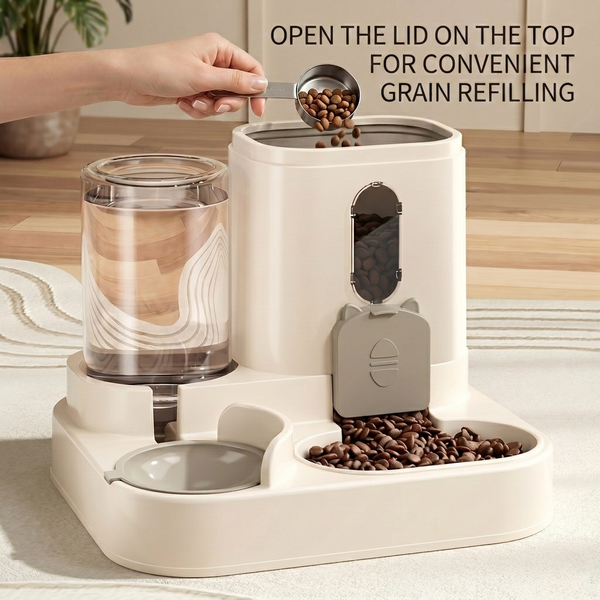
In this complete guide, we explain exactly how the CozyPaws™ 3L Pet Water Fountain triple-action filtration system works, walk through the full setup and maintenance process step by step, compare every fountain type available in the UK, and cover everything you need to know about keeping your cat or dog properly hydrated year-round. For the complete picture on dehydration warning signs and all the ways to boost your pet's water intake, see our in-depth pet hydration guide.
Table of Contents
- Why Pets Need Flowing Water
- How a Triple-Filtration Pet Fountain Works
- 5 Benefits of a Pet Water Fountain
- Before You Start
- How to Set Up & Maintain Your Fountain (Step by Step)
- Safety, Cleaning & When to See a Vet
- Fountain Comparison & 5-Year Value
- Frequently Asked Questions
Why Pets Need Flowing Water
In the wild, cats and dogs instinctively avoid standing water. Still pools are more likely to contain harmful bacteria, parasites, and algae — so animals evolved to associate flowing water with safety. This instinct persists in domestic pets. The APBC confirms that water source avoidance is one of the most commonly misunderstood feline behaviours — owners assume their cat simply does not like water when the animal is actually responding to legitimate quality and safety concerns. A standard water bowl is essentially a miniature stagnant pool that begins degrading the moment you fill it: bacteria in standing water accumulate rapidly at room temperature, dust and pet hair settle on the surface, and dissolved oxygen drops steadily — creating water your pet instinctively wants to avoid.
The RSPCA recommends refreshing water bowls at least twice daily and providing multiple water sources around the home — but even with diligent bowl management, you cannot replicate what a fountain does: continuous circulation that oxygenates the water, constant filtration that removes impurities, and the gentle sound of flowing water that actively draws your pet to drink.
For cats specifically, there is an additional factor: whisker fatigue. Many standard bowls are too narrow, causing the sensitive whiskers to press against the sides and creating discomfort that discourages drinking. A fountain with a wide, open drinking surface eliminates this problem entirely. Cats Protection warns that chronic dehydration is a major contributor to kidney disease, urinary tract infections, and bladder crystals — conditions that collectively account for a significant proportion of veterinary visits in cats over five years old.
How a Triple-Filtration Pet Fountain Works
The CozyPaws™ 3L Pet Water Fountain uses a three-stage filtration process that addresses every common water quality issue in a single replaceable cartridge:
Stage 1 — Fine Cotton Filter: Captures physical debris including pet hair, dust particles, food residue, and any sediment that falls into the water. This is the first line of defence and the layer that catches the most visible contaminants.
Stage 2 — Activated Carbon: Removes chlorine, unpleasant tastes, and odours from tap water. Chlorine is the primary reason many cats refuse to drink tap water from a bowl — they can smell it far more acutely than humans can. The carbon layer neutralises these chemicals, making the water taste fresher and more appealing.
Stage 3 — Ion Exchange Resin: Softens water by reducing excess minerals, calcium deposits, and trace heavy metals. This final stage produces noticeably cleaner water and also protects the pump mechanism from limescale buildup — extending the fountain's lifespan significantly in hard water areas across most of southern and eastern England.
The ultra-quiet pump circulates water continuously at under 30 dB — quieter than a whisper — meaning the fountain can run 24/7 without disturbing light sleepers, nervous cats, or noise-sensitive dogs. The 3-litre capacity provides enough fresh water for a single cat for 5–7 days or multiple pets for 2–3 days between refills. USB power keeps consumption under 2 watts — less than a phone charger — with no mains voltage anywhere near the water.
| Pet | Typical Weight | Daily Water Needed | Recommended Refill |
|---|---|---|---|
| Kitten (3+ months) | 1–2 kg | 40–120 ml | Every 5–7 days |
| Adult cat | 4–5 kg | 200–300 ml | Every 5–7 days |
| Large cat (Maine Coon) | 6–8 kg | 240–480 ml | Every 3–5 days |
| Small dog (Chihuahua) | 2–3 kg | 60–150 ml | Every 5–7 days |
| Medium dog (Cocker Spaniel) | 12–15 kg | 360–750 ml | Every 2–3 days |
| Two-cat household | 4–5 kg each | 400–600 ml combined | Every 2–3 days |
Pro Tip: In hard water areas (most of England south of Birmingham), the ion exchange resin in Stage 3 makes a visible difference — you will notice less white residue around the fountain and cleaner water clarity within the first week of use.
5 Benefits of a Pet Water Fountain
1. Significantly Increased Water Intake
The combination of flowing water, improved taste from chlorine removal, and the sound of movement encourages pets to drink considerably more than from a standard bowl — PDSA research supports that access to fresh, moving water significantly increases daily intake, with product testing indicating improvements of up to 70%. For cats — who naturally have a low thirst drive inherited from their desert-dwelling ancestors — this increase can be the difference between adequate hydration and the chronic low-level dehydration that leads to kidney and urinary problems over time.
2. Continuously Filtered, Clean Water
Every drop cycles through three filtration stages before reaching your pet. Unlike a bowl that starts degrading immediately, fountain water stays fresh around the clock. The activated carbon stage is particularly valuable if your tap water has a strong chlorine taste — a common complaint across UK water supply regions and a frequent reason cats refuse to drink enough.
3. Ultra-Quiet 24/7 Operation
At under 30 dB, the CozyPaws™ pump is quieter than a softly ticking clock. This matters because many pets — especially cats and noise-sensitive rescue dogs — will avoid a noisy fountain entirely, defeating its purpose. The quiet operation also means you can place the fountain in a bedroom or living area without it disrupting your own sleep or relaxation.
4. Multi-Pet Household Friendly
The 3-litre capacity serves multiple cats or small-to-medium dogs for 2–3 days between refills. For single-cat households, a full fountain lasts 5–7 days. This is especially useful when you work long shifts or travel overnight — your pet always has access to fresh, filtered water even when you are not home to refill a bowl.
Planning to leave your cat for a work day, overnight, or a full weekend? The fountain's 3-litre capacity is your first line of defence — but safe alone time depends on more than just water. Age, health status, food setup, home safety, and enrichment all determine how long your cat can comfortably manage without you. Our complete guide to leaving your cat home alone covers the safe duration limits by age, the full before-you-leave checklist, room-by-room safety-proofing, and the enrichment strategies that keep your cat content during every absence.
5. Energy Efficient and Safe
USB power means the fountain draws under 2 watts — less electricity than a phone charger. There is no mains voltage near the water, eliminating any electrical safety concern. The low running cost makes 24/7 operation genuinely practical, and the USB cable connects to any phone charger, power bank, or laptop port you already own.
Shop the CozyPaws™ Pet Water Fountain →
Before You Start
- Choose a quiet, accessible location — place the fountain away from food bowls (cats prefer water separate from food), away from litter trays, and on a hard, wipeable surface in case of splashing.
- Prepare a USB power source — any standard phone charger (5 V), power bank, or USB wall adapter works. Position the cable neatly to prevent your pet from chewing it.
- Pre-rinse the filter — run the triple-action filter under cold tap water for 30 seconds before first use to flush any loose carbon dust. This is a one-time step per new filter.
- Have replacement filters on hand — filters need replacing every 2–4 weeks depending on water hardness and number of pets. Order a multi-pack so you are never caught without one.
- Keep the old bowl available initially — do not remove your pet's existing water source immediately. Run both side by side for the first week so your pet can choose freely. Most cats switch to the fountain within 3–5 days.
- Allow 3–7 days for adjustment — some cats are cautious about new objects. Nervous cats may take up to two weeks. Do not force interaction — curiosity will win.
How to Set Up & Maintain Your Fountain — Step by Step
The CozyPaws™ fountain assembles in under 5 minutes with no tools required. Follow these steps for a perfect first fill:
Step 1: Unbox and Wash All Parts
Separate the base, pump, filter housing, and fountain top. Wash all parts (except the pump and USB cable) in warm soapy water. Rinse thoroughly. The fountain body is dishwasher-safe on the top rack — ideal for the initial clean.
Step 2: Install the Filter
After pre-rinsing the triple-action filter under cold tap water for 30 seconds, slot it into the filter housing. The filter sits in one orientation only — it clicks into place without forcing. Ensure it is fully seated so water flows through all three stages rather than bypassing the cartridge.
Step 3: Fill with Fresh Water
Fill the base to the maximum line with fresh tap water. Do not overfill — the water level will rise slightly once the pump is running and recirculating. For the best results, use cold water straight from the tap.
Step 4: Connect the Pump and Test
Place the pump in the base, route the USB cable through the rear cable channel, and plug into your power source. The pump should start silently within 2 seconds. Check that water flows evenly across the drinking surface with no sputtering. If the pump is noisy on first use, it may have an air bubble — unplug for 10 seconds, then reconnect.
Step 5: Introduce Your Pet
Place the fountain in your chosen location alongside the existing water bowl. Do not pick up your cat and bring them to it — let them discover it naturally. Most cats investigate within a few hours, attracted by the sound of running water. If your cat is very cautious, place a few treats near (not in) the fountain to encourage approach. Remove the old bowl only after you see your pet drinking from the fountain regularly.
| Maintenance Task | Frequency | Time Required |
|---|---|---|
| Check water level and top up | Every 2–3 days | 1 minute |
| Full clean and filter rinse | Weekly | 5 minutes |
| Replace triple-action filter | Every 2–4 weeks | 2 minutes |
| Clean pump impeller | Monthly | 5 minutes |
| Deep clean and descale | Every 3 months | 15 minutes |
Quick Check — Is Your Fountain Running Correctly?
- ✅ Water flows smoothly with no sputtering or air bubbles
- ✅ Pump runs silently (you should barely hear it from 1 metre away)
- ✅ Water level sits between the minimum and maximum lines
- ✅ Filter is seated correctly with no water bypassing the cartridge
- ✅ No visible slime, discolouration, or odour in the water
Safety, Cleaning & When to See a Vet
The CozyPaws™ fountain is designed for continuous unsupervised operation. The following safety features protect both your pet and your home:
- ✅ BPA-free food-grade plastic — safe for daily drinking, will not leach chemicals
- ✅ USB low-voltage power (5 V) — no mains electricity near the water, eliminating shock risk
- ✅ Dishwasher-safe body — top-rack safe for thorough sanitisation
- ✅ Anti-slip base — prevents tipping and sliding on hard floors
- ✅ Pump auto-protection — designed to shut off if water drops below minimum level
- ✅ Non-toxic materials throughout — safe if licked, chewed, or pawed
Cleaning Best Practice
Weekly cleaning takes under 5 minutes: disassemble all parts, wash the base and fountain top with warm soapy water (or run through the dishwasher), rinse the filter under cold water, wipe the pump housing with a soft cloth, and refill with fresh water. For the quarterly deep clean, soak all parts in a solution of white vinegar and warm water (50/50) for 15 minutes to dissolve any limescale buildup — particularly important in hard water areas. RSPCA advises that clean, fresh water available at all times is one of the simplest and most effective measures for preventing urinary tract problems in cats.
⚠️ Warning: Never allow the fountain to run dry. Operating the pump without water causes permanent motor damage. If you are going away for more than 3 days with a single cat (or more than 1 day with multiple pets), arrange for someone to check and refill the fountain — or place a large standard bowl alongside as backup.
⚠️ When to See a Vet
- Your pet stops drinking entirely for more than 24 hours
- Sudden dramatic increase in thirst (polydipsia) — a key early sign of diabetes, kidney disease, or hyperthyroidism
- Frequent urination, straining, or blood in urine — may indicate a urinary tract infection or bladder crystals
- Persistent vomiting or diarrhoea causing rapid dehydration
- Skin tent test shows delayed return (pinch the skin at the scruff — if it takes more than 2 seconds to flatten, your pet is dehydrated)
- Lethargy, sunken eyes, or dry, pale gums
RSPCA emphasises that any sudden change in drinking habits — whether increased or decreased — warrants a prompt veterinary check. Early detection of kidney disease, diabetes, and urinary conditions dramatically improves treatment outcomes and quality of life. For a full list of dehydration warning signs and the skin tent test method, see our complete pet hydration guide.
Fountain Comparison & 5-Year Value
| Factor | Standard Bowl | Basic Fountain | CozyPaws™ Fountain |
|---|---|---|---|
| Filtration | ❌ None | ⚠️ Single carbon only | ✅ Triple-action (3 stages) |
| Water freshness over 24 h | ❌ Degrades within hours | ⚠️ Moderate circulation | ✅ Continuously filtered |
| Noise level | ✅ Silent | ❌ 40–50 dB (audible) | ✅ Under 30 dB (whisper-quiet) |
| Capacity | 300–500 ml (2× daily refill) | 1–2 L (daily refill) | ✅ 3 L (5–7 days single cat) |
| Electrical safety | ✅ No power needed | ❌ Mains voltage near water | ✅ USB low-voltage (5 V) |
| Drinking encouragement | ❌ Minimal | ⚠️ Moderate improvement | ✅ Significant increase |
| Kidney disease risk | ❌ Higher (chronic dehydration) | ⚠️ Reduced | ✅ Significantly reduced |
| Typical lifespan | Replace yearly (staining) | 2–3 years (pump wear) | ✅ 5+ years (quality build) |
5-Year ROI: A standard water bowl costs almost nothing upfront — but the hidden cost is in preventable veterinary bills. A single urinary tract infection treatment costs £100–£300. Chronic kidney disease management runs £500–£2,000+ per year for the rest of your cat's life. A water fountain that genuinely increases your pet's daily intake is one of the most cost-effective preventive health investments you can make. The CozyPaws™ fountain pays for itself the moment it prevents one avoidable UTI — and over five years of consistently better hydration, the cumulative health benefit is substantial.
Frequently Asked Questions
How often do I need to replace the filter?
Every 2–4 weeks depending on water hardness and the number of pets using the fountain. In hard water areas (most of southern and eastern England), replace closer to every 2 weeks. Signs that replacement is overdue include reduced water flow, visible discolouration of the filter, or any change in water taste or smell. Always keep spare filters on hand so you can swap immediately when needed.
Can I use tap water or does it need to be filtered first?
Standard UK tap water is perfectly fine — the triple-action filter handles chlorine removal, mineral softening, and debris capture. There is no need to pre-filter or use bottled water. In fact, the activated carbon stage specifically targets the chlorine taste that puts many cats off drinking tap water from a bowl.
Is the fountain safe to run 24/7?
Yes — the fountain is designed for continuous operation. The USB pump draws under 2 watts and generates no meaningful heat. The low-voltage USB power means there is no mains electricity near the water at any point. Running 24/7 is not just safe — it is recommended, because switching the fountain off allows bacteria to multiply in standing water.
How quiet is the fountain really?
Under 30 dB — quieter than a whisper, roughly equivalent to the ambient noise of a quiet bedroom at night. From more than a metre away, most people cannot hear the pump at all. If the pump becomes noticeably louder over time, it usually means the impeller needs cleaning (a 5-minute monthly task) or the water level has dropped below minimum.
Will my cat actually use the fountain?
The vast majority of cats begin drinking from the fountain within 3–7 days when introduced alongside their existing bowl. Cats are naturally attracted to moving water — you may have noticed your cat drinking from running taps, which is the same instinct at work. Very cautious cats may take up to two weeks. For additional hydration support, pair the fountain with moisture-rich food served on a CozyPaws™ Lick Mat — our lick mat guide covers how slow feeding increases fluid intake.
Can I put the fountain in the dishwasher?
The fountain body (base and top) is dishwasher-safe on the top rack. The pump, USB cable, and filter must be cleaned by hand. For the pump, a soft cloth and warm water is sufficient. For the quarterly deep clean, soak the body parts in a 50/50 white vinegar and water solution for 15 minutes to remove limescale.
Is the fountain suitable for kittens and puppies?
Yes — the wide, low drinking surface is accessible to kittens from around 8 weeks old and small breed puppies. The gentle water flow is not forceful enough to startle young animals. Supervise initial interactions to ensure they are drinking comfortably and not attempting to climb into the fountain. The BPA-free materials are safe for animals of all ages.
What if the pump stops working?
The most common cause of pump failure is a dirty impeller — clean it monthly as part of routine maintenance and this should not occur. If cleaning does not resolve the issue, check that the water level is above the minimum line (running dry damages the motor). The pump is replaceable as a spare part — contact support@thecozypaws.co.uk for a replacement rather than purchasing an entire new fountain.
Is the fountain suitable for dogs?
Yes — the 3-litre capacity and wide drinking surface work well for small to medium dogs. Larger breeds (25 kg+) may empty the reservoir more quickly and could benefit from a supplementary water source alongside the fountain. For dogs, place the fountain on a mat or tray as larger breeds tend to splash more than cats. During hot weather, pair the fountain with a CozyPaws™ Cooling Mat to keep your dog comfortable — our cooling mat guide covers summer safety in detail.
How much water should my cat or dog drink daily?
Dogs need approximately 30–50 ml per kilogram of body weight daily. Cats need 40–60 ml per kilogram. A 5 kg cat should drink 200–300 ml per day, and a 10 kg dog should drink 300–500 ml. If your pet consistently drinks significantly more or less than these ranges, consult your vet — sudden changes in water intake can indicate underlying health conditions. International Cat Care notes that many cats in the early stages of kidney disease show increased thirst as their first visible symptom.
Ready to Keep Your Pet Hydrated — Automatically?
- ❌ Stagnant bowl water that degrades within hours
- ❌ Constant manual refilling twice a day
- ❌ Chlorine-tasting tap water your cat refuses to drink
- ❌ Preventable kidney and urinary problems from chronic dehydration
- ✅ Continuously circulated, triple-filtered fresh water 24/7
- ✅ Ultra-quiet operation your whole household can sleep through
- ✅ 3-litre capacity lasting up to a week per fill
- ✅ One of the most cost-effective preventive health investments for your pet
Shop the CozyPaws™ Pet Water Fountain →
Questions about the CozyPaws™ 3L Pet Water Fountain? Email us at support@thecozypaws.co.uk — we're here to help.