More than one in three cats in the UK never sees a vet for their recommended annual health check — and the primary reason is not cost or indifference, but stress. Stress on the cat, stress on the owner, and the lingering memory of the last visit when the carrier came out and everything fell apart. According to Cats Protection, many owners delay or skip vet visits entirely because the experience feels so traumatic for their cat — and every skipped check-up is a missed opportunity to catch dental disease, kidney problems, hyperthyroidism, or early-stage arthritis before they become painful, expensive, and difficult to treat.
This guide covers every stage of taking your cat to the vet in the UK — from choosing a cat-friendly practice with ISFM accreditation and training your cat to accept the carrier weeks before the appointment, through safe transport by car, public transport, or on foot, to managing the waiting room, understanding what happens during the examination, settling your cat back home afterwards, and budgeting for vet costs with a full UK price breakdown. Whether you are preparing a kitten for their very first vaccination visit, managing twice-yearly health checks for a senior cat, or simply trying to make the annual check-up less stressful for everyone, every section is built around practical, step-by-step advice you can act on today.
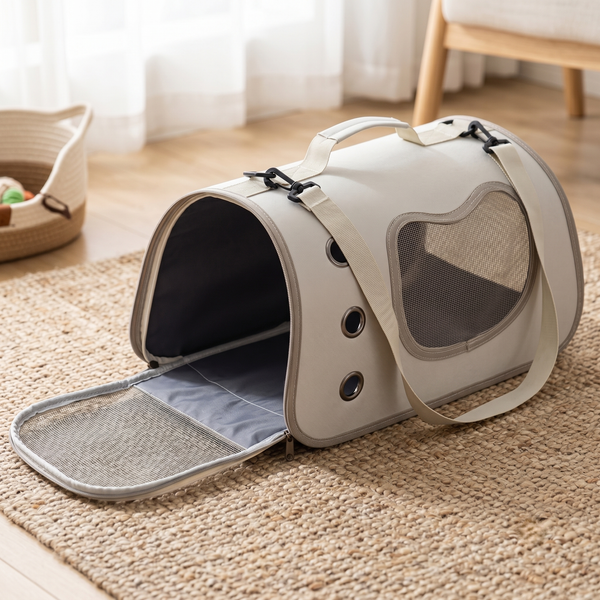
A hands-free backpack carrier with a transparent bubble window changes the vet visit equation entirely — your cat can see out without feeling exposed, weight sits on your shoulders rather than pulling one arm, and both hands stay free for doors, paperwork, and reassurance. If you are choosing a carrier specifically for vet visits, our complete guide to the cat carrier backpack covers sizing, ventilation, and weight limits in detail. The CozyPaws™ Bubble Window Cat Backpack is built for exactly this scenario — and you will see it referenced throughout the sections below wherever carrier choice, positioning, or transport matters most.
Table of Contents
- Why Regular Vet Visits Matter More Than Most Cat Owners Realise
- How Often Should You Take Your Cat to the Vet? The Complete UK Schedule
- How to Choose a Cat-Friendly Vet Practice in the UK
- Carrier Training: How to Get Your Cat Comfortable Weeks Before the Appointment
- The Day Before and Morning Of: Your Complete Vet Visit Preparation Checklist
- Safe Transport: Getting Your Cat to the Vet by Car, Public Transport or on Foot
- In the Waiting Room: Keeping Your Cat Calm and Secure
- During the Examination: What Your Vet Checks and How to Help
- After the Vet Visit: Settling Your Cat Back Home Safely
- Vet Costs in the UK: What to Budget, Insurance Options and How to Save
1. Why Regular Vet Visits Matter More Than Most Cat Owners Realise
Cats are masters at hiding pain. In the wild, showing weakness attracts predators, so domestic cats retain that instinct — they eat normally, groom normally, and sleep in their usual spots while dental abscesses build beneath the gumline, kidneys quietly lose function, and joints stiffen to the point where jumping onto a favourite shelf becomes impossible. By the time behavioural changes are visible to even an attentive owner, many conditions are already advanced.
A routine annual health check catches problems early. Your vet will feel for lumps, check teeth and gums, listen to the heart, palpate the abdomen, weigh your cat against previous records, and ask you the kind of targeted questions about appetite, thirst, litter habits, and activity levels that surface subtle changes you may not have noticed at home. For senior cats, blood work and blood pressure monitoring can identify chronic kidney disease, diabetes, or hyperthyroidism months or even years before clinical signs appear — and earlier detection almost always means simpler, cheaper, and more effective treatment.
The financial argument is equally clear. A standard consultation in the UK costs between £40 and £70. An emergency out-of-hours visit for a condition that could have been caught at a routine check can run from £150 to well over £1,000 — before treatment even begins. Prevention is not just better medicine; it is dramatically better economics. Every routine visit is an investment in fewer emergency visits later.
Beyond physical health, regular vet visits also keep your cat's vaccination status, flea and worm treatment, and microchip records current. Microchipping is now a legal requirement in England for all cats over 20 weeks, and your vet is the simplest place to get it done and to update your contact details if you move. In short, an annual vet visit is the single most important thing you can do for your cat's long-term health — and the rest of this guide is about making that visit as stress-free as possible for both of you.
2. How Often Should You Take Your Cat to the Vet? The Complete UK Schedule
The right frequency depends on your cat's age, health status, and lifestyle. Indoor cats face fewer injury risks than outdoor cats, but they are not immune to dental disease, obesity, urinary problems, or the boredom-related stress that can suppress immune function over time. Outdoor cats face additional risks from road traffic, territorial fights, parasites, and infectious diseases — and may need more frequent wound checks and booster assessments. The table below gives a clear, age-based schedule recommended by UK veterinary organisations.
| Life Stage | Age | Recommended Frequency | What to Expect |
|---|---|---|---|
| Kitten | 0–12 months | 3–4 visits | Primary vaccinations (9 and 12 weeks), neutering (4–6 months), microchipping, first health check, flea/worm treatment plan |
| Young Adult | 1–3 years | Once a year | Annual booster, dental check, weight monitoring, parasite prevention review |
| Adult | 3–7 years | Once a year | Full health check, dental assessment, vaccination boosters, lifestyle review |
| Mature | 7–10 years | Every 6–12 months | Blood work recommended, blood pressure check, thyroid screening, kidney function baseline, weight and mobility assessment |
| Senior | 11–14 years | Every 6 months | Comprehensive blood panel, urine analysis, blood pressure, dental review, pain assessment, arthritis screening |
| Geriatric | 15+ years | Every 6 months (or more) | All senior checks plus cognitive assessment, mobility evaluation, quality-of-life review, medication adjustments |
According to the RSPCA, kittens need their first vaccination at around nine weeks old and a second booster at approximately twelve weeks. After the primary course, annual boosters keep protection current — though some vaccines, such as those for feline parvovirus, may only need boosting every three years depending on your vet's assessment and the vaccine manufacturer's guidance. The Blue Cross recommends registering with a vet and booking your kitten's first appointment as soon as you bring them home — ideally within the first few days.
If you are welcoming a kitten into your household and want a comprehensive preparation plan covering far more than just the vet schedule — from room-by-room kitten-proofing and sanctuary room setup to litter placement, toxic plant removal, and a full first-week settling plan — our complete guide to preparing your home for a kitten covers every step.
3. How to Choose a Cat-Friendly Vet Practice in the UK
Not all veterinary practices are created equal when it comes to cats. Dogs and cats have fundamentally different stress responses — a dog may shake, whine, or seek comfort from its owner, but a cat is more likely to freeze, attempt to flee, or become defensively aggressive. A practice that handles cats well understands these differences at every level: reception, waiting room layout, handling techniques, consultation room setup, and hospitalisation protocols.
The gold standard is International Cat Care's Cat Friendly Clinic accreditation, run through the International Society of Feline Medicine (ISFM). Accredited clinics meet specific standards for cat handling, environment, equipment, and staff training. You can search for accredited practices near you on the ISFM website — and choosing one can dramatically reduce the stress your cat experiences at every visit.
Even if there is no ISFM-accredited clinic nearby, Cats Protection recommends looking for the following features when choosing a practice:
- Separate waiting areas — a dedicated cat waiting room, or at least a section away from dogs, prevents your cat from being surrounded by unfamiliar barking and sniffing
- Cat-only consultation times — some mixed practices offer specific sessions where only cats are seen, reducing the overall sensory load
- Elevated surfaces in the consulting room — cats feel safer when they are up high, so a practice that places carriers on a table rather than the floor is thinking about feline welfare
- Gentle handling protocols — minimal restraint, slow movements, allowing the cat to emerge from the carrier voluntarily, and using familiar bedding during examination
- Proximity to your home — a shorter journey means less time in the carrier and less exposure to unfamiliar sights, sounds, and vibrations
Register with your chosen practice before you need an emergency appointment. Registration is usually free, involves a quick form with your contact details and your cat's basic information, and means that when you do need an urgent visit, your cat's medical history is already on file. If you move house or change practices, ask your old vet to transfer records to the new one — continuity of medical history is important for spotting long-term trends in weight, blood values, or dental condition.
4. Carrier Training: How to Get Your Cat Comfortable Weeks Before the Appointment
The single biggest source of vet visit stress is the carrier — and the reason is simple. Most cats only see the carrier when something unpleasant is about to happen. It lives in a cupboard or garage for 364 days of the year, then appears on the morning of the vet appointment, smelling of plastic and last year's stress hormones, and the cat immediately associates it with being trapped, transported, and examined. The solution is equally simple: make the carrier a permanent, positive part of your cat's environment.
According to the PDSA, carrier training should begin at least two to three weeks before a planned vet visit — and ideally, the carrier should be out all the time. Woodgreen Pets Charity recommends the following step-by-step approach:
Week 1 — Introduction: Place the carrier in a room your cat uses regularly, with the door removed or secured open. Line it with your cat's own unwashed bedding so it smells familiar. Drop a few treats inside daily but do not close the door. Let curiosity do the work.
Week 2 — Building comfort: Once your cat is voluntarily entering the carrier to eat treats or nap, begin gently closing the door for a few seconds while your cat is inside. Open it immediately. Gradually extend the time the door is closed — ten seconds, thirty seconds, a minute — always pairing the experience with treats or a small meal.
Week 3 — Movement: With the door closed and your cat calm, lift the carrier a few inches off the ground. Set it down gently. Over several sessions, progress to carrying the carrier across the room, then to the front door, then outside for thirty seconds, then to the car and back. Each step should be short, positive, and followed by a treat.
A backpack-style carrier offers a significant advantage during this process. Because it sits upright on the floor with the opening at the front, cats can walk in and out freely — there is no need to lower them through a top hatch or push them through a narrow door. The CozyPaws™ Bubble Window Cat Backpack is particularly well-suited to carrier training because the transparent bubble window allows your cat to see out without feeling enclosed, the padded interior feels secure rather than clinical, and the multiple ventilation points prevent heat build-up that makes some cats panic.
5. The Day Before and Morning Of: Your Complete Vet Visit Preparation Checklist
Preparation on the day before and the morning of the appointment makes the difference between a controlled, calm experience and a chaotic scramble that leaves both you and your cat stressed before you even leave the house. The checklist below covers everything you need to think about.
| Timing | Action | Why It Matters |
|---|---|---|
| Day Before | Confirm appointment time and practice address | Avoids last-minute rushing and wrong locations if the practice has multiple branches |
| Day Before | Prepare carrier with fresh familiar bedding | Your cat's own scent on the bedding reduces anxiety inside the carrier |
| Day Before | Write down any questions or concerns for the vet | It is easy to forget important observations once you are in the consulting room |
| Day Before | Gather vaccination records and any previous vet notes | Especially important if visiting a new practice or attending for a booster |
| Evening Before | Check fasting requirements — most routine visits do not require fasting, but blood tests or anaesthesia may | Unnecessary fasting stresses your cat; eating when you should have fasted can delay the appointment |
| Morning Of | Keep indoor cats inside and secure cat flaps for outdoor cats | Cats sense disruption to routine — an outdoor cat may disappear for hours if they associate your behaviour with the carrier |
| Morning Of | Spray carrier bedding with a feline pheromone spray (e.g. Feliway) 15–20 minutes before loading | Synthetic pheromones mimic the calming facial scent cats use to mark safe territory |
| Morning Of | Place a light towel or cover over the carrier for transport | Blocking visual stimuli reduces fear responses during the journey |
| Morning Of | Bring kitchen roll, a spare towel, and a small bag for soiled bedding | Stress can cause accidents — having cleanup supplies prevents a worse experience |
| Morning Of | Bring a favourite treat for positive reinforcement after the examination | Ending the visit on a positive note helps build better associations for next time |
If your cat takes regular medication, bring the packaging or a note of the exact name, dosage, and frequency. If you have noticed any specific symptoms — changes in appetite, drinking more than usual, a new limp, a lump you can feel, or any behavioural shift — write them down with approximate dates. Vets appreciate specifics: "She started drinking noticeably more about three weeks ago" is far more useful than "She seems a bit off."
6. Safe Transport: Getting Your Cat to the Vet by Car, Public Transport or on Foot
How you transport your cat to the vet matters just as much as how you prepare at home. A bumpy, noisy, or overheated journey can undo all your carrier training and leave your cat in a heightened state of stress before the vet has even looked at them.
By car: According to the PDSA, your cat must be secured in their carrier at all times while the car is moving — a loose cat in a car is a serious distraction and a safety risk for everyone. Place the carrier on the back seat and secure it with the seatbelt threaded through the handle or around the base. Never place the carrier in the boot, where ventilation is poor and your cat cannot see or hear you. Keep the car at a comfortable temperature, avoid loud music, and drive smoothly — sudden braking or sharp turns are far more alarming for a cat than steady movement. If it is a hot day, run the air conditioning before putting the carrier in the car so the interior is already cool. Never leave your cat in a parked car, even for a few minutes, even with windows cracked.
By public transport: Most UK train operators allow cats in carriers at no extra charge, but policies vary by company and route. Check your operator's website before travelling. On buses, it is generally at the driver's discretion. The London Underground permits small animals in carriers. Keep the carrier on your lap or at your feet — never on an empty seat — and cover it with a light cloth to reduce visual stimulation. Avoid peak hours when carriages are crowded and noisy.
On foot: If your vet practice is within walking distance, a backpack carrier is the safest and most comfortable option for both you and your cat. The CozyPaws™ Bubble Window Cat Backpack distributes your cat's weight evenly across both shoulders, keeps both hands free for opening doors and checking your phone for the appointment time, and allows your cat to observe their surroundings through the transparent window without being exposed to wind, noise, or other animals. Walking is often less stressful than driving because the motion is smoother and more predictable — no engine vibrations, no sudden stops, no slamming doors.
Regardless of transport method, keep the journey as short as possible. Plan your route in advance, leave in good time, and remember that arriving five minutes early and sitting calmly in the car or waiting area is infinitely better than arriving late and flustered. Your cat reads your energy — if you are rushed and anxious, they will be too.
Every Vet Visit Starts with the Right Carrier
Hands-free, ventilated, and designed so your cat can see out without feeling exposed — the CozyPaws™ Bubble Window Cat Backpack takes the stress out of the journey before the vet even opens the door.
View the CozyPaws™ Cat Carrier Backpack →7. In the Waiting Room: Keeping Your Cat Calm and Secure
The waiting room is one of the most challenging parts of the vet visit for cats. Unfamiliar smells, the sound of dogs barking, other cats in distress, bright overhead lighting, and the general activity of a busy practice can all push a nervous cat from mild anxiety into full fight-or-flight mode. According to Battersea Dogs & Cats Home, the waiting room is where most cats reach their peak stress level — and managing this period well can make the actual examination far easier.
Position the carrier high: Place the carrier on your lap or on a chair beside you — never on the floor, where dogs can approach and sniff. Elevation gives your cat a psychological advantage and reduces direct eye contact with other animals.
Cover the carrier: A light towel or blanket draped over the carrier blocks visual stimuli without restricting airflow. If you are using the CozyPaws™ Bubble Window Cat Backpack, a cover over the bubble window transforms the transparent viewing panel into a dark, enclosed den — useful for the waiting room even if your cat enjoyed watching the world during the journey.
Use pheromones: If you sprayed the bedding with a feline pheromone product before leaving home, the effect will still be active. If not, a quick spray on the towel covering the carrier can help.
Ask to wait elsewhere: Many practices are happy for cat owners to wait in the car or outside the building until the vet is ready. Call or speak to reception when you arrive and ask if this is possible — it can eliminate waiting room stress entirely.
Do not open the carrier: It is tempting to reach in and comfort your cat, but opening the carrier in a waiting room full of unfamiliar animals risks an escape. Speak to your cat in a calm, low voice instead. If your cat responds to a specific word or sound you use at home — a feeding call, a particular tone — use it quietly to provide reassurance.
If your cat's carrier anxiety extends beyond vet visits and affects travel more broadly — car journeys, holidays, moves — our complete guide to carrier anxiety and travel stress in cats covers desensitisation techniques, pharmaceutical options, and long-journey preparation in detail.
8. During the Examination: What Your Vet Checks and How to Help
Understanding what happens during a standard feline health check removes uncertainty for you — and your calm, informed presence in the consulting room helps your cat stay calmer too. A typical examination takes ten to twenty minutes and covers the following areas.
Weight and body condition: Your cat is weighed and assessed against a body condition score — a standardised scale that evaluates fat coverage over the ribs, spine, and waist. Even a small unexplained weight loss (as little as 200–300g in a cat) can be clinically significant and may prompt further investigation.
Eyes, ears, and nose: The vet checks for discharge, redness, cloudiness (which can indicate glaucoma or cataracts in older cats), ear mites, and nasal obstruction. Cats with flat faces (Persians, British Shorthairs) are more prone to tear duct and breathing issues.
Mouth and teeth: Dental disease is extremely common in cats — studies suggest that the majority of cats over three years old have some degree of dental disease. Your vet will check for tartar build-up, gingivitis, tooth resorption (a painful condition unique to cats), and oral masses. Dental problems cause chronic pain that cats hide remarkably well.
Heart and lungs: Using a stethoscope, the vet listens for heart murmurs, irregular rhythms, and abnormal lung sounds. Hypertrophic cardiomyopathy (HCM) is the most common heart disease in cats and can be present without any visible symptoms — listening for a murmur is one of the earliest ways to detect it.
Abdomen: Gentle palpation of the abdomen allows the vet to feel the kidneys, bladder, intestines, and liver for abnormalities — enlarged organs, masses, fluid build-up, or pain responses that your cat would never show you at home.
Skin and coat: The vet checks for parasites (fleas, ticks, mites), lumps, skin lesions, hair loss patterns, and coat quality. A dull or greasy coat in a cat that previously groomed well can indicate pain, arthritis, obesity, or systemic illness.
Mobility and joints: Particularly in cats over seven, the vet may gently flex and extend joints, watch the cat move, and ask about jumping, climbing, and activity levels. Arthritis is dramatically underdiagnosed in cats because they compensate by simply avoiding movements that hurt — they stop jumping onto the bed rather than limping.
Vaccinations: If boosters are due, these are administered during the health check. The vet will check that your cat is healthy enough for vaccination and discuss which boosters are needed based on your cat's lifestyle (indoor versus outdoor, single versus multi-cat household, cattery boarding plans).
How to help: Stay calm. Speak in a low, steady tone. Let the vet handle your cat — they are trained in feline restraint techniques that minimise stress. If your cat is more comfortable being examined in the bottom half of the carrier, many vets will remove the top and work around the base rather than lifting the cat onto a cold examination table. Ask questions. Take notes. And do not be embarrassed if your cat hisses, swats, or urinates — vets see it every day and do not judge.
9. After the Vet Visit: Settling Your Cat Back Home Safely
The vet visit does not end when you walk out of the practice. How you handle the first few hours at home can either consolidate the experience as manageable or leave your cat with lingering stress that makes the next visit even harder.
Immediate return: When you get home, place the carrier on the floor in a quiet room and open the door. Do not pull your cat out. Let them emerge in their own time — some cats will walk out immediately, others may sit inside for ten or twenty minutes processing the experience. Leave the carrier door open and step away. Offer a small amount of food or a favourite treat once they emerge, but do not force interaction.
Multi-cat households — scent management: This is one of the most overlooked post-vet challenges. When a cat returns from the vet, they carry unfamiliar scents — antiseptic, other animals, the vet's hands, pheromone sprays. To the cats that stayed home, the returning cat can smell like a stranger, and this can trigger hissing, growling, or even aggressive confrontations. To reduce this risk, rub a soft cloth on the cats that stayed home before you leave for the appointment, then rub the same cloth on the returning cat before releasing them into the shared space. Alternatively, keep the returning cat in a separate room for thirty to sixty minutes — long enough for the unfamiliar scent to fade and the cat's own scent to reassert itself. If your cat tends to hide after stressful experiences and you want to understand the deeper behavioural patterns behind that response, our complete guide to why cats hide explains the triggers, timelines, and when to worry.
Create a recovery space: After vaccinations, dental work, or any procedure involving sedation, your cat needs a warm, quiet, low-traffic space to rest. A CozyPaws™ Waterproof Pet Cave House provides the enclosed, den-like environment that cats instinctively seek when they feel vulnerable. A CozyPaws™ Calming Donut Pet Bed offers the deep bolster walls that let your cat curl up and feel surrounded — mimicking the pressure comfort that reduces post-stress cortisol levels. And a CozyPaws™ Cat Tunnel Bed gives your cat the option to hide inside a felt tunnel while still being in the room with you — visible but enclosed, safe but not isolated.
As Cats Protection notes, senior cats may take longer to recover from the stress of a vet visit than younger cats. If your elderly cat seems withdrawn, off their food, or unusually quiet for more than 24 hours after a routine visit, contact your practice for advice.
10. Vet Costs in the UK: What to Budget, Insurance Options and How to Save
One of the most common reasons cat owners delay vet visits is uncertainty about cost. According to Cats Protection, the average annual cost of veterinary care for a cat in the UK — including vaccinations, flea and worm treatment, and one routine consultation — is between £100 and £200. But that figure can rise significantly if your cat needs dental work, blood tests, emergency treatment, or specialist referral. The table below provides a realistic breakdown of common UK vet costs as of 2026.
| Service | Typical UK Cost Range | Notes |
|---|---|---|
| Routine consultation | £40–£70 | Standard health check; no treatment included |
| Annual booster vaccination | £50–£80 | Usually includes a health check; price varies by region |
| Kitten primary vaccinations (2 doses) | £60–£100 | Covers FPV, FCV, FHV; FeLV often additional |
| Neutering (female/spay) | £50–£130 | Charity-subsidised schemes often available at lower cost |
| Neutering (male/castration) | £40–£100 | Simpler procedure; charity schemes may cover entirely |
| Microchipping | £20–£35 | Legally required in England from June 2024 for cats over 20 weeks |
| Dental scale and polish | £150–£350 | Requires general anaesthetic; extractions cost extra |
| Blood test panel | £80–£200 | Recommended annually for cats over seven; essential for seniors |
| Emergency out-of-hours consultation | £150–£350 | Before any treatment; often at a separate emergency practice |
| X-ray | £150–£400 | May require sedation; multiple views increase cost |
| Ultrasound | £200–£500 | Often used for abdominal or cardiac assessment |
Pet insurance: Insurance is the most effective way to protect yourself from unexpected large bills. Lifetime policies — where coverage renews each year regardless of ongoing conditions — offer the best protection, but premiums increase with your cat's age and claims history. Expect to pay between £10 and £30 per month for a mid-range policy covering a healthy indoor cat. Outdoor cats, pedigree breeds, and older cats will pay more. Always check the excess (the amount you pay per claim), annual or per-condition limits, and whether dental cover is included or optional.
Financial assistance: If cost is a barrier, several UK charities offer support. The PDSA provides free and low-cost veterinary care to pet owners receiving certain qualifying benefits. Blue Cross animal hospitals offer subsidised treatment in some locations. Cats Protection runs low-cost and free neutering schemes across the UK. Your local RSPCA branch may also offer financial assistance. Speak honestly with your vet about your budget — most practices can offer payment plans, phased treatment, or prioritised options that address the most urgent issues first.
How to save without cutting corners: Keep vaccinations current — lapsed vaccinations require a full restart course, which costs more than a single booster. Maintain flea and worm treatment year-round — treating an infestation costs far more than prevention. Book routine health checks rather than waiting for emergencies — a £50 consultation that catches early kidney disease saves thousands compared with emergency treatment for kidney failure. And compare prices between local practices for routine procedures like neutering and vaccination — costs can vary significantly even within the same town.
Frequently Asked Questions
How often should I take my cat to the vet UK?
Adult cats aged one to seven should have at least one health check per year, ideally combined with their annual booster vaccination. Cats over seven benefit from twice-yearly visits because age-related conditions like kidney disease, hyperthyroidism, and arthritis can develop between annual checks. Kittens need three to four visits in their first year for vaccinations, neutering, and microchipping.
How do I get my cat into the carrier without a fight?
Start carrier training at least two weeks before the appointment. Leave the carrier out permanently with familiar bedding inside so your cat uses it voluntarily. Gradually close the door for short periods, then lift and carry the carrier in increasing increments. On vet day, a cat that already sleeps in the carrier is a cat that walks in willingly rather than needing to be caught and forced through a narrow door.
What is an ISFM Cat Friendly Clinic?
The International Society of Feline Medicine accredits veterinary practices that meet specific standards for feline care — including cat-specific handling techniques, separate waiting areas, reduced noise, appropriate equipment, and staff training in feline behaviour. Choosing an accredited practice means your cat is treated by a team that understands how cats experience stress differently from dogs.
Can I take my cat to the vet on public transport UK?
Most UK train operators allow cats in carriers at no extra charge, though policies vary so check your operator's website before travelling. Buses are generally at the driver's discretion. The London Underground permits small animals in suitable carriers. Keep the carrier covered, secure it on your lap, and avoid peak hours for a calmer journey for your cat.
Why does my cat act differently after coming home from the vet?
Your cat may hide, refuse food, or seem withdrawn after a vet visit because the experience triggered a stress response — unfamiliar handling, strange scents, vaccinations, and transport all contribute. In multi-cat households, the returning cat may also face hostility from housemates who do not recognise their altered scent. Most cats return to normal within a few hours; if behavioural changes persist beyond 24 hours, contact your vet.
Do indoor cats need to go to the vet as often as outdoor cats?
Yes. Indoor cats are protected from road traffic and fights, but they remain susceptible to dental disease, obesity, urinary tract problems, stress-related conditions, and age-related illness. They still need annual vaccinations (especially if they board at a cattery or live with other cats), parasite prevention, and routine health monitoring. Indoor cats are also more prone to weight gain and boredom-related stress, both of which a vet can assess and advise on.
How much does a vet visit cost for a cat in the UK?
A standard routine consultation typically costs between £40 and £70 depending on your location and practice. Annual booster vaccinations including the health check run between £50 and £80. Emergency out-of-hours consultations start at around £150 before any treatment. Pet insurance, financial assistance from charities like the PDSA, and open conversations with your vet about budget can all help manage costs.
Should I fast my cat before a vet visit?
For a routine health check or vaccination, fasting is usually not required — feed your cat their normal breakfast unless your vet has said otherwise. If blood tests are planned, your vet may ask you to withhold food for eight to twelve hours beforehand to ensure accurate results. If your cat is having a procedure under sedation or general anaesthetic, fasting is essential to reduce the risk of aspiration — your practice will give you specific timing instructions when you book.
At what age should a kitten have its first vet visit?
Book your kitten's first vet visit within the first few days of bringing them home. Most kittens receive their first vaccination at around nine weeks old and a second booster at approximately twelve weeks. This initial visit also covers a full health check, discussion of neutering timing (usually four to six months), microchipping requirements, and setting up a parasite prevention plan tailored to your kitten's lifestyle.
How can I make the vet waiting room less stressful for my cat?
Place the carrier on a chair or your lap rather than on the floor to keep your cat above dog eye-level. Cover the carrier with a light towel to block visual stimuli. Ask reception if you can wait in the car or outside until the vet is ready. Book the first appointment of the day or a cat-only session if available. Use a feline pheromone spray on the carrier bedding before leaving home. Do not open the carrier door in the waiting room.
Make Every Vet Visit Easier — Starting with the Carrier
The CozyPaws™ Bubble Window Cat Backpack keeps your cat secure, ventilated, and calm from front door to consulting room. Hands-free transport, transparent viewing window, and padded interior designed for cats up to 6 kg. Free UK delivery. 30-day money-back guarantee.
View the CozyPaws™ Cat Carrier Backpack →