The UK has over 140,000 miles of public rights of way — footpaths, bridleways, and byways crossing some of the most spectacular countryside in Europe. From the Lake District fells to the Pembrokeshire coastal path, the Peak District ridgelines to the South Downs chalk trails, every one of these routes is waiting for you and your dog. The RSPCA advises that regular outdoor exercise is one of the five welfare needs every dog owner must meet — and there's no better way to meet it than a proper countryside hike together.
But hiking with a dog isn't the same as a walk around the park. Trails are longer, water sources are unreliable or contaminated, livestock encounters carry legal consequences, and a dog without reliable recall on open moorland is a danger to wildlife, farm animals, and themselves. The Ramblers confirm that dogs are welcome on all public rights of way — but with that access comes responsibility that too many owners underestimate until something goes wrong.
This guide covers everything you need to know before taking your dog on a UK hike: access rights, breed fitness assessment, the essential gear checklist — starting with the CozyPaws™ 2-in-1 Portable Dog Water Bottle for reliable trail hydration — water calculation per hour of walking, off-lead recall for trails, livestock rules, seasonal hazards, and the post-hike recovery routine. For a complete breakdown of the water bottle's features and materials, see our Portable Dog Water Bottle UK: Complete Guide.
Table of Contents
- Where Can You Hike with Your Dog in the UK?
- Is Your Dog Fit Enough to Hike? Breed Assessment
- The Essential Dog Hiking Gear Checklist
- How Much Water Does Your Dog Need on a Hike?
- Off-Lead Safety & Recall on Trails
- Livestock Encounters: Legal Obligations & Safety
- Trail Hazards Every Dog Owner Must Know
- The Post-Hike Recovery Routine
- Seasonal Hiking Calendar for UK Dog Owners
- Safety Checklist & When to See a Vet
- Frequently Asked Questions
1. Where Can You Hike with Your Dog in the UK?
Understanding where your dog can and cannot go is the first step to planning any hike. The UK's access laws give dog owners more freedom than many realise — but there are restrictions that carry real legal consequences if ignored.
Public Rights of Way (England & Wales)
The PDSA advises that dogs are welcome on all public footpaths and bridleways in England and Wales. You do not need to keep your dog on a lead on these paths — provided they are under close control. However, "close control" means your dog responds immediately to recall, does not chase wildlife, and stays near you at all times.
Open Access Land (CRoW Act)
The Countryside and Rights of Way Act 2000 opened up mountain, moor, heath, and downland for public access. Dogs are welcome on this land, but with a critical restriction: between 1 March and 31 July, dogs must be on a short lead (no longer than 2 metres) on all open access land — even if no livestock is visible. This protects ground-nesting birds during breeding season. Year-round, dogs must be on a short lead near livestock on open access land.
National Parks, Woodland Trust & National Trust
The Woodland Trust welcomes dogs in all their woods — over 1,000 sites across the UK — with the simple rule that dogs must be kept in sight and under control. National Trust properties vary by site; look for the pawprint rating (three pawprints = most dog-friendly). National Parks follow the same CRoW Act rules as all open access land.
Scotland
Scotland's Land Reform Act 2003 grants broader access rights than England and Wales. Dogs are welcome on most land, including farmland, provided they are under proper control. However, during lambing season (typically March–May), dogs should be kept on a short lead near sheep — this is strongly advised even where not legally required.
| Land Type | Dogs Allowed | Lead Required | Key Rule |
|---|---|---|---|
| Public Footpath | ✅ Yes | No (if under close control) | Must not obstruct other users |
| Bridleway | ✅ Yes | No (if under close control) | Give way to horses |
| Open Access Land (CRoW) | ✅ Yes | 1 Mar – 31 Jul: mandatory short lead | Protects ground-nesting birds |
| Open Access Land (near livestock) | ✅ Yes | Year-round: mandatory short lead | Dogs (Protection of Livestock) Act |
| Woodland Trust Sites | ✅ Yes | Where signposted | In sight and under control |
| National Trust (outdoor areas) | ✅ Most sites | Varies by site | Check pawprint rating before visiting |
| Scotland (Land Reform Act) | ✅ Yes | Near livestock: strongly advised | Broader access than England/Wales |
Pro Tip: Before any hike, check the route on Ordnance Survey maps or the OS Maps app. Public rights of way are marked as green dashed lines (footpaths) or long green dashes (bridleways). Open access land is shown with orange shading. This takes 2 minutes and prevents you accidentally trespassing on private land with no public right of way.
2. Is Your Dog Fit Enough to Hike? Breed Assessment
Not every dog is built for a 10-mile moorland trek. The PDSA's exercise guide confirms that exercise needs vary enormously by breed, age, and individual health — and pushing a dog beyond their capacity on a remote trail is far more dangerous than overdoing it in a local park where you can simply turn home.
Blue Cross advises building up to longer exercise gradually — never taking an unfit dog on a demanding hike without conditioning first. A dog who walks 30 minutes a day cannot safely complete a 4-hour hill walk without weeks of progressive training.
| Breed Group | Hiking Suitability | Max Distance (conditioned) | Key Limitation |
|---|---|---|---|
| Working/Herding (Border Collie, GSD, Springer) | ⭐⭐⭐ Excellent | 15–25+ miles | Overexcitement around livestock |
| Sporting (Labrador, Vizsla, Weimaraner) | ⭐⭐⭐ Excellent | 12–20 miles | Heat sensitivity in dark coats |
| Terriers (Jack Russell, Patterdale, Border) | ⭐⭐⭐ Excellent | 10–15 miles | Prey drive near wildlife |
| Hounds — Sight (Greyhound, Whippet) | ⭐⭐ Moderate | 5–8 miles | Sprint not endurance; thin skin |
| Hounds — Scent (Beagle, Basset) | ⭐⭐ Moderate | 8–12 miles | Nose leads them off-trail |
| Giant Breeds (Great Dane, St Bernard) | ⭐⭐ Moderate | 5–8 miles | Joint stress on steep/uneven ground |
| Toy Breeds (Chihuahua, Yorkie, Pomeranian) | ⭐ Limited | 3–5 miles (flat terrain) | Fatigue; vulnerable to cold/rain |
| Brachycephalic (Pug, French Bulldog, Bulldog) | ❌ Not recommended | 1–3 miles max (flat, cool weather) | Breathing restriction; heatstroke risk |
| Senior Dogs (any breed, 8+ years) | ⚠️ Vet assessment required | Individual — depends on joints | Arthritis, cardiac, recovery time |
| Puppies (under 12 months) | ⚠️ Limited — 5 min per month of age | Follow the 5-minute rule | Growth plates; joint damage risk |
Fitness Conditioning Plan
If your dog currently walks 30–60 minutes a day and you want to prepare them for a 3–4 hour hike:
- Weeks 1–2: Increase daily walks to 60–75 minutes on varied terrain (grass, gravel, gentle hills)
- Weeks 3–4: Add one 90-minute walk per week with elevation changes
- Weeks 5–6: Introduce one 2-hour walk per week with a loaded backpack (if using one)
- Week 7+: Attempt your target distance at a gentle pace, with frequent water and rest stops
Watch for signs of fatigue during conditioning: lagging behind, excessive panting that doesn't resolve with rest, lying down and refusing to move, or limping. Any of these mean you've pushed too far — shorten the next session and build up more gradually.
3. The Essential Dog Hiking Gear Checklist
The difference between a safe hike and a dangerous one often comes down to what you packed. On a remote trail, there's no corner shop, no tap, and no vet within easy reach. Every item below earns its weight.
Hydration — The Non-Negotiable
Water is the single most important item for any hike. Natural water sources — streams, puddles, lakes — carry leptospirosis, giardia, blue-green algae, and chemical runoff. Our complete guide to why dogs drink from puddles covers the full list of diseases your dog risks from unfiltered countryside water. The only safe option is carrying your own clean supply.
The CozyPaws™ 2-in-1 Portable Dog Water Bottle is purpose-built for trail use: stainless steel body keeps water cool for hours, the fold-out silicone bowl provides one-handed drinking access without stopping, and the sealed food compartment at the base carries treats or kibble for energy top-ups on longer hikes. The integrated carry loop clips to any backpack or belt — no fumbling in a bag while your dog pulls ahead.
Full Gear Checklist
| Category | Item | Why You Need It |
|---|---|---|
| Hydration | Portable water bottle with bowl | Clean water access every 20 min; prevents dehydration and puddle drinking |
| Hydration | Extra water (500ml per hour per 20kg dog) | Backup supply for longer/hotter hikes |
| Nutrition | High-value treats + kibble | Recall reward; energy on long hikes; CozyPaws bottle has built-in food compartment |
| Lead | Standard lead (1.5m) + long-line (5–10m) | Short lead for livestock; long-line for controlled freedom |
| ID | Collar with ID tag + microchip up to date | Legal requirement; lost dogs on trails are harder to find |
| Navigation | OS Maps app or paper map | Phone batteries die; paper doesn't. Know your route. |
| First Aid | Tick remover, antiseptic wipes, bandage, tweezers | Trail injuries need immediate attention far from help |
| Paw Protection | Paw balm or dog boots | Rocky terrain and hot paths damage pads |
| Weather | Dog coat (for rain/cold); cooling bandana (summer) | UK weather changes fast on exposed trails |
| Waste | Poo bags ×10 minimum | No bins on trails; carry it out. Legal requirement. |
| Visibility | Reflective collar/harness or LED light | Essential if hike runs late; woodland gets dark quickly |
Pro Tip: Pack your dog's gear the night before and do a "shake test" — clip the bottle to your bag and shake it. If it leaks, you'll find out at home rather than discovering a soaked backpack 2 miles up a fell. The CozyPaws™ stainless steel bottle uses a precision-fitted seal rated leak-proof at any angle — it passes the shake test every time.
Shop the CozyPaws™ Portable Dog Water Bottle →
4. How Much Water Does Your Dog Need on a Hike?
Most owners underestimate their dog's water needs on a hike — often dramatically. At rest, a dog needs 40–60ml of water per kilogram of body weight per day. During active hiking, that requirement doubles or triples depending on temperature, terrain difficulty, and your dog's coat type.
Trail Hydration Formula
The practical calculation for hiking:
- Baseline: 50ml per kg body weight per day (at rest)
- Active hiking (cool weather, 10–18°C): ×1.5 = 75ml per kg per day
- Active hiking (warm weather, 18–25°C): ×2.5 = 125ml per kg per day
- Intense hiking (hot weather, hills, thick coat): ×3 = 150ml per kg per day
Per-hour calculation for a 20kg dog on a warm day: 125ml × 20kg = 2,500ml per day ÷ 8 active hours = ~310ml per hour. For a 4-hour hike, that's 1.2 litres minimum — plus extra for margin.
When to Offer Water
Don't wait for your dog to pant heavily or seek puddles. Offer water from your CozyPaws™ Portable Dog Water Bottle every 15–20 minutes during active hiking — small, frequent drinks are better than large volumes at rest stops. The fold-out silicone bowl makes this effortless: one hand flips the bowl open, the other tilts to pour. No need to stop walking, remove your pack, or dig through a bag.
Signs of Dehydration on the Trail
- 🚩 Dry, tacky gums (healthy gums are wet and pink)
- 🚩 Skin tenting — pinch the scruff; if it stays raised for more than 2 seconds, your dog is dehydrated
- 🚩 Sunken eyes with a hollow appearance
- 🚩 Excessive panting that doesn't slow at rest stops
- 🚩 Lethargy or reluctance to continue walking
- 🚩 Thick, ropy saliva instead of thin and watery
- 🚩 Reduced urination or dark-coloured urine
If you spot any of these signs: stop immediately, move to shade, offer small amounts of water every 5 minutes, and do not continue the hike. If symptoms don't improve within 15–20 minutes, get to a vet. Severe dehydration progresses rapidly to organ failure in dogs — it is a medical emergency.
Pro Tip: Fill two bottles for any hike over 2 hours. One in your bag, one clipped to the outside for quick access. The CozyPaws™ bottle's integrated carry loop clips to any D-ring, carabiner, or bag strap — keeping hydration within arm's reach without taking up pack space.
5. Off-Lead Safety & Recall on Trails
Off-lead hiking is the dream — watching your dog bound through open countryside, ears flying, tail going. But off-lead freedom on trails requires reliable recall. Not "comes back eventually" recall. Not "comes back when there's nothing interesting" recall. Instant, every-time, even-when-there's-a-rabbit recall.
Battersea's recall training guide is the gold standard for building reliable recall from scratch. The key principles for trail-ready recall:
The Three Rules of Trail Recall
- Practice throughout the walk, not just at the end. If you only recall your dog when the walk is over, they learn that "come" means "fun stops." Recall randomly 10–15 times per hike, reward generously, then release them again.
- Use a unique recall cue that you never use in anger. "Come" is overused and often poisoned with frustration. Choose a whistle, a specific word, or a distinct sound — and only ever associate it with high-value rewards.
- Always have treats that beat the environment. On trails, your competition is rabbits, deer, other dogs, and fascinating smells. Standard kibble won't cut it. Carry high-value treats — liver, cheese, chicken — in the CozyPaws™ bottle's food compartment so they're always within reach.
When to Keep Your Dog ON Lead
- Within sight of any livestock (legal requirement)
- On open access land between 1 March – 31 July (ground-nesting birds)
- Near cliff edges, steep drops, or quarry edges
- On busy paths with other dogs/walkers who may be nervous
- If you can hear but not see livestock ahead on the path
- On roads, lanes, and car parks (even rural ones)
- If your dog's recall is not 100% reliable in all situations
The Long-Line Compromise
If your dog's recall isn't trail-ready yet, a 5–10 metre long-line gives freedom without risk. Let it trail along the ground — your dog gets to explore, sniff, and move naturally, but you can step on the line instantly if they bolt towards livestock or a hazard. It's the responsible middle ground between full off-lead freedom and a restrictive 1.5m lead — and it doubles as a training tool to build the recall you want.
6. Livestock Encounters: Legal Obligations & Safety
This section could save your dog's life — and keep you out of court. Woodgreen Pets Charity warns that livestock worrying is a criminal offence under the Dogs (Protection of Livestock) Act — and the consequences are severe.
The Law
- Offence: It is illegal for your dog to chase, worry, or attack livestock. Your dog does not need to make physical contact — chasing alone is an offence.
- Fine: Unlimited (increased from £1,000 under recent amendments).
- Seizure: Police can seize and detain your dog if they believe it has worried livestock and may do so again.
- Shooting: A farmer can legally shoot a dog that is attacking or chasing livestock — and may not be liable to compensate you.
- Ewes: Chasing can cause pregnant ewes to abort. A dog doesn't need to touch a sheep to cause fatal harm.
How to Navigate Livestock Fields Safely
- Put your dog on a short lead before entering the field — not after you see the animals. By then, your dog has already seen them and arousal is high.
- Walk calmly around the edge of the field rather than through the middle of a flock/herd.
- If cattle approach aggressively — particularly cows with calves — let go of your dog's lead and move away calmly. Your dog can outrun cattle; you cannot. Holding the lead puts YOU at risk of being trampled.
- Never get between a cow and her calf.
- Keep walking steadily. Don't run, shout, or wave arms — this escalates the situation.
The Kennel Club's Countryside Code campaign reports that 87% of sheep farmers experienced a dog attack on their flock in recent years. This isn't a rare problem — it's an epidemic driven by owners who believe "my dog would never chase." Every dog has prey drive. No dog is exempt from being on a lead around livestock.
Pro Tip: If your planned route crosses multiple livestock fields — common in the Yorkshire Dales and Peak District — consider an alternative route that uses open moorland or woodland instead. The OS Maps app shows field boundaries and often indicates where livestock are likely to be found.
7. Trail Hazards Every Dog Owner Must Know
Ticks
The British Veterinary Association identifies ticks as one of the most significant parasite threats to UK dogs. Ticks transmit Lyme disease, babesiosis, and anaplasmosis — all serious conditions that can cause long-term health problems.
High-risk areas: Bracken, heather, long grass, woodland edges, and deer paths. Peak season: March–June and September–November.
Prevention:
- Use a vet-prescribed tick preventative (spot-on, tablet, or collar) year-round
- Stay on established trails rather than pushing through undergrowth
- Check your dog thoroughly after every hike — focus on ears, neck, armpits, groin, and between toes
- Carry a tick removal tool in your first aid kit (twist, don't pull)
- Save any removed ticks in a sealed bag — your vet may need to identify the species
Adders
The UK's only venomous snake is found on heathland, moorland, woodland edges, and south-facing slopes — all prime hiking territory. Adder bites peak between April and July when snakes are most active.
If your dog is bitten:
- Stay calm — panicking increases your dog's heart rate and spreads venom faster
- Carry your dog if possible (don't let them walk — movement circulates venom)
- Do NOT apply a tourniquet, suck the wound, or apply ice
- Get to a vet immediately — adder bites can be fatal without antivenom
- Note the time of the bite for the vet
Toxic Plants
Common trail-side plants poisonous to dogs include: foxglove (cardiac glycosides), yew berries (taxine — rapidly fatal), wild garlic (N-propyl disulfide), ragwort (liver failure), and bluebells (glycosides). Most dogs won't eat these — but puppies and dogs who chew everything should be watched closely near any unfamiliar vegetation.
Blue-Green Algae
Still or slow-moving water with a green, blue-green, or brown scum on the surface may contain cyanobacteria. This is lethal to dogs — symptoms appear within minutes to hours and there is no antidote. Never let your dog drink from or swim in water with algae blooms. This is another reason why carrying clean water in your CozyPaws™ Portable Dog Water Bottle isn't optional — it's a safety measure that could save your dog's life.
Steep Terrain & Falls
Dogs are not mountain goats. Scree slopes, cliff edges, and exposed ridgelines are dangerous for dogs who may scramble up something they cannot get down from. Keep your dog on-lead near any significant drop, and choose routes appropriate for their size and agility.
8. The Post-Hike Recovery Routine
What you do in the 30 minutes after a hike matters as much as the hike itself. A proper recovery routine prevents injuries from going unnoticed, removes parasites before they embed, and helps your dog's muscles recover faster.
Step 1: Hydration & Cool-Down (Immediate)
Offer water immediately — small amounts, frequently. A dog who drinks a massive volume at once after exercise can vomit. Let them drink, rest 5 minutes, drink again. If it's a warm day, a CozyPaws™ Pet Cooling Mat in the car or at home gives them an immediate cool surface to bring core temperature down safely.
Step 2: Full Body Check (Within 10 Minutes)
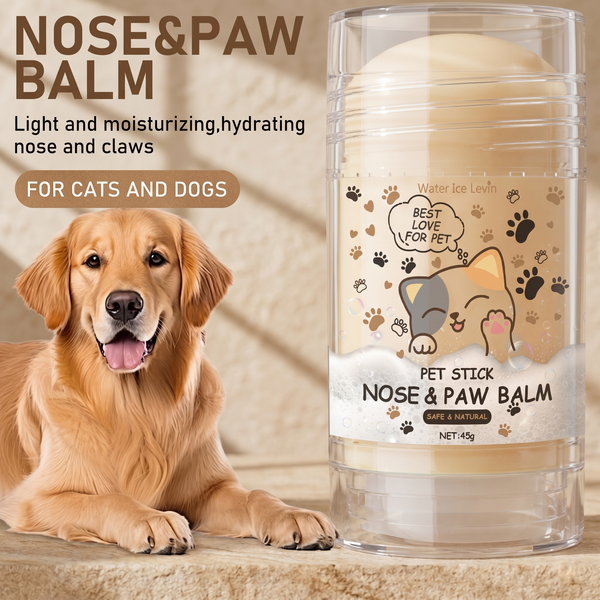
- Paws: Check between every toe for thorns, glass, stones, cuts, and ticks. Check pads for cracks, abrasions, or blisters. Apply CozyPaws™ Nose & Paw Balm to any dry or roughened pads.
- Ears: Look inside for ticks, grass seeds (foxtails), and redness.
- Skin: Run your hands over entire body — feel for ticks (small, round, attached bumps), cuts, or swelling.
- Eyes: Check for grass seeds, redness, or excessive tearing.
- Undercarriage: Check belly, groin, and armpits — favourite tick attachment sites.
Step 3: Clean-Up (Within 30 Minutes)
If your dog walked through mud, streams, or wet grass, a CozyPaws™ Portable Dog Paw Cleaner removes trail debris from paws without a full bath. For a muddy coat, a dry towel rub-down is usually sufficient — save full baths for genuinely filthy dogs, as over-bathing strips natural coat oils.
Step 4: Rest & Monitor (2–24 Hours)
After a long hike, your dog needs genuine rest — not another walk, not a play session. Let them sleep. Watch for:
- Limping or stiffness (may not appear until the next morning)
- Excessive licking of a specific area (pain or embedded object)
- Vomiting or diarrhoea (contaminated water ingestion despite your best efforts)
- Swelling at any site (possible adder bite or tick reaction)
If your dog seems stiff the morning after a hike, the walk was too long or too intense. Shorten your next hike and build up more gradually.
9. Seasonal Hiking Calendar for UK Dog Owners
The UK's seasons create dramatically different hiking conditions — and different risks for your dog at each time of year. The RSPCA warns that exercise in hot weather is the most common trigger of heatstroke in UK dogs. But summer isn't the only danger season. Here's your month-by-month planning guide.
| Season | Best For | Key Hazards | Gear Focus |
|---|---|---|---|
| Spring (Mar–May) | Moderate temps; wildflowers; quieter trails | Lambing (dogs on lead); tick season starts; adders emerge; mud/flooding from melt | Long-line lead; tick prevention; waterproof coat |
| Summer (Jun–Aug) | Longest daylight; driest trails; highest visibility | Heatstroke; dehydration; adders at peak; blue-green algae; hot rock surfaces | Extra water ×2; cooling bandana; early morning/evening hikes only above 22°C |
| Autumn (Sep–Nov) | Cooler temps; stunning colours; fewer crowds | Tick second peak; fallen leaves hide holes/drops; shorter daylight; fungi (toxic if eaten) | Reflective gear; headtorch; tick remover; early start times |
| Winter (Dec–Feb) | Crisp clear days; no ticks; no adders; empty trails | Ice on paths; reduced daylight (sunset 3:30–4pm); hypothermia risk for short-coated dogs; frozen water sources | Dog coat; LED collar; carry all water (streams may be frozen); plan for short daylight |
For detailed guidance on managing hot-weather exercise specifically, our Summer Dog Walks guide covers temperature thresholds, pavement testing, and breed-specific heat limits in full. And for year-round paw protection across all terrain types, see our Dog Paw Care: Seasonal Protection Guide.
Pro Tip: The golden windows for UK dog hiking are April–May and September–October. Temperatures are moderate (12–18°C), daylight is long enough for full-day hikes, trails are drier than winter, and the extreme heat risks of July–August are absent. Plan your biggest adventures for these shoulder seasons.
10. Safety Checklist & When to See a Vet
Pre-Hike Safety Checklist
- ✅ Route planned on OS Maps — distance, elevation, terrain assessed
- ✅ Dog's fitness matches the route difficulty
- ✅ Water packed — minimum 500ml per hour per 20kg dog
- ✅ CozyPaws™ Portable Water Bottle filled, sealed, and clipped to pack
- ✅ Lead, long-line, and high-value treats packed
- ✅ First aid kit including tick remover
- ✅ ID tag on collar + microchip details up to date
- ✅ Weather checked — route adjusted if above 22°C or storms forecast
- ✅ Someone knows your route and expected return time
- ✅ Phone fully charged + portable battery
- ✅ Tick prevention up to date (vet-prescribed)
- ✅ Recall tested in a safe environment within the last week
When to See a Vet After a Hike
- 🚨 Immediately: Suspected adder bite; blue-green algae ingestion; collapse; uncontrolled bleeding; breathing difficulty
- ⚠️ Within 24 hours: Persistent limping; vomiting/diarrhoea after drinking from a natural source; embedded tick that you couldn't fully remove; eye injury from a grass seed
- 📋 Within 1 week: Circular rash around a tick bite site (Lyme disease); ongoing stiffness that doesn't resolve with rest; behavioural changes (lethargy, loss of appetite) that appeared after the hike
Frequently Asked Questions
Can I take my dog hiking off-lead in the UK?
Yes — on public footpaths and bridleways, dogs can be off-lead if under close control. On open access land (CRoW Act), dogs must be on a short lead between 1 March and 31 July and at all times near livestock. The key requirement is reliable recall — if your dog doesn't come back instantly every time, they should be on a lead or long-line for safety.
How much water should I carry for my dog on a hike?
As a minimum, carry 500ml per hour of hiking for a 20kg dog in cool weather, and double that in warm weather (above 18°C). For a 4-hour hike with a medium-large dog on a warm day, that's 2–4 litres. Always carry more than you think you'll need — you can't predict delays, wrong turns, or unexpectedly warm conditions on exposed ridgelines.
What breeds are best for hiking?
Working and herding breeds excel: Border Collies, German Shepherds, Springer Spaniels, Labradors, Vizslas, and Weimaraners are all built for endurance over varied terrain. Terriers — Jack Russells, Patterdales, Border Terriers — are surprisingly capable hikers despite their size. Avoid demanding hikes with brachycephalic breeds (Pugs, French Bulldogs, Bulldogs) as their restricted airways make sustained exercise dangerous.
How do I stop my dog drinking from streams and puddles on hikes?
Prevention is about access to clean water, not just training. If you offer fresh water from a portable bottle every 15–20 minutes, your dog is never thirsty enough to seek puddles. Combine this with a "leave it" command and redirecting to the bottle whenever they show interest in standing water. Consistency is key — one lapse teaches them that puddles are sometimes allowed.
What do I do if my dog is bitten by an adder?
Stay calm. Keep your dog as still as possible — carry them if you can. Do not apply a tourniquet, ice, or try to suck out venom. Get to a vet immediately. Note the time of the bite so the vet can assess progression. Most dogs survive adder bites with prompt veterinary treatment, but delays significantly worsen outcomes.
Can I hike with a puppy?
Follow the 5-minute rule: 5 minutes of exercise per month of age, twice daily. A 4-month-old puppy should walk no more than 20 minutes at a time. Long hikes risk permanent damage to developing growth plates and joints. Wait until your puppy is at least 12 months old (18 months for large/giant breeds) before attempting hikes over 1 hour, and consult your vet first.
Do I need to put my dog on a lead around cows?
Always put your dog on a lead when entering any field with livestock — this is a legal requirement on open access land and strongly advised on rights of way. However, if cattle charge aggressively (particularly cows with calves), let go of the lead immediately. Your dog can outrun cattle; you cannot. Holding the lead puts you in danger of being trampled.
How do I check for ticks after a hike?
Run your hands over your dog's entire body within 10 minutes of finishing the hike. Ticks feel like small, round, firm bumps attached to the skin. Focus on ears (inside and behind), neck, chin, armpits, groin, between toes, and around the tail base. Part the fur in these areas and look closely. Use a tick removal tool to twist them out — never pull straight, squeeze, or burn them.
Is it safe to hike with my dog in summer?
Yes — but only with adjustments. Hike early morning (before 9am) or evening (after 6pm) when temperatures are below 20°C. Carry double the usual water supply. Avoid south-facing slopes and exposed ridgelines during midday. Watch for heavy panting, excessive drooling, bright red gums, or stumbling — all signs of heatstroke requiring immediate cooling and veterinary attention.
What should be in a dog first aid kit for hiking?
Essential items: tick removal tool, antiseptic wipes, sterile gauze pads, self-adhesive bandage (for paw injuries), tweezers (for thorns/splinters), saline eye wash (for grass seeds), emergency foil blanket, and your vet's phone number. Optional additions: styptic powder (stops nail bleeding), antihistamine tablets (vet-approved dose for insect stings), and a muzzle (injured dogs may bite from pain).
Ready to Hit the Trails with Your Dog?
Every great hike starts with one decision: pack clean water or gamble on whatever the trail provides. Contaminated puddles, stagnant ponds, and chemically-treated streams are everywhere on UK trails — and your dog will drink from every single one if they're thirsty enough. The solution is simple: never let them get thirsty in the first place.
The CozyPaws™ 2-in-1 Portable Dog Water Bottle was designed for exactly this:
- Food-grade stainless steel body keeps water cool for hours on sun-exposed trails
- Fold-out silicone drinking bowl — one-handed operation without stopping
- Sealed food compartment for high-value recall treats
- Integrated carry loop clips to any backpack, belt, or harness
- Leak-proof precision seal — survives any angle, any terrain, any shake
- Dishwasher-safe silicone components — clean-up takes seconds
- Works for all breeds — from Jack Russells to German Shepherds
- 30-day money-back guarantee + Free UK delivery
Shop the CozyPaws™ Dog Water Bottle — Free UK Delivery →
Questions about hiking with your dog? Contact our team at support@thecozypaws.co.uk or leave a comment below.