The UK averages 156 rainy days per year — and for the estimated 13 million dog owners who need to walk their pets regardless of weather, that means nearly half the year involves some form of wet weather decision. Should you go out? How long is safe? What happens to your dog's paws after 30 minutes on sodden grass and muddy paths? The PDSA recommends adjusting exercise routines during severe weather rather than skipping them entirely — but provides little guidance on the practical reality of managing daily walks through months of persistent British rain.
The truth is that rain itself is not dangerous for a healthy dog. What creates problems is the aftermath: wet paws sitting in moisture for hours, contaminated puddle water carrying leptospirosis bacteria, mud packed between toe pads harbouring fungal spores, and the gradual erosion of your dog's willingness to walk at all after repeated unpleasant experiences. More than half of UK dog owners report that their dog either dislikes or actively resists walking in the rain — turning a necessary daily activity into a stressful negotiation.
This guide covers everything UK dog owners need to manage wet weather walks confidently: when to go and when to stay home, which breeds handle rain well and which struggle, essential gear that makes rainy walks comfortable, the post-walk routine that prevents paw infections and keeps your home clean, health risks specific to wet conditions, and indoor alternatives for days when the weather is genuinely too severe. For a detailed guide to cleaning muddy paws effectively after every walk, see our complete muddy paw cleaning guide.
Table of Contents
- Should You Walk Your Dog in the Rain?
- When to Skip the Walk: Storms, Warnings, and Safety Limits
- Breeds That Thrive in Rain vs Breeds That Struggle
- Essential Gear for Wet Weather Dog Walks
- Training a Rain-Reluctant Dog to Walk Confidently
- The Post-Walk Routine: Drying, Paw Cleaning, and Health Checks
- Health Risks from Wet Weather Walks
- Indoor Enrichment for Severe Weather Days
- Rainy Walk Routes: What to Look For and What to Avoid
- Frequently Asked Questions
Should You Walk Your Dog in the Rain?
Yes — in most cases. Walking a healthy adult dog in light to moderate rain is perfectly safe and provides the physical exercise and mental stimulation they need regardless of weather. Rain alone does not make dogs sick. The Blue Cross confirms that most dogs can and should continue their regular walking routine in wet weather, with adjustments to duration and intensity based on conditions.
The real question is not whether to walk — it's how to walk safely and what to do afterwards. An unprepared rainy walk followed by no drying or paw cleaning creates the conditions for skin irritation, yeast infections, and bacterial problems. A well-managed rainy walk followed by a proper post-walk routine is no different health-wise from a dry-weather walk.
When Rain Walks Are Fine
- Light to moderate rain with no wind — proceed with your normal route and duration
- Drizzle or intermittent showers — full walk, no adjustments needed
- Steady rain with your dog wearing appropriate gear — moderate duration, familiar routes
- Your dog is healthy, adult, and shows no distress in wet conditions
When to Shorten the Walk
- Heavy persistent rain — reduce to 15–20 minutes focused on toileting and light exercise
- Cold rain (below 5°C) with small, elderly, or short-coated dogs — brief outings only
- Your dog is showing signs of discomfort — shivering, reluctance, tucked tail
- Visibility is significantly reduced — stick to well-lit, familiar paths
The UK Reality
If you only walked your dog on completely dry days in the UK, they would miss approximately 40–50% of their annual exercise. Dogs need 30 minutes to 2 hours of daily exercise depending on breed — rain or no rain. The goal is not to avoid wet weather entirely but to manage it effectively so both you and your dog remain comfortable, safe, and healthy throughout the year.
When to Skip the Walk: Storms, Warnings, and Safety Limits
There are genuine situations where staying home is the responsible choice. The Royal Kennel Club advises keeping dogs indoors during storms and severe weather events rather than risking injury or extreme stress.
Met Office Weather Warnings
The Met Office issues colour-coded warnings that should directly inform your walking decision:
| Warning Level | Walking Decision | What to Do Instead |
|---|---|---|
| Yellow (Rain/Wind) | Walk with caution — shorter route, familiar paths, reflective gear | Reduce duration by half; avoid exposed areas and riverbanks |
| Amber (Rain/Wind) | Brief toilet breaks only — 5 minutes maximum | Garden if available; indoor enrichment for exercise needs |
| Red (Severe) | Do not go outside under any circumstances | Indoor toilet solution; full enrichment programme |
Specific Conditions That Mean "Stay Home"
- Thunderstorms: Lightning risk is real. If you can hear thunder, you are within striking range. Dogs can also develop severe storm phobia from a single traumatic outdoor experience during a storm
- High winds (40mph+): Flying debris, falling branches, and reduced stability for small dogs. Gusts can knock small breeds off their feet and disrupt balance for elderly dogs
- Flooding/standing water: Floodwater carries sewage, chemicals, sharp debris, and dangerous bacteria at concentrations far higher than normal puddles
- Hail: Painful and frightening — even brief exposure can cause distress and minor injury
- Freezing rain/black ice: Extreme slip risk for both you and your dog — ligament injuries and fractures are common
Pro Tip: Check the Met Office app before every walk during autumn, winter, and spring. Weather in the UK can change rapidly — a calm morning can become a severe afternoon. Plan walks around the most stable weather window of the day, typically mid-morning between fronts passing through.
Breeds That Thrive in Rain vs Breeds That Struggle
Not all dogs are equally equipped for wet weather. Breed, coat type, body size, and individual temperament all influence how well a dog handles rain — and understanding this helps you adjust your approach rather than forcing a one-size-fits-all routine.
Breeds Built for Wet Weather
| Breed | Why They Handle Rain Well | Rainy Walk Notes |
|---|---|---|
| Labrador Retriever | Water-resistant double coat, bred for retrieving from water | Thrives in rain; may seek out puddles and streams actively |
| Golden Retriever | Water-repellent outer coat, working gun dog heritage | Enjoys wet walks; requires thorough drying to prevent hot spots |
| English Springer Spaniel | Bred to work in wet undergrowth and water all day | Rain does not reduce enthusiasm; may need restraining near deep water |
| Border Collie | Weather-resistant double coat, bred for all-day outdoor work | Rain rarely deters; still needs full exercise in wet conditions |
| German Shepherd | Dense double coat provides natural weather protection | Handles rain well; drying time significant due to coat density |
| Newfoundland | Oily water-resistant coat literally designed for swimming | Rain is irrelevant; actively enjoys water in any form |
Breeds That Struggle in Rain
| Breed | Why They Struggle | Rainy Walk Adjustments |
|---|---|---|
| Chihuahua | Tiny body loses heat rapidly; single thin coat offers no protection | Waterproof coat essential; walks under 15 min in heavy rain |
| Greyhound/Whippet | Virtually no body fat; thin single coat; low cold tolerance | Full-body waterproof suit; avoid prolonged exposure below 8°C |
| Yorkshire Terrier | Fine silky coat absorbs water; low body mass chills quickly | Waterproof coat; carry on longer walks if saturated |
| Dachshund | Low ground clearance means belly drags through wet surfaces constantly | Full-belly coverage coat; avoid deep puddles and long grass |
| French Bulldog | Brachycephalic breeds struggle with temperature regulation in any extreme | Short walks; dry skin folds thoroughly afterwards to prevent infection |
| Shih Tzu | Dense coat absorbs water heavily; takes hours to dry; matting risk | Waterproof coat; immediate drying post-walk; check for mats |
The Dogs Trust recommends that small breeds, elderly dogs, puppies under 12 weeks, and dogs with existing health conditions should have their outdoor exposure limited during cold rain — with brief toilet outings replacing full walks when temperatures drop below 5°C combined with heavy rain.
Essential Gear for Wet Weather Dog Walks
The right gear transforms a miserable rainy walk into a manageable one — for both you and your dog. The difference between dreading rain and handling it confidently is usually three or four well-chosen items.
For Your Dog
| Item | Purpose | Best For |
|---|---|---|
| Waterproof dog coat | Keeps core body dry; reduces drying time post-walk by 70% | Small breeds, single-coated, thin-bodied, elderly dogs |
| Reflective/LED collar or harness | Visibility in low-light rain conditions; seen by motorists and cyclists | All dogs — non-negotiable for dark, rainy walks |
| Paw cleaner | Removes mud, bacteria, road salt, and debris from between pads in 30 seconds | All dogs after wet walks — prevents infections and keeps homes clean |
| Microfibre towel | Absorbs 5× more water than cotton; dries coat quickly post-walk | All dogs; essential for double-coated and long-haired breeds |
| Waterproof lead | Doesn't absorb water, stays grippy when wet, dries instantly | Replaces fabric leads that become heavy and slippery in rain |
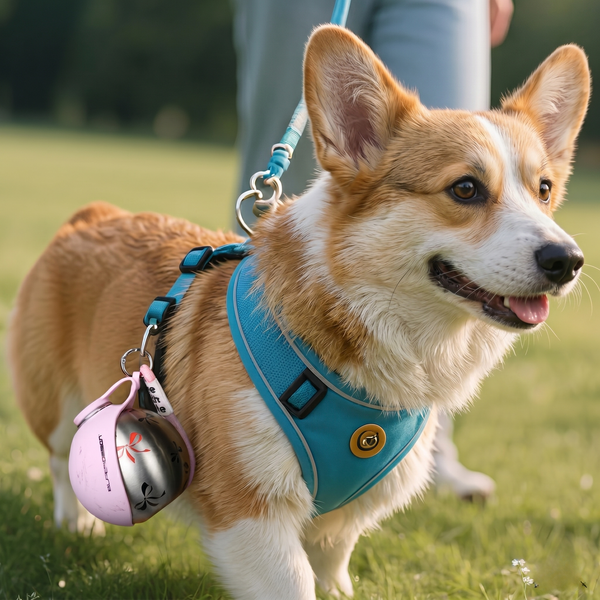
The CozyPaws™ Portable Dog Paw Cleaner is specifically designed for the post-walk transition — 360° soft silicone bristles reach between every toe pad and crevice, the splash-proof lid contains dirty water, and at just 243g it fits in a coat pocket or car door compartment. Fill halfway with lukewarm water, insert each paw, rotate 5–10 times, and your dog's feet are clean before they cross the threshold. For dogs walking daily through UK rain, this single tool eliminates muddy pawprints throughout the home and — critically — removes the bacteria-laden moisture that causes paw infections when left between pads.
For You
- Waterproof jacket with sealed seams — not just "shower-resistant"; proper waterproof rating (10,000mm+)
- Waterproof trousers or overtrousers — jeans absorb water and make the walk miserable
- Waterproof boots with grip — muddy paths become genuinely hazardous in wellies without tread
- Head torch or clip-on light — rain reduces visibility dramatically; essential October–March
- Waterproof treat pouch — soggy treats lose all motivational value
For the Car
- Boot liner or waterproof seat cover
- Portable water bottle for rinsing worst mud before loading
- Spare towels (minimum two — one for initial dry, one for finishing)
- Paw cleaner pre-filled with water — clean paws before they touch car upholstery
Training a Rain-Reluctant Dog to Walk Confidently
More than 50% of UK dogs show some degree of rain reluctance — from mild hesitation at the door to complete refusal to step outside. This is not stubbornness. Dogs that resist rain are typically experiencing genuine sensory discomfort: the sensation of water hitting their coat, cold penetrating thin fur, wet ground under sensitive pads, or the unfamiliar sounds and smells that rain creates. The AKC recommends a gradual desensitisation approach rather than forcing dogs into uncomfortable situations.
Week 1–2: Build Positive Associations
- Open the door in rain — let your dog observe from the dry doorstep. Reward calm observation with high-value treats
- Step into light rain together — 30 seconds only. Treat heavily. Return inside immediately
- Gradually extend exposure — add 1–2 minutes per session. Always end before your dog shows stress
- Use their favourite activity — if they love sniffing, let them sniff. If they love fetch, bring the ball. Pair rain with what they already enjoy
Week 3–4: Full Walk Building
- Start with familiar routes — novelty plus rain is too much stimulation simultaneously
- Walk briskly — standing still in rain feels worse than moving through it
- Use a waterproof coat — many dogs that "hate rain" actually hate the sensation of water hitting their skin; a coat removes that trigger entirely
- Keep sessions short — 10–15 minutes is enough initially. Build duration over weeks, not days
What NOT to Do
- Never drag a resistant dog into rain — this creates lasting negative association
- Never punish hesitation or refusal — fear is not disobedience
- Never flood (force prolonged exposure) — this technique backfires with rain sensitivity
- Never assume your dog will "get used to it" without active positive training
For dogs whose rain reluctance is part of a broader anxiety pattern — including noise sensitivity, generalised nervousness, or distress when routines change — a CozyPaws™ Dog Anxiety Vest provides gentle compression that reduces cortisol levels during stressful exposures, including the sensory overload of heavy rain and wind.
The Post-Walk Routine: Drying, Paw Cleaning, and Health Checks
The post-walk routine is where most health problems from wet weather walks are either prevented or created. A dog that comes inside soaking wet with muddy paws and is left to dry naturally on the sofa is accumulating risk with every walk. A dog that is dried, cleaned, and checked within 5 minutes of returning home faces zero additional health risk from walking in rain compared to walking in dry conditions.
The 5-Minute Post-Walk Protocol
Step 1: Paw Cleaning (60 seconds)
This is the most important step. Mud, bacteria, road chemicals, and standing water debris pack between toe pads during every wet walk — and if left there, create the warm, moist environment where yeast and bacterial infections develop within 24–48 hours. The CozyPaws™ Portable Dog Paw Cleaner makes this step effortless: fill the cup halfway with lukewarm water, insert each paw through the splash-proof lid, rotate 5–10 times while the 360° silicone bristles clean between every toe and crevice, remove and pat dry with the included microfibre towel. All four paws clean in under 60 seconds — no bathroom required, no wet dog wrestling, no muddy water splashing across your hallway.
Step 2: Body Drying (2 minutes)
Use a large microfibre towel — they absorb 5× more water than cotton. Work systematically: head and ears first, then neck and chest, back, belly, legs, and tail. For double-coated breeds, squeeze sections of coat rather than rubbing (rubbing creates tangles in wet fur). Pay special attention to skin folds on breeds like Bulldogs and Shar Peis — trapped moisture in folds causes rapid bacterial growth.
Step 3: Ear Check (30 seconds)
Lift each ear flap and check for moisture inside. Dogs with floppy ears (Spaniels, Retrievers, Beagles) are prone to ear infections when moisture gets trapped inside the ear canal during rain. Gently dry the outer ear with a soft cloth. If you notice redness, odour, or discharge, book a vet appointment — ear infections caught early are simple to treat but become painful and expensive if left.
Step 4: Quick Skin and Paw Pad Inspection (30 seconds)
Run your hands over the coat feeling for anything unusual: cuts from hidden debris, ticks that attach during wet walks (they are active year-round in the UK, not just summer), thorns, or areas of sensitivity. Check paw pads for cuts, cracks, or embedded stones — wet pads are softer and more vulnerable to puncture wounds. For a complete seasonal paw protection programme, see our seasonal paw care guide.
Step 5: Settle and Warm (1 minute)
Direct your dog to a warm, dry resting spot. A towel-lined bed or a CozyPaws™ Calming Donut Bed with raised bolster edges retains body heat and provides comfort after the sensory intensity of a wet walk. Dogs often sleep deeply after rain walks due to the additional mental stimulation that unfamiliar wet-weather scents and sounds provide.
Shop the CozyPaws™ Portable Dog Paw Cleaner →
Health Risks from Wet Weather Walks
Most wet weather walks are perfectly safe — but certain risks increase in wet conditions and deserve attention. Knowledge of these risks allows you to prevent them entirely through simple post-walk habits rather than avoiding walks altogether.
Leptospirosis
Medivet identifies leptospirosis as one of the most serious infections dogs can contract from contaminated water. The bacteria thrive in stagnant puddles, floodwater, and areas where rat urine has been diluted by rain. During heavy rainfall, normally safe paths become high-risk as standing water collects and contaminant concentrations rise.
- Prevention: Keep your dog's leptospirosis vaccination up to date (annual booster required). Prevent drinking from puddles, ponds, and standing water. Clean paws after walks to remove any contaminated water from between pads
- Symptoms: Fever, lethargy, vomiting, diarrhoea, muscle pain, jaundice. Seek emergency veterinary care immediately — leptospirosis can be fatal and is zoonotic (transmissible to humans)
Alabama Rot (CRGV)
The RSPCA notes that confirmed Alabama rot cases in the UK tend to peak between November and May — coinciding exactly with the wettest, muddiest walking months. While extremely rare (approximately 330 confirmed UK cases since 2012), the condition is serious and linked to muddy woodland walks.
- Prevention: Wash mud from legs, belly, and paws after every walk through woodland or muddy areas. Cleaning paws immediately post-walk removes any potential contaminants before they can penetrate the skin
- Symptoms: Unexplained skin lesions (not caused by injury) on legs, paws, or face — followed by signs of kidney failure 2–7 days later. Contact your vet immediately if you notice unexplained sores after muddy walks
Paw Pad Yeast and Bacterial Infections
Wet paws that are not dried after walks create a warm, moist environment between the toe pads — perfect conditions for yeast (Malassezia) and bacteria to multiply. Dogs that walk in rain daily without paw cleaning are significantly more likely to develop interdigital infections.
- Prevention: Clean and dry paws after every wet walk. The CozyPaws™ Paw Cleaner removes debris and excess moisture in one step — removing the conditions infections need to develop. Trim excess fur between paw pads (it traps moisture) and check between toes regularly
- Symptoms: Red or brown staining between toes, excessive paw licking, musty odour from feet, swelling between pads, visible irritation or discharge
Hypothermia Risk
Cold rain combined with wind chill can lower a dog's core temperature dangerously — particularly in small breeds, short-coated breeds, elderly dogs, and puppies. The RSPCA advises monitoring for signs of cold stress during winter rain walks.
- Prevention: Waterproof coats for vulnerable breeds; shorter walks in cold rain; brisk pace to maintain body heat; head home immediately if shivering starts
- Symptoms: Shivering, lethargy, reluctance to move, cold ears and paws, hunched posture. Warm gradually with towels and blankets — not hot water or hairdryers set to high
Skin Irritation from Road Chemicals
Rain washes road salt, de-icer, antifreeze, fuel residue, and herbicides from surfaces into puddles and path edges — where your dog's paws and belly make direct contact. Antifreeze (ethylene glycol) is particularly dangerous: it tastes sweet to dogs and is lethal in small quantities.
- Prevention: Avoid walking along road gutters and drains during/after heavy rain. Clean paws and belly after urban walks. Never let dogs drink from road puddles or gutter runoff
- Symptoms of antifreeze poisoning: Wobbling, vomiting, excessive thirst, seizures. This is a medical emergency — contact your vet immediately
Pro Tip: A 30-second paw clean after every wet walk prevents every single paw-related infection on this list. The investment of one minute per walk eliminates hours of veterinary treatment and weeks of recovery. It is the highest-impact, lowest-effort health intervention you can make for a dog that walks in UK weather year-round.
Indoor Enrichment for Severe Weather Days
When the weather genuinely prevents walking — Met Office amber/red warnings, thunderstorms, flooding, or extreme cold rain — your dog still needs mental stimulation and physical activity. A missed walk without alternatives leads to frustration, destructive behaviour, and restlessness. Guide Dogs recommends providing enrichment activities that engage a dog's brain and natural behaviours as a direct substitute for walk-based stimulation.
High-Energy Indoor Activities (Replace Physical Walk)
- Staircase fetch: Throw a ball up the stairs — the climbing provides genuine cardiovascular exercise in minimal space
- Tug-of-war: 10 minutes of structured tug engages core muscles and provides an energy outlet equivalent to a 20-minute walk
- Indoor agility: Use chairs, broomsticks, and cushions to create a simple obstacle course — weaving, jumping, and crawling burn energy and build coordination
- Flirt pole: A pole with a toy attached to a string — chase and catch provides intense burst exercise in a small space
Mental Stimulation (Replace Sniffing and Exploration)
- Scatter feeding: Spread kibble across the floor or hide it around the room — nose work engages the same brain areas as outdoor sniffing
- Snuffle mat: A CozyPaws™ Carrot Snuffle Mat mimics foraging behaviour and can occupy a dog for 15–20 minutes per feeding session
- Puzzle feeders: A CozyPaws™ Dog Puzzle Feeder requires problem-solving to access food — 15 minutes of puzzle work is mentally equivalent to a 30-minute walk
- Frozen lick mat: Spread peanut butter or wet food on a CozyPaws™ Lick Mat and freeze — licking releases calming endorphins and provides 20+ minutes of focused activity
Training Sessions (Replace Social and Novel Stimulation)
- New trick training: 10-minute sessions of reward-based training are as mentally tiring as physical exercise. Teach spin, bow, paw, rollover, or "find it"
- Scent work: Hide treats in boxes around the room and let your dog search — engages their 300 million scent receptors and provides the novelty they would normally get from outdoor exploration
- Impulse control games: "Wait," "leave it," and "stay" exercises build mental discipline while providing focused interaction
For dogs with storm anxiety — those that pace, whine, hide, or tremble during thunder and heavy rain — see our complete anxiety guide for management strategies including compression therapy, safe-space creation, and desensitisation techniques.
Rainy Walk Routes: What to Look For and What to Avoid
Where you walk matters more in wet weather than in dry conditions. The same path that is pleasant in summer can become hazardous, flooded, or deeply muddy after sustained rain — and the wrong surface creates unnecessary paw exposure to bacteria and chemicals.
Best Surfaces for Wet Weather
- Tarmac/paved paths: Drain quickly, dry fast, minimal mud. Best for routine walks when speed and cleanliness are priorities
- Gravel paths: Excellent drainage; minimal standing water; easy on joints. Ideal for parks with maintained gravel trails
- Short grass (maintained): Drains reasonably well; less muddy than long grass or woodland floor. Sports fields and bowling greens (where dogs are permitted) are good options
- Elevated paths: Hilltop routes and ridgeline paths shed water naturally. Less pooling, less mud, better drainage than valley floors
Surfaces to Avoid in Wet Weather
- Woodland floor: Leaf litter retains moisture for days; decaying matter harbours bacteria; Alabama rot cases concentrate in muddy woodland. If you do walk woodland, clean paws immediately afterwards
- River/canal towpaths: Flood risk after heavy rain; deep mud forms quickly; contaminated water pools in depressions. Check conditions before committing to a riverside route
- Clay soil paths: Become dangerously slippery and create thick, heavy mud that packs between paw pads. Common in southern England
- Road gutters and drain areas: Concentrate all the chemicals, fuel, and debris washed from road surfaces into a narrow strip your dog walks through
- Fields after heavy rain: Waterlogged ground means your dog's belly and legs are constantly submerged. Fine for water-loving breeds but creates enormous cleaning requirements and prolonged moisture exposure
Planning Your Route
Build a mental (or physical) list of three wet-weather routes at different distances:
- The 5-minute circuit — for severe weather toilet breaks. Close to home, paved, well-lit
- The 15-minute loop — for moderate rain. Mostly paved/gravel, some shelter, familiar and safe
- The 30-minute route — for light rain when your dog needs full exercise. Mixed surfaces, scenic enough to remain interesting, but well-drained
Pro Tip: Walk your regular routes after rain (before walking them in rain) to see how they drain. You will quickly learn which sections flood, which turn to deep mud, and which remain passable — information that makes real-time route decisions effortless on the next rainy day.
Frequently Asked Questions
Can my dog get sick from walking in the rain?
Rain itself does not cause illness. However, contaminated puddles can carry leptospirosis bacteria, prolonged wet paws without cleaning can develop yeast infections, and cold rain on small or elderly dogs can cause hypothermia. A proper post-walk routine — drying, paw cleaning, and a health check — eliminates these risks entirely. The walk is safe; the lack of aftercare is what creates problems.
Should I skip my dog's walk if it's raining heavily?
Not necessarily. A healthy adult dog in a waterproof coat can handle heavy rain for a shortened walk (15–20 minutes). Only skip walks entirely during Met Office amber/red warnings, thunderstorms, flooding, or freezing rain. On days you skip, provide indoor enrichment to compensate — puzzle feeders, nose work, and training sessions keep your dog mentally satisfied without outdoor exposure.
My dog refuses to walk in rain. What should I do?
This is common and not stubbornness — it is sensory discomfort. Start with extremely brief positive exposures (30 seconds with high-value treats), gradually build duration over 2–4 weeks, and use a waterproof coat to remove the sensation of water hitting skin. Never force a reluctant dog into heavy rain — this creates phobia rather than confidence. Most dogs can be trained to tolerate moderate rain within a month of consistent positive exposure.
How do I clean my dog's paws after a rainy walk?
The fastest method is a paw washing cup with silicone bristles — fill with lukewarm water, insert each paw, rotate to clean between all pads and toes, then pat dry. The CozyPaws™ Portable Paw Cleaner completes all four paws in under 60 seconds. This removes mud, bacteria, road chemicals, and moisture that would otherwise remain packed between toe pads and cause irritation or infection within 24–48 hours.
Do I need a raincoat for my dog?
It depends on breed and coat type. Dogs with thick double coats (Labradors, Huskies, German Shepherds) have natural water resistance and rarely need a coat. Single-coated breeds, small dogs, elderly dogs, and breeds with fine or long fur benefit significantly from a waterproof coat — it keeps their core dry, reduces body heat loss, and cuts drying time post-walk by up to 70%.
Can rain cause ear infections in dogs?
Rain does not directly cause ear infections, but moisture trapped inside floppy ears creates conditions where bacteria and yeast multiply. Breeds with pendulous ears (Spaniels, Bassets, Beagles, Retrievers) are particularly vulnerable. After every rainy walk, lift ear flaps and gently dry the outer ear. If you notice redness, odour, head shaking, or discharge, see your vet — ear infections are simple to treat early but painful and expensive if left.
Is it safe to let my dog drink from puddles?
No. Puddles — especially after heavy rain — can contain leptospirosis bacteria, rat urine, antifreeze runoff, road chemicals, herbicides, and decaying organic matter. Leptospirosis alone is potentially fatal and transmissible to humans. Always carry fresh water and discourage puddle drinking by redirecting your dog's attention and offering their own water immediately.
How often should I clean my dog's paws in winter?
After every single walk that involves wet or muddy surfaces — which in a UK winter means after virtually every walk. Road salt, grit, and de-icing chemicals sit on pavements from November to March and are picked up between toe pads on every outing. These chemicals cause irritation, cracking, and chemical burns if left on paws overnight. A 30-second paw clean after every walk is the single most protective habit for winter paw health.
What are the signs of a paw infection?
Excessive paw licking (especially between toes), red or brown staining on fur between pads, musty or yeasty odour from feet, visible swelling or redness between toes, limping or tenderness when pads are touched, and discharge or crusty buildup. If you notice any of these signs, see your vet — most paw infections respond quickly to treatment but worsen rapidly if ignored.
Can I use a regular towel instead of a paw cleaner?
A towel removes surface mud but cannot clean between toe pads where debris, bacteria, and moisture concentrate. The spaces between a dog's toes are where 90% of paw infections develop — and they are impossible to clean effectively with a towel alone. A paw cleaner with silicone bristles physically agitates debris from every crevice and flushes contaminants away with water, providing a level of cleaning that wiping simply cannot achieve.
Ready to Walk Confidently in Any Weather?
Say goodbye to:
- ❌ Muddy pawprints tracked through every room after every walk
- ❌ Paw infections from bacteria and moisture left between toe pads
- ❌ 10-minute bathroom wrestling matches trying to rinse paws in the shower
- ❌ Avoiding walks because the cleanup is worse than the weather
- ❌ Expensive vet bills for preventable interdigital infections
Say hello to:
- ✅ Clean paws in 30 seconds — before your dog leaves the doormat
- ✅ 360° silicone bristles that reach between every toe and crevice
- ✅ Splash-proof design — dirty water stays in the cup, not on your floor
- ✅ Portable at 243g — fits in a coat pocket, car door, or bag
- ✅ BPA-free, dishwasher safe, and built to last 2–3 years of daily use
The CozyPaws™ Portable Dog Paw Cleaner
Features:
- 360° soft silicone bristles — gentle yet thorough cleaning between every pad
- Splash-proof lid — no mess, no splashing, no bathroom required
- 3 sizes available — Small (paws up to 4cm), Medium (up to 7cm), Large (up to 9cm)
- 300ml water capacity — enough for all four paws per fill
- Includes microfibre drying towel — complete clean-and-dry in one kit
- BPA-free food-grade silicone — safe for daily contact with sensitive paw skin
- Dishwasher safe (top rack) — effortless hygiene maintenance
- 243g portable design — take it on walks, keep it in the car, store by the door
- 30-day money-back guarantee + free UK delivery
Shop the CozyPaws™ Portable Dog Paw Cleaner — Free UK Delivery
Questions about walking your dog in wet weather or managing muddy paws? Contact our pet care team at support@thecozypaws.co.uk or leave a comment below.