Moving house is consistently ranked among the top five most stressful life events for humans — and for dogs, who depend entirely on routine and familiar surroundings, the upheaval is even more destabilising. The PDSA confirms that routine disruption and unfamiliar environments are leading causes of anxiety in UK dogs, with behavioural changes often appearing weeks before the actual move begins — the moment packing boxes enter the house. Yet most owners focus entirely on the logistics of the move itself, leaving their dog's emotional needs as an afterthought until problems have already developed.
The reality is that your dog has been reading your stress for days. They've noticed the boxes, the dismantled furniture, the disrupted walking schedule, and the tension in your voice on the phone to removal companies. Every change to the visual and scent landscape of their home triggers a stress response — and without intervention, those responses stack on top of each other until your dog is in a state of chronic anxiety that can take weeks to resolve in the new home. The good news: with the right preparation, the right tools, and a clear plan for every stage of the process, moving house with your dog can be manageable, calm, and even a bonding experience that strengthens your relationship.
This guide covers every stage of moving house with your dog — from the first packing box to the last admin update — with a focus on calming enrichment techniques that keep your dog's stress below threshold at every step. A CozyPaws™ Dog Licking Bowl loaded with frozen broth or yogurt is the single most effective calming tool you can use during a move, because the repetitive act of licking releases endorphins that physiologically lower your dog's heart rate and cortisol levels — turning a stressful twenty minutes into a calm, focused enrichment session while you handle the chaos around them.
Table of Contents
- Why Moving House Is One of the Most Stressful Events for Dogs
- Signs Your Dog Is Stressed by the Move
- Preparing Your Dog Weeks Before Moving Day
- The Packing Phase: Managing Anxiety as Your Home Changes
- Moving Day: A Step-by-Step Survival Plan
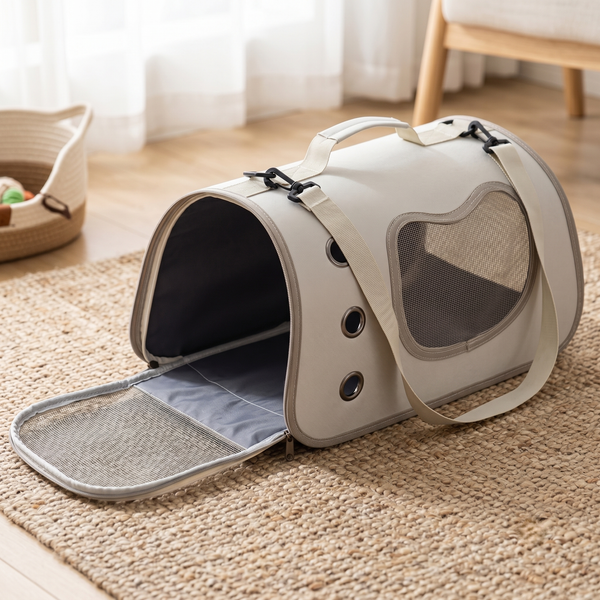
- The Journey: Keeping Your Dog Calm During Transport
- The First 24 Hours in Your New Home
- The First Week: Settling In, New Routines & Garden Safety
- New Neighbourhood: Walks, Territory & Meeting Other Dogs
- The Admin Checklist: Vet, Microchip, Insurance & ID Tags
Why Moving House Is One of the Most Stressful Events for Dogs
To understand why moving house hits dogs so hard, you need to understand how dogs experience their environment. Humans navigate primarily through vision — we walk into a new house and assess it by looking around. Dogs navigate primarily through scent. Your current home is a rich, layered scent landscape that your dog has built over months or years: their own scent on the sofa, your scent on the carpet, the cooking smells embedded in the kitchen walls, the familiar garden soil under their paws. When you move house, that entire scent world is destroyed overnight and replaced with an alien one — previous occupants, different cleaning products, unfamiliar garden, unknown neighbourhood smells drifting through the windows.
Routine Disruption
Dogs are creatures of deep routine. They know when breakfast happens, when the walk starts, which door leads to the garden, where their bed sits, and what sounds are normal at 2am. A house move disrupts every single one of these anchors simultaneously. Feeding times shift because you're busy. Walks get shorter or skipped because you're packing. The familiar sofa disappears into a removal van. The garden gate is suddenly in a different place. For a dog, this level of simultaneous change is the equivalent of waking up in a foreign country where nothing works the way it did yesterday.
Sensory Overload
Moving day itself is a sensory assault: strangers carrying heavy objects through the house, doors slamming, vehicles reversing, unfamiliar voices, furniture being dragged across floors, the sound of packing tape being pulled. For sound-sensitive dogs, this is overwhelming. For dogs who are already anxious, it can push them past their coping threshold within minutes. And unlike a thunderstorm or firework display, the sensory overload doesn't end after an hour — it continues for an entire day, sometimes two, with no predictable endpoint.
Loss of Safe Spaces
Every dog has a place in the house where they feel safest — under the stairs, behind the sofa, in their crate, on their bed in the corner of the bedroom. During a move, these safe spaces are systematically dismantled. The furniture moves, the bed gets packed, the crate goes into the van. Your dog watches their security infrastructure disappear piece by piece, with nothing to replace it until you reach the new home and rebuild from scratch.
Signs Your Dog Is Stressed by the Move
Dogs rarely show stress in obvious ways until they've passed their coping threshold. The Dogs Trust explains that dogs communicate discomfort through a ladder of escalating signals — starting with subtle body language that most owners miss entirely, and progressing to overt behaviours that are much harder to resolve. The PDSA confirms that recognising early signs and intervening immediately is the single most important factor in preventing chronic stress during major life changes.
| Severity | Signs to Watch For | What It Means |
|---|---|---|
| Mild (early warning) | Lip licking (unrelated to food), yawning when not tired, ears pinned back, turning head away, whale eye (whites of eyes visible) | Your dog is uncomfortable but still coping — intervene now with calming enrichment before stress escalates |
| Moderate (active stress) | Panting when not hot, pacing, whining, excessive following (won't leave your side), tucked tail, refusing food, drinking excessively, trembling | Your dog's stress has crossed into active discomfort — remove them from the stressor and provide a safe space immediately |
| Severe (threshold exceeded) | Toileting indoors (previously house-trained), destructive chewing, barking at everything, aggression, cowering, escape attempts, complete appetite loss lasting 24+ hours | Your dog is in distress — consult your vet. Behavioural changes at this level can become entrenched if not addressed quickly |
The critical window is between mild and moderate. If you spot lip licking, yawning, or pinned ears during the packing phase, that's your signal to pause, give your dog a calming enrichment session, and reassess whether the pace of change is too fast for them. Dogs Trust advises that it takes 48 to 72 hours for stress hormones to return to baseline — meaning a single overwhelming day can leave your dog in an elevated stress state for three days afterwards, even if the trigger has been removed.
Pro Tip: Film your dog on your phone for five minutes during a packing session. Watching the footage back, you'll spot subtle stress signals — lip licks, head turns, micro-yawns — that you missed in real time because you were focused on boxing up the kitchen.
Preparing Your Dog Weeks Before Moving Day
The most important preparation you can make has nothing to do with removal vans or forwarding post — it's establishing a calming ritual that your dog associates with safety and relaxation, so that when the chaos of moving day arrives, you have a proven tool to bring their stress down instantly. The Woodgreen Pets Charity recommends catching calm moments and reinforcing them with rewards — building a deliberate association between a specific activity and a relaxed emotional state.
Weeks 4–3: Introduce the Licking Bowl Routine
Start giving your dog a CozyPaws™ Dog Licking Bowl loaded with frozen yogurt or bone broth once a day — ideally at the same time each day. The textured ridges slow the licking process to 15–20 minutes, during which time the repetitive licking action triggers endorphin release and measurably lowers heart rate. After two weeks of daily use, your dog will associate the licking bowl with a calm, pleasurable experience. By the time packing begins, the licking bowl isn't a novel distraction — it's a deeply familiar comfort ritual that your dog seeks out. This is the foundation of your entire moving-day calming strategy.
Weeks 3–2: Gradual Routine Shifts
If your new home will require different walk times, feeding times, or sleeping arrangements, start shifting these gradually — no more than 15 minutes per day. A dog who currently walks at 7am and will need to walk at 8am after the move should shift to 7:15 this week, 7:30 next week, and so on. Sudden schedule changes on top of environmental upheaval create compound stress that's far harder to manage than either factor alone.
Week 2: Desensitise to Packing Materials
Leave empty boxes in the hallway for a few days before you start packing. Let your dog sniff them, walk around them, and get bored of them. When you do start filling boxes, your dog has already accepted them as part of the furniture. If you use packing tape that makes a loud tearing sound, pull a few strips in advance while giving your dog a treat — so the sound becomes associated with a positive outcome rather than an unpredictable threat.
Week 1: Prepare Frozen Licking Bowl Batches
Freeze five to seven licking bowls loaded with your dog's favourite recipe — bone broth, natural yogurt with mashed banana, or peanut butter (xylitol-free). Having frozen bowls ready to go means you can deploy instant calming enrichment at any point during the move without needing to prepare anything. If your vet has prescribed calming supplements or medication for the move and your dog refuses to take them, mixing them into the licking bowl filling before freezing is the most reliable delivery method — and for dogs who consistently refuse medication, our complete guide to getting your dog to take medicine covers every technique from pill pockets to liquid alternatives.
The Packing Phase: Managing Anxiety as Your Home Changes
The packing phase — typically three to seven days before the move — is where most dogs' stress begins. The Battersea Dogs & Cats Home describes this as trigger stacking: multiple stressors accumulating without sufficient recovery time between them. A box appears (trigger one). A bookshelf gets emptied (trigger two). Pictures come off the walls (trigger three). The sofa gets wrapped in plastic (trigger four). Individually, each change is minor. Stacked together over several hours, they push your dog's stress level higher and higher until a seemingly small event — a doorbell ring, a dropped box — triggers a disproportionate reaction like barking, destructive chewing, or toileting indoors.
The Packing Session Strategy
Never pack for more than two hours without giving your dog a structured calming break. At the start of each packing session, give your dog a frozen CozyPaws™ Dog Licking Bowl in their current safe space — their bed, their crate, the room you're packing last. The 15–20 minutes of focused licking resets their stress level, giving you a clear window to pack without your dog absorbing the disruption. When the licking bowl is finished, take a ten-minute break, play with your dog briefly, and then resume. This pack-pause-play rhythm prevents trigger stacking from reaching threshold. For a complete guide to frozen recipes, licking techniques, and daily enrichment routines with the licking bowl, see our complete dog licking bowl guide.
Enrichment Rotation During Packing Week
Variety prevents habituation. The Dogs Trust recommends rotating between different enrichment activities to maintain mental engagement and prevent boredom with any single tool. Use the licking bowl for morning sessions, a CozyPaws™ Lick Mat smeared with peanut butter for afternoon sessions, and scatter feeding in the garden for evening enrichment. The licking bowl should remain the primary calming tool during active packing sessions because its deep ridges hold frozen food longest, giving you the maximum uninterrupted packing time — but rotating tools throughout the rest of the day keeps your dog's brain engaged and their stress managed across the full 24-hour cycle.
Pro Tip: Pack your dog's room last and unpack it first. Their bed, toys, bowls, and licking bowl should be the final items into the van and the first items out — minimising the window where your dog has zero familiar objects around them.
Moving Day: A Step-by-Step Survival Plan
Moving day is the highest-stress period of the entire relocation. The Blue Cross recommends designating one family member whose sole responsibility is the dog — not helping with boxes, not directing removals, just managing your dog's experience throughout the day. This single decision prevents the most common moving-day mistakes: leaving the dog unattended in a room where the door gets opened, forgetting to provide water during the chaos, or accidentally letting the dog out of an unsecured garden gate.
| Time | Action | Why It Matters |
|---|---|---|
| Early morning | Walk your dog for 45–60 minutes before the removal team arrives | Physical exercise burns off nervous energy and encourages a calm rest period once strangers enter the house |
| Before removals start | Set up the safe room: bed, water, frozen licking bowl, familiar toys, closed door, sign reading "DOG INSIDE — DO NOT OPEN" | Your dog's safe room is their sanctuary for the entire day — removal staff must know it's off limits |
| Mid-morning | Check on your dog every 30–45 minutes — refresh water, provide a second frozen licking bowl if needed, offer a brief toilet break in the garden on lead | Regular check-ins prevent isolation anxiety and ensure your dog hasn't run out of water or enrichment |
| Lunchtime | Feed a small meal (half the normal portion) — avoid feeding within 2 hours of car travel to prevent motion sickness | An empty stomach reduces nausea risk during the journey, but a completely unfed dog will be irritable and stressed |
| Before departure | Take your dog for a 15-minute lead walk around the old neighbourhood one final time, then load them into the car last — after all furniture is in the van | The final walk provides a toilet break and physical reset before the journey, loading last minimises car wait time |
| Arrival at new home | Set up your dog's safe room FIRST, before any furniture comes in — bed, water, frozen licking bowl, familiar-scented blanket | Your dog needs a secure base before the unloading chaos begins — the safe room must be ready before the van doors open |
The Safe Room Setup
Choose the quietest room in both the old and new house — ideally away from the front door and the main traffic route for removal staff. At the old house, this is typically a bedroom; at the new house, it might be a back bedroom or utility room. The safe room needs: your dog's bed, a water bowl, two pre-frozen licking bowls, familiar toys, and a blanket that carries your scent. If your dog is particularly anxious, a CozyPaws™ Dog Anxiety Vest provides gentle compression that mimics the calming sensation of being held — particularly effective during the noise and activity of moving day. Close the door, attach the warning sign, and let your dog rest. Resist the urge to keep checking every ten minutes — let them settle.
Shop the CozyPaws™ Dog Licking Bowl →
The Journey: Keeping Your Dog Calm During Transport
The car journey between homes is a concentrated stress event: confined space, engine vibration, unfamiliar route, and a dog who's already been through the most disruptive day of their life. The RSPCA advises that dogs must be properly restrained during car travel — either in a secured crate or with a car harness linked to the seatbelt system — and should have access to water throughout the journey.
Frozen Licking Bowl for the Journey
Place a frozen CozyPaws™ Dog Licking Bowl in your dog's travel crate or on the back seat (on a towel to catch drips as it thaws). A bowl frozen solid the night before will last 30–45 minutes in a car at normal temperature — long enough for most UK house moves where the distance is under an hour. The focused licking keeps your dog's brain occupied with a positive, calming task rather than fixating on the unfamiliar sensations of the journey. The cold surface also helps regulate body temperature if your dog is stress-panting, and the act of licking prevents the rapid, shallow breathing pattern that amplifies anxiety during car travel.
Journey Preparation Checklist
- ✅ No food within 2 hours of departure (prevents motion sickness)
- ✅ 45–60-minute walk before loading into the car
- ✅ Frozen licking bowl placed in crate or on towel
- ✅ Water bottle and collapsible bowl for rest stops
- ✅ Familiar blanket with home scent in the crate
- ✅ Poo bags, kitchen roll, and spare towels for accidents
- ✅ Dog's lead and harness accessible (not packed in the van)
- ✅ Windows slightly open for ventilation — never leave dog in closed car
- ✅ Rest stop every 90 minutes for journeys over 2 hours
For long-distance moves (over two hours), bring a second frozen licking bowl in a cool bag. At each rest stop, let your dog out for a five-minute lead walk and a toilet break, refresh their water, and replace the depleted licking bowl with a fresh frozen one. This rhythm — walk, water, licking bowl, drive — keeps the journey structured and predictable for your dog, which is exactly what they need on a day when nothing else feels predictable.
The First 24 Hours in Your New Home
The first night in a new home is the moment that determines whether your dog's stress escalates or begins to resolve. Every sight, sound, and smell is unfamiliar. The central heating makes different noises. The pipes sound different. The neighbours' TV bleeds through at a different frequency. The garden has smells your dog has never encountered. The RSPCA emphasises that dogs must have constant access to a safe hiding place where they can retreat when afraid — in a new home, this means establishing their safe space before anything else.
The Scent Anchor Strategy
Here's the technique that separates a smooth transition from weeks of anxiety: place your dog's used, unwashed CozyPaws™ Dog Licking Bowl on the floor of the new home the moment you arrive. Every other object in the removal van has been cleaned, wrapped, or boxed — it smells like cardboard and packing tape, not home. But the licking bowl that your dog has been using daily for the past four weeks carries layers of their own scent — saliva, nose oils, paw oils — embedded into the textured ridges. When your dog walks into an alien space and encounters an object saturated with their own familiar scent, the stress response drops immediately. Load the bowl with a fresh frozen filling and let your dog settle into a licking session while you unpack their bed and set up the safe room. This fifteen-minute window of calm gives them a positive first experience of the new space that anchors every subsequent interaction.
Room-by-Room Introduction
Do not let your dog explore the entire house at once. Start with one room — ideally the room where they'll sleep — and let them spend the first few hours there with their bed, water, toys, and licking bowl. Once they're calm and settled in that room, open a second room and let them investigate at their own pace. Never force exploration — if your dog retreats to the first room, let them. Each room they explore voluntarily becomes part of their expanding safe territory. Most dogs will have explored the ground floor by the end of day one and the upstairs by day two or three. Pair a CozyPaws™ Calming Donut Bed with the licking bowl in their chosen sleeping spot — the raised bolster rim creates a nest-like enclosure that helps anxious dogs feel protected in unfamiliar surroundings. For more on how calming beds reduce anxiety through pressure and warmth, see our complete guide to calming dog beds for anxiety.
First Night Tips
- ✅ Keep your dog's bed in your bedroom for the first 3–5 nights — your presence and scent provide reassurance that the new house is safe
- ✅ Give a final licking bowl session 30 minutes before bedtime — the endorphin release promotes drowsiness
- ✅ Leave a radio or white noise machine on low overnight — it masks unfamiliar house sounds that might wake your dog
- ✅ Expect one or two toilet accidents — the stress of relocation and unfamiliar garden can temporarily disrupt house training
- ✅ Do not punish accidents — clean with enzymatic cleaner and reinforce outdoor toileting with treats, exactly as you would with a puppy
The First Week: Settling In, New Routines & Garden Safety
The first week is when your dog's temporary coping mechanisms either consolidate into genuine comfort or collapse into chronic stress. The Woodgreen Pets Charity recommends establishing a structured daily enrichment routine that provides predictability during a period when everything else is unfamiliar. The licking bowl is the centrepiece of this routine — same time, same place, same calming effect, every single day.
| Time of Day | Activity | Purpose |
|---|---|---|
| Morning (before walk) | Frozen licking bowl with natural yogurt and a spoonful of mashed banana — 15 minutes | Calm start to the day, endorphin release before the stimulation of a walk in an unfamiliar neighbourhood |
| Mid-morning | Scatter feeding in the new garden — sprinkle kibble across the lawn | Builds positive scent associations with the garden through foraging, claiming the space as territory |
| Lunchtime | Lick mat with peanut butter (xylitol-free) while you unpack a room | Keeps your dog occupied and calm during unpacking disruption |
| Afternoon | Short training session (5–10 minutes) — known commands only (sit, paw, down) | Reinforces routine and confidence through familiar, achievable tasks with guaranteed rewards |
| Evening | Frozen CozyPaws™ Dog Licking Bowl with bone broth while you eat dinner | Parallel routine — dog eats when you eat, reinforcing pack behaviour and normality |
| Before bed | Final licking bowl session with calming chamomile-infused broth — 15 minutes | Wind-down ritual that signals sleep time, promoting a calm night in the new bedroom |
Garden Safety: The First Priority
Before your dog sets paw in the new garden off lead, conduct a thorough safety inspection. Walk the full perimeter of the fence line — check for gaps, loose panels, rotting wood, or holes dug by previous occupants' pets. Dogs in a new environment are escape risks: the garden is unfamiliar, the scents are overwhelming, and the instinct to explore and map territory can overpower recall training. Keep your dog on a long lead in the garden for the first 48 hours while you secure any weak points.
Check for toxic plants: common UK garden plants including foxglove, lily of the valley, yew, laburnum, rhododendron, and daffodil bulbs are all poisonous to dogs. If you can't identify every plant in the new garden, photograph them and use a plant identification app or ask your vet. Remove or fence off anything toxic before allowing unsupervised garden access.
Leaving Your Dog Alone in the New Home
Do not leave your dog alone in the new house for the first three to five days if at all possible. When you do start leaving them, follow the same gradual protocol you'd use for a new puppy: leave for five minutes, return calmly, leave for ten minutes, return calmly, and build up slowly. The new house hasn't yet been proven safe in your dog's mind — being left alone in an unproven space can trigger separation anxiety that's much harder to resolve than preventing it in the first place. For a complete guide to preventing and treating separation anxiety — including the exact graduated absence protocol — see our complete guide to separation anxiety in dogs.
Pro Tip: Rub a worn t-shirt against your dog's bed and leave it in the room where they'll stay when alone. Your concentrated scent on the fabric acts as a reassurance signal that you haven't abandoned the space — particularly effective in a new home where your scent hasn't yet permeated the walls and furniture.
New Neighbourhood: Walks, Territory & Meeting Other Dogs
Your dog's world extends beyond the front door. A new neighbourhood means new walking routes, new dogs, new people, new traffic patterns, new surface textures underfoot, and entirely new scent landscapes to map. For the first two weeks, every walk is an exploration expedition — your dog is building a mental map of their new territory from scratch.
First Walks: Keep Them Short and Predictable
Start with one short walking route — ten to fifteen minutes, out and back along the same streets. Walk this same route at the same time for the first three to five days. Repetition builds familiarity: your dog will begin to recognise specific lampposts, gate posts, and hedge lines, and the scent deposits left by neighbourhood dogs will become part of their mental map. Once your dog walks the route calmly — relaxed body posture, normal sniffing behaviour, no pulling or freezing — you can extend the distance or introduce a second route.
Meeting Neighbourhood Dogs
Your dog will encounter other dogs on their new walking routes. Approach these encounters slowly: keep your dog on a loose lead (not a tight, short lead, which transmits tension), allow a brief sniff if both dogs are relaxed, and walk on. Avoid dog parks for the first two weeks — the combination of a new environment plus multiple unfamiliar dogs plus off-lead interaction is too much simultaneous novelty for a dog who is still settling into a new home. Let your dog build confidence through brief, controlled encounters with individual dogs before introducing the unpredictability of an off-lead group.
Scent Marking and Territory
Expect a significant increase in scent marking during the first two weeks. Your dog is leaving their scent on lampposts, kerbs, and garden boundaries to establish their presence in the new territory. Males may mark more frequently than usual, and some females will also increase marking behaviour. This is normal and healthy — it's your dog's way of writing their name on the new neighbourhood. Allow extra time on walks for sniffing and marking. Rushing through a walk in a new area denies your dog the sensory information they need to feel safe in their new territory.
The Admin Checklist: Vet, Microchip, Insurance & ID Tags
Post-move admin is easy to forget in the chaos of unpacking — but several items are time-sensitive and legally required. The Kennel Club warns that failing to update your dog's microchip details after moving house means your dog is no longer legally considered microchipped — and if they escape from the unfamiliar new garden, the microchip will lead back to your old address.
Within 48 Hours of Moving
- ✅ Update microchip details — contact your microchip database (Petlog, Identibase, or your specific provider) and update your address, phone number, and emergency contact. This is a legal requirement under The Microchipping of Dogs (England) Regulations 2015
- ✅ Update ID tag — under the Control of Dogs Order 1992, your dog's collar tag must display your name, address, and postcode. Order a new tag immediately and attach it before the first walk from the new address
- ✅ Register with a new vet — if you've moved outside your previous practice's catchment area, register with a local vet and request your dog's medical records be transferred. Ask whether an introductory check-up is offered
Within the First Week
- ✅ Update pet insurance — notify your insurer of the address change and confirm that your policy covers the new postcode area. Some insurers adjust premiums based on location
- ✅ Update Kennel Club registration — if your dog is Kennel Club registered, update your address through their online portal
- ✅ Research local dog walkers and daycare — if you used a dog walker at your previous address, find and vet a replacement before you need one. Ask your new vet for recommendations
- ✅ Locate the nearest emergency vet — know the address and route to the nearest 24-hour emergency veterinary practice before you need it. Save the number in your phone
- ✅ Check local dog control orders — some UK council areas have specific rules about dogs on leads in public spaces, dogs in parks, and fouling fines. Check your new council's website for local bylaws
Frequently Asked Questions
How long does it take a dog to settle into a new home?
Most dogs begin to show signs of comfort within one to two weeks, but full adjustment — where the dog is as relaxed as they were in the previous home — typically takes four to six weeks. Dogs with pre-existing anxiety, older dogs, and dogs who have been rehomed multiple times may take longer. Maintaining a consistent daily routine with structured enrichment sessions, particularly a calming licking bowl ritual at the same time each day, accelerates the settling process by providing a predictable anchor in an otherwise unfamiliar environment.
Should I keep my dog on a lead in the new garden?
Yes, for the first 48 to 72 hours. The garden fence and boundaries are unproven — gaps, weak panels, or holes may exist that you haven't discovered yet. A dog in a new environment is an escape risk because the territory hasn't been mapped and recall training is less reliable when the dog is in a heightened state of sensory arousal. Walk the perimeter on lead first, secure any weak points, then allow supervised off-lead access before progressing to unsupervised garden time.
My dog won't eat after moving — is this normal?
Appetite loss lasting 24 to 48 hours after a move is common and not usually cause for alarm. Stress hormones suppress appetite, and the unfamiliar environment can make even favourite foods seem unappealing. Offer small, tempting meals rather than full portions — warm bone broth in a licking bowl is particularly effective because the scent is stronger when warm and the licking action is self-rewarding even when appetite is low. If appetite loss continues beyond 48 hours, consult your vet to rule out illness.
Can moving house cause separation anxiety in dogs?
Yes. Moving house is one of the most common triggers for separation anxiety in previously confident dogs. The new environment hasn't been proven safe, so being left alone in an unproven space triggers a fear response. Prevent this by not leaving your dog alone for the first three to five days, then building up absence time gradually — five minutes, ten minutes, twenty minutes — using positive reinforcement. A frozen licking bowl given at the moment of departure provides a calming activity that bridges the anxiety gap of the first few minutes alone.
Should I change my dog's food when we move?
No. This is the worst possible time to change food. Your dog's digestive system is already under stress, and a new diet on top of a new environment increases the risk of vomiting and diarrhoea. Keep everything about your dog's diet identical — same brand, same flavour, same portion size, same feeding times. If you've been planning a diet change, wait until your dog has been fully settled in the new home for at least four weeks before introducing new food gradually over seven to ten days.
How do I stop my dog toileting in the new house?
Treat your dog as if they are a puppy being house-trained for the first time. Take them outside every two hours, after meals, after waking, and after play sessions. Praise and reward outdoor toileting enthusiastically. Clean indoor accidents immediately with enzymatic cleaner — standard cleaning products don't break down the scent markers that encourage repeat toileting in the same spot. Never punish indoor accidents. If the previous owners had pets, the carpets and soft furnishings may carry scent markers from other animals — a professional carpet clean before moving in can prevent your dog from marking over existing deposits.
My dog barks constantly at the new house — what should I do?
Barking in a new home is usually driven by unfamiliar sounds: different pipes, different neighbours, different traffic patterns. This typically resolves within one to two weeks as your dog habituates to the new soundscape. In the meantime, use white noise or a radio playing at low volume to mask novel sounds, close curtains to reduce visual triggers from windows, and redirect barking with a licking bowl session — the licking action is physically incompatible with barking and shifts your dog's focus from alerting to calming within minutes.
Should I let my dog explore the whole house immediately?
No. Introduce rooms gradually over two to three days. Start with one room — ideally where your dog will sleep — and let them become comfortable there before opening the next room. Flooding your dog with the entire house at once creates sensory overload: too many new smells, too many unfamiliar spaces, too much territory to process simultaneously. Gradual introduction allows your dog to claim each room as safe before expanding their mental map of the new home.
When should I start walking my dog from the new address?
Start walking from the new address on day one, but keep walks short — ten to fifteen minutes along a single, consistent route. Walk the same route at the same time for three to five days before varying the route. If your dog pulls, freezes, or shows signs of stress during the first walks, shorten the distance and increase treats. Some dogs take a week to walk confidently in a new neighbourhood. Do not visit busy dog parks for at least two weeks — let your dog build confidence through brief, controlled encounters with individual dogs first.
Do I need to register with a new vet after moving?
If you've moved outside your previous vet practice's catchment area, yes — register with a local practice as soon as possible and request your dog's full medical history be transferred. Even if you could technically continue travelling to your old vet, having a local practice is essential for emergencies. Research practices before moving if possible: check Google and Trustpilot reviews, ask neighbours with dogs for recommendations, and confirm that the practice offers out-of-hours emergency cover or has a clear referral pathway to a 24-hour emergency hospital.
Ready to Give Your Dog a Calm, Stress-Free Move?
Say goodbye to:
- ❌ A panicked dog hiding behind the sofa while removal teams carry furniture past
- ❌ Barking, whining, and pacing through every stage of the move
- ❌ Toilet accidents in the new house because stress has overridden house training
- ❌ Weeks of anxiety-driven behaviours in the new home with no clear resolution
- ❌ Sleepless first nights with a dog who won't settle in unfamiliar surroundings
Say hello to:
- ✅ A dog who stays calm during packing, moving day, and the car journey
- ✅ 15–20 minutes of focused, endorphin-releasing enrichment whenever you need it
- ✅ A familiar scent anchor that makes the new home feel safe from the very first moment
- ✅ A structured settling-in routine that builds confidence day by day
- ✅ A calm first night with a dog who's already associated the new space with positive experiences
The CozyPaws™ Dog Licking Bowl
Features:
- Textured ridges — slows licking to 15–20 minutes per session for maximum calming effect
- Deep food channels — holds frozen broth, yogurt, or puree firmly in place
- Freezer-safe design — prepare batches days in advance for instant deployment
- Non-slip suction base — stays stable on any floor surface during vigorous licking
- BPA-free food-safe material — safe for daily use with broth, puree, supplements, and treats
- Easy to clean — fully dishwasher-safe for quick turnaround between sessions
- Scent-retaining texture — ridges hold your dog's familiar scent, making it a comfort anchor in new environments
30-day money-back guarantee · Free UK delivery
Keep Your Dog Calm Through Every Stage — Free UK Delivery →
Questions about moving house with your dog or calming enrichment techniques? Contact our pet care team at support@thecozypaws.co.uk or leave a comment below.