Your dog slips through the front door, squeezes under the garden fence, or bolts the moment the lead unclips — and you are left shouting into an empty street wondering why it keeps happening. Escape behaviour is one of the most common and most dangerous problems UK dog owners face: local authorities across Great Britain handle over 100,000 stray dog cases every year, and a significant proportion of those dogs had loving homes they simply ran from.
The truth is that dogs rarely run away because they are unhappy — they escape because something specific is triggering a drive stronger than the comfort of home. Fear, boredom, mating instinct, prey drive, separation anxiety, and even genetics all play a role, and until you identify your dog's particular trigger, no amount of higher fencing or stronger leads will solve the problem permanently.
This guide covers eight proven reasons dogs run away, twelve breeds genetically wired to escape, a full garden security audit, off-lead recall training steps, and the modern alarm-based prevention method that alerts you the instant your dog moves beyond safe range. Whether your dog is a serial fence-climber or bolted once and terrified you, our complete Bluetooth pet tracker guide pairs perfectly with this behavioural breakdown — together they cover both the technology and the training needed to keep your dog safe.
1. Why Do Dogs Run Away? 8 Common Causes
Understanding the root cause is the single most important step in stopping escape behaviour. A dog bolting from fireworks needs a completely different solution to a dog tunnelling under fences out of boredom. PDSA identifies prey drive as one of the most powerful instincts that overrides training, while Dogs Trust warns that chasing behaviour — whether directed at cats, squirrels, cyclists, or livestock — is both a welfare risk and a legal liability.
| Escape Trigger | Why It Happens | Typical Signs | Primary Solution |
|---|---|---|---|
| Fear (fireworks, thunder, loud noises) | Flight response overrides all training | Panting, trembling, hiding before bolting | Safe room + desensitisation training |
| Boredom / under-stimulation | Insufficient physical or mental exercise | Digging, chewing fences, pacing the boundary | Longer walks + enrichment toys |
| Reproductive drive | Intact males detect females in season up to 5 km away | Whining, marking, focused on one direction | Neutering + secure boundaries |
| Prey drive | Sighting of cats, squirrels, rabbits triggers chase instinct | Fixated stare, lunging, ignoring recall | Long-line training + high-value recall |
| Separation anxiety | Panic when left alone drives destructive escape | Scratched doors, broken crates, escape only when alone | Gradual desensitisation + calming aids |
| Territorial patrol | Guarding breeds expand patrol beyond the garden | Barking at boundary, pushing gates, roaming predictably | Visual barriers + boundary training |
| Social attraction | Dog wants to reach other dogs or people | Escapes toward the park, neighbours' dogs, or school run | Supervised socialisation + secure fencing |
| Opportunity (open door/gate) | No intent to flee — the exit was simply available | Bolts through open doors, slips collar on walks | Airlock system + properly fitted collar |
Most dogs display one or two primary triggers. Identifying yours correctly means you can target the specific cause rather than applying generic solutions that address symptoms but not the motivation. PDSA notes that dogs suffering from separation anxiety may attempt to escape only when left alone — if your dog never tries to escape while you are home, anxiety rather than boredom is almost certainly the driver.
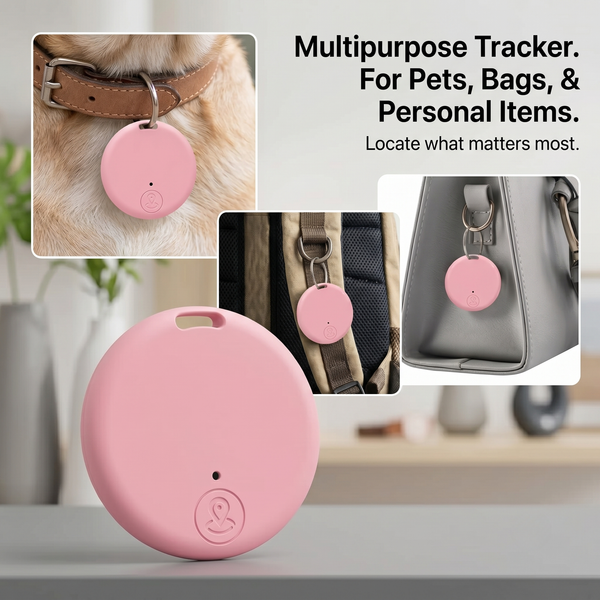
The CozyPaws™ Mini Bluetooth Pet Tracker Tag adds a critical safety net during the identification phase — its two-way alarm alerts you the instant your dog moves beyond 15 metres, giving you time to intervene before a full escape develops into a dangerous situation.
Pro Tip: Keep a simple escape log — date, time, weather, who was home, what happened immediately before the escape attempt. After three to five entries, the pattern almost always reveals the primary trigger, and you can match it directly to the table above for the correct solution.
2. 12 Escape Artist Dog Breeds
Some breeds are genetically predisposed to escape behaviour — not because they are badly trained, but because centuries of selective breeding gave them the intelligence, athleticism, or drive that makes confinement feel intolerable. The Royal Kennel Club warns that escapist tendencies often arise from a lack of attention or stimulating activities, and that breeds in the working, hound, and terrier groups were historically expected to operate independently over distance.
| Breed | Primary Escape Method | Driving Instinct | Exercise Needs |
|---|---|---|---|
| Siberian Husky | Climbing, digging, jumping 6ft fences | Endurance running — bred to cover 100+ miles daily | 2+ hours vigorous |
| Beagle | Digging under fences, squeezing through gaps | Scent tracking — follows a trail and ignores recall | 1–2 hours with scent work |
| Jack Russell Terrier | Digging, squeezing, jumping | Prey drive — chases anything small that moves | 1–2 hours high intensity |
| German Shepherd | Jumping, gate manipulation | Territorial patrol — expands boundary beyond garden | 2+ hours with mental stimulation |
| Labrador Retriever | Pushing through weak points, pulling gates open | Social drive — wants to reach people and dogs | 2+ hours |
| Border Collie | Problem-solving latches, climbing, agility escapes | Under-stimulation — escapes when bored | 2+ hours with herding or agility |
| Whippet | Jumping — clears 5ft fences from standing | Prey drive — chases cats and squirrels at 35+ mph | 1 hour + sprint opportunities |
| Staffordshire Bull Terrier | Brute strength through weak fencing | Social attraction + prey drive combination | 1–2 hours |
| Cocker Spaniel | Squeezing through hedges and gaps | Hunting instinct — follows birds into cover | 1–2 hours with retrieving |
| Dachshund | Digging — purpose-bred tunnelling instinct | Prey drive — bred to dig into badger sets | 1 hour with digging outlets |
| Alaskan Malamute | Digging, climbing, overwhelming barriers | Endurance running + pack roaming instinct | 2+ hours vigorous |
| Belgian Malinois | Climbing, jumping, problem-solving locks | Drive to work — escapes when under-employed | 2+ hours with task-based training |
If your breed appears in this table, standard 4-foot garden fencing is unlikely to contain them. These escape artist dog breeds benefit most from a layered approach: secure physical boundaries combined with adequate exercise and an early-warning system like the CozyPaws™ Pet Tracker Tag — its 7-gram weight and adjustable collar attachment make it unnoticeable even on small terriers, while the two-way alarm sounds the moment they approach the boundary edge.
3. Garden Security Audit: Fence, Gate & Boundary Checks
Most dog escapes happen from the owner's own garden — not during walks. The Royal Kennel Club recommends that every dog owner conducts a full perimeter check at least twice a year, and after any storm or construction work that may have weakened boundaries. Walk the entire perimeter and check each of the following.
Fence height: Minimum 6 feet for athletic breeds (Huskies, Malinois, Whippets, German Shepherds). Standard 4-foot panel fencing is insufficient for any breed in the table above. Consider coyote rollers or inward-angled extensions at the top for climbers and jumpers.
Ground level: Dig-proof the base by burying wire mesh (L-footer) 30 cm deep and 30 cm outward along the fence line. Breeds like Beagles, Dachshunds, and Huskies can excavate under a fence in minutes when motivated by scent or prey on the other side.
Gate security: Install self-closing spring hinges and a bolt lock that requires human dexterity to open. Border Collies and German Shepherds have been documented opening lever-handle gates and sliding bolts. A padlock eliminates this entirely.
Weak points: Check where fencing meets walls, sheds, or hedges. Many dogs escape through the 15 cm gap between a fence panel and a brick wall that owners assume is too small. If a dog can fit its skull through a gap, the body can follow.
Visual barriers: For dogs who escape due to territorial patrol or prey drive — barking at passing dogs, chasing cats along the fence line — solid fencing or reed screening that blocks their view reduces the trigger entirely. You cannot chase what you cannot see.
Pro Tip: Create an airlock system at your front and back doors — a baby gate or secondary barrier that prevents direct access to the street even if the main door opens. This eliminates opportunity-based door bolting, which accounts for a large proportion of urban dog escapes and is the easiest trigger to prevent with zero training required.
All of these garden security measures apply to your permanent home — the property where you control the boundaries, know every weak point, and have had time to reinforce them. But UK holidays introduce a completely different challenge. When you arrive at a holiday cottage, caravan park, or campsite, your dog is confronting an entirely unfamiliar perimeter for the first time: fences you have never checked, gates with unknown latches, hedges with hidden gaps, and a garden layout that neither you nor your dog has ever seen. The escape risk is compounded because every scent, sound, and sight in the new environment is novel — the same triggers that might cause a minor alert at home can provoke a full bolt in an unfamiliar setting. A holiday cottage garden that looks perfectly secure from the listing photos may have a rotten panel behind the shed or a 15 cm gap where the fence meets the neighbour's wall. For the complete guide to escape-proofing a holiday property on arrival day, handling beaches and countryside walks in unfamiliar terrain, and the emergency plan for finding a lost dog away from home — see our complete guide to dog-friendly holidays in the UK.
4. Off-Lead Recall Training: Step-by-Step Method
A reliable recall is the single most important skill for preventing off-lead escapes. Battersea Dogs & Cats Home emphasises that recall training must make returning to you more rewarding than whatever the dog is running toward — and that dogs who associate recall with their lead going back on and the fun ending will never respond reliably. Dogs Trust recommends building recall in graduated stages rather than testing it in high-distraction environments before the dog is ready.
Stage 1 — Indoor foundation (Week 1–2): In a quiet room with zero distractions, say your recall word (one consistent word — not the dog's name) and immediately reward with a high-value treat when the dog turns toward you. Repeat 20–30 times per day until the response is instant and enthusiastic.
Stage 2 — Garden practice (Week 2–4): Move to your secure garden. Wait until the dog is mildly distracted (sniffing, exploring) before using the recall word. Reward generously every single time. Never recall and then do something the dog dislikes (lead on, bath, leaving the park) — this poisons the cue permanently.
Stage 3 — Long-line in low-distraction environments (Week 4–8): Attach a 10-metre training line in a quiet field. Allow the dog to reach the end of the line before recalling. The line prevents failure — you can gently guide the dog back if they ignore you, but they never learn that ignoring recall is an option. Blue Cross recommends keeping your dog on a long line until recall is reliable in progressively distracting environments.
Stage 4 — Graduated distractions (Week 8–12): Increase distractions gradually — other dogs at a distance, wildlife, new environments. If the dog fails recall at any stage, drop back one level and rebuild. Two consecutive successful sessions before advancing.
Stage 5 — Off-lead with backup (Week 12+): Remove the long line in a secure, enclosed area first. The CozyPaws™ Pet Tracker Tag provides essential backup during this phase — if recall fails unexpectedly, the 15-metre Bluetooth alarm alerts you before the dog is out of sight, giving you critical seconds to redirect rather than chase.
Recall training is never truly finished. Even well-trained dogs need regular reinforcement — random high-value rewards on walks keep the behaviour sharp. The moment you stop rewarding recall, the behaviour begins to degrade, and a dog that won't come back when called is a dog that runs away off lead.
5. Fear-Based Escapes: Fireworks, Thunder & Loud Noises
Fear-based bolting is the most dangerous type of escape because the dog is in full flight mode — they do not respond to recall, they do not navigate safely, and they can cover enormous distances in minutes. Veterinary practices across the UK report a significant spike in lost and injured dogs during firework season (October–November) and summer thunderstorms.
A dog in panic flight will run through traffic, jump from heights, crash through glass doors, and injure themselves on fencing. The priority is always prevention, not recovery.
Before the event: Walk your dog well before fireworks are expected. Close all windows, doors, and cat flaps. Create a safe den — an interior room or covered crate with familiar bedding and background noise (television, radio, or white noise machine). The CozyPaws™ Dog Anxiety Calming Vest applies gentle compression with an integrated noise-reducing hood that covers the ears — our complete anxiety vest guide explains how compression therapy reduces cortisol levels by up to 40% and which breeds respond best.
During the event: Stay calm — your anxiety amplifies theirs. Do not force interaction, but remain present and available. Offer a long-lasting chew or lick mat as a distraction. Never punish fear behaviour — it makes the next event worse.
After the event: Check all exit points before opening doors or letting your dog into the garden. A dog who appears calm may still bolt if a residual firework goes off. Maintain the safe den setup for at least 24 hours after the last firework event.
Long-term desensitisation: Between firework seasons, play recorded firework and thunder sounds at very low volume during positive activities (meals, play, treats). Gradually increase the volume over weeks. This builds tolerance rather than fear, and is far more effective than medication alone for dogs whose primary escape trigger is noise.
6. Prevention Methods Compared: Trackers, GPS, Microchips & Fencing
No single method prevents every type of escape. The most effective approach combines physical barriers, training, and technology — but understanding what each method actually does (and does not do) helps you invest in the right combination for your dog's specific escape trigger.
| Prevention Method | How It Works | Effective Range | Monthly Cost | Prevents Escape? | Finds Lost Pet? |
|---|---|---|---|---|---|
| CozyPaws™ Bluetooth Tracker | Two-way alarm when pet leaves range | 15 metres | £0 | Yes — alerts before escape completes | Last-known map pin location |
| GPS Subscription Tracker | Real-time location via mobile network | Unlimited | £5–£10 | No — tracks after escape only | Yes — live location tracking |
| Microchip | Passive ID scanned by vet or warden | None | £0 | No | Only if someone finds and scans the dog |
| Secure Fencing (6ft+) | Physical barrier around garden | Garden perimeter only | £0 (after installation) | Yes — for garden escapes only | No |
| Professional Recall Training | Behavioural conditioning for return command | Voice/whistle range | £0 (after course) | Reduces risk — does not eliminate | No |
| ID Tag on Collar | Visual contact details for finder | None | £0 | No | Only if someone reads the tag |
The critical difference between the CozyPaws™ Pet Tracker Tag and every other method on this table is timing. GPS trackers, microchips, and ID tags all activate after the escape — they help you find a dog that is already lost. The Bluetooth two-way alarm activates before the escape completes, alerting you the moment your dog crosses the 15-metre boundary so you can intervene while they are still within sight and voice range. For a detailed breakdown of setup, battery life, app features, and cost comparison over five years, our complete Bluetooth pet tracker guide covers every specification.
7. What to Do When Your Dog Runs Away
If your dog has already escaped, speed is critical. Dogs Trust advises that councils are only legally required to hold stray dogs for seven days before they can be rehomed or, in the worst case, put to sleep — so every hour matters.
Immediate actions (first 30 minutes):
- Check the CozyPaws™ app for the last-known map pin location — this shows exactly where the Bluetooth connection was lost
- Search familiar routes: your regular walking path, the local park, neighbours' gardens, any location your dog associates with positive experiences
- Leave your front door or garden gate open with a familiar-smelling item (your worn clothing, their bed) outside — many dogs return home within hours if the entrance is accessible
Within the first hour:
- Call your microchip database and report your dog as missing — RSPCA confirms that microchipping is legally mandatory for all dogs over eight weeks in the UK, and an up-to-date chip is your strongest recovery tool
- Contact your local council's dog warden service — they are legally responsible for collecting stray dogs in your area
- Call nearby veterinary surgeries in case your dog has been injured and brought in by a member of the public
Within the first day:
- Report to Battersea and local rescue centres — file a lost dog report with a clear photograph and description
- Post on local community groups and lost pet databases — PDSA recommends social media as one of the most effective tools for reuniting lost pets
- Create and distribute missing posters with a clear photo, your phone number, and the area last seen
- Report to Blue Cross for additional missing dog advice and support resources
Consider theft: If your dog disappeared from a secure garden with no obvious escape route, consider the possibility of theft. Dogs Trust reports that approximately 2,000 dogs are stolen in the UK each year. The Pet Abduction Act, which received Royal Assent in May 2024, now makes pet theft a specific criminal offence — Pet Theft Reform campaigned for this legislation and provides prevention resources on their site. Report suspected theft to the police immediately.
8. Does Neutering Stop Dogs Escaping?
If your dog's primary escape trigger is reproductive drive — intact males detecting a female in season — neutering is the single most effective intervention. Research consistently shows that neutering reduces roaming behaviour in approximately 90% of male dogs, because it eliminates the hormonal drive that makes them willing to scale fences, break through barriers, and travel kilometres to reach a mate.
However, neutering will not stop escapes caused by fear, boredom, prey drive, separation anxiety, or territorial patrol. If your intact male dog escapes regardless of whether local females are in season, or if your female dog escapes, the trigger is behavioural rather than hormonal — and neutering alone will not resolve it.
The decision to neuter should be discussed with your veterinarian, who can assess whether your dog's escape behaviour is hormonally motivated and whether the timing is appropriate for their breed and age. Early neutering in large breeds carries orthopaedic considerations that your vet can advise on.
9. Age & Escape Risk: Puppies, Adolescents & Seniors
Escape risk is not constant throughout a dog's life — it peaks during specific developmental stages, and understanding when your dog is most vulnerable allows you to increase precautions at exactly the right time.
| Life Stage | Age Range | Escape Risk | Primary Trigger | Prevention Focus |
|---|---|---|---|---|
| Puppy | 8 weeks – 6 months | Moderate | Curiosity + no recall training yet | Secure boundaries, never off-lead in open areas |
| Adolescent | 6 months – 2 years | Very High | Hormones, independence, testing boundaries | Intensify recall, increase exercise, consider neutering |
| Adult | 2 – 7 years | Moderate | Boredom, prey drive, established habits | Maintain enrichment, reinforce recall regularly |
| Senior | 7+ years | Low–Moderate | Cognitive decline, disorientation, confusion | Supervised garden time, tracker tag for wandering |
Adolescence is the most dangerous period. Between 6 months and 2 years, dogs experience a hormonal surge, increased independence, and a natural drive to test every boundary — physical and behavioural. A puppy with perfect recall at 4 months may completely ignore you at 10 months. This is normal canine development, not disobedience, and it is the stage where most first-time escapes occur.
Senior dogs present a different risk: cognitive dysfunction syndrome (canine dementia) can cause previously reliable dogs to wander aimlessly, fail to recognise their home environment, or become disoriented in familiar gardens. A CozyPaws™ Pet Tracker Tag is particularly valuable for senior dogs — the two-way alarm alerts you immediately if they wander beyond 15 metres, and the last-known map pin helps locate a confused dog who has simply forgotten the way home.
Pro Tip: If your adolescent dog's recall suddenly deteriorates between 6 and 18 months, do not panic — and do not give them more off-lead freedom to "practice." Go back to long-line training in low-distraction environments and rebuild from Stage 3. Adolescent regression is temporary if you maintain the training structure, but permanent if you allow the dog to practise ignoring you.
10. Long-Term Prevention Plan: Training, Security & Technology Combined
No single method stops every type of escape. The most effective long-term approach layers three systems together so that if one fails, the others catch the gap.
Layer 1 — Physical security: Maintain 6-foot fencing with dig-proof bases, self-closing gates with padlocks, and an airlock system at all doors. Inspect the perimeter quarterly and after storms. This prevents garden escapes entirely for most breeds.
Layer 2 — Behavioural training: Maintain recall with weekly reinforcement using high-value rewards. Provide breed-appropriate exercise daily — no less than the minimum in the breeds table. Combat boredom with enrichment: a CozyPaws™ Interactive Dog Puzzle Feeder challenges your dog's problem-solving instinct during meals, while a CozyPaws™ Carrot Snuffle Mat channels their scent-tracking drive into a safe indoor activity. A mentally tired dog does not dig under fences.
Layer 3 — Technology: Attach a CozyPaws™ Pet Tracker Tag to your dog's collar as the final safety net. At 7 grams, your dog will not notice it. The two-way alarm triggers the instant they leave Bluetooth range — before an escape becomes a lost dog situation. The last-known map pin records exactly where the connection dropped, eliminating the worst part of any escape: not knowing which direction they went. With zero monthly fees and a 10-month battery life from a single CR2032 coin cell, the ongoing cost is under £4 per year.
Combine all three layers and the chance of a successful escape drops from likely to near-zero — and on the rare occasion something does go wrong, you have the tools and training to recover your dog within minutes rather than hours.
CozyPaws™ Mini Bluetooth Pet Tracker Tag
Two-way alarm · 15m range · 7g ultra-light · 10-month battery · Zero monthly fees
★★★★★ 4.8/5 from 38 UK reviews
30-day money-back guarantee · Free UK delivery
Shop the Pet Tracker TagFrequently Asked Questions
Why does my dog run away when I open the front door?
Door bolting is opportunity-based escape — your dog has learned that an open door leads to exciting stimuli (other dogs, smells, freedom to run). The solution is an airlock system (baby gate or secondary barrier inside the door) combined with training your dog to sit and wait at all exits before the door opens. Reward the wait, not the bolt.
How far can a dog run when it escapes?
Distance depends on breed, fitness, and trigger. A panicked dog fleeing fireworks can cover 3–5 miles in under 30 minutes. A bored Husky may roam 10+ miles over several hours. A reproductively motivated male can travel up to 5 km in a single direction following a scent. Most dogs that escape due to opportunity stay within 1 mile of home.
Will my dog come back on its own?
Many dogs do return within 24 hours, especially if the escape was opportunity-based. However, dogs that escaped due to fear (fireworks, thunder) often run until they are exhausted and disoriented, making self-return unlikely. Never rely on your dog coming back — begin search procedures immediately.
Does neutering stop a dog from running away?
Neutering reduces roaming in approximately 90% of male dogs whose primary escape trigger is reproductive drive. It will not stop escapes caused by fear, boredom, prey drive, or separation anxiety. Discuss timing and suitability with your veterinarian.
What are the most common escape artist dog breeds?
Siberian Huskies, Beagles, Jack Russell Terriers, Border Collies, Labrador Retrievers, and German Shepherds top most escape lists. These breeds combine intelligence, athleticism, and strong independent drives that make standard fencing insufficient. See our full 12-breed table above for escape methods and exercise needs.
How do I stop my dog escaping the garden?
Conduct a full perimeter audit: ensure fencing is at least 6 feet, bury wire mesh along the base to prevent digging, install self-closing spring hinges on gates, block visual triggers with solid fencing, and remove objects near the fence that could be used as climbing aids. Combine physical security with adequate exercise and enrichment.
Why does my dog run away off lead but not in the garden?
This indicates your dog's recall breaks down under distraction — prey drive, social attraction, or scent-following overrides their training in stimulating environments. Return to long-line training (Stage 3) and rebuild recall with high-value rewards before allowing off-lead freedom again.
Is it illegal if my dog runs away and causes damage in the UK?
Yes. Under the Dogs Act 1871 and the Dangerous Dogs Act 1991, owners can be held liable if their dog causes injury, damages property, or worries livestock while loose. Fines, compensation orders, and in serious cases criminal charges can result. The Animals Act 1971 also covers civil liability for damage caused by straying animals.
What should I do immediately when my dog runs away?
Check any tracker app for last-known location. Search familiar routes and your regular walking areas. Leave your door open with a familiar-scented item outside. Within the hour: call your microchip database, contact local dog wardens, and alert nearby veterinary surgeries. Post on local social media groups with a clear photograph within the first day.
Can a Bluetooth tracker help prevent my dog from escaping?
Yes — unlike GPS trackers or microchips that activate after the escape, a Bluetooth tracker with a two-way alarm alerts you the moment your dog crosses the range boundary. The CozyPaws™ Pet Tracker Tag triggers at 15 metres, giving you time to intervene before a full escape develops. It weighs just 7 grams, requires no subscription, and the CR2032 battery lasts up to 10 months.