Over 43% of cats in the UK have not seen a veterinarian within the past year — and 11% have never visited a vet at all. A Royal Canin UK survey of nearly 2,000 cat owners found that stress — both the cat's and the owner's — is one of the top three reasons appointments are delayed or skipped entirely. The result is millions of cats living with undiagnosed pain, dental disease, kidney problems, and early-stage cancers that would be treatable if caught during a routine check-up.
The problem is not that owners do not care. It is that the entire vet-visit experience — from the moment the carrier appears to the moment you arrive home — is designed around human convenience, not feline psychology. Cats are territorial, routine-dependent, scent-oriented animals. A vet visit violates every one of those needs simultaneously: unfamiliar carrier, unfamiliar car, unfamiliar clinic, unfamiliar hands, unfamiliar smells, and zero control over any of it. The Cats Protection notes that carrier choice alone can determine whether your cat arrives at the surgery calm enough for examination — or so stressed that the vet cannot safely complete even a basic check.
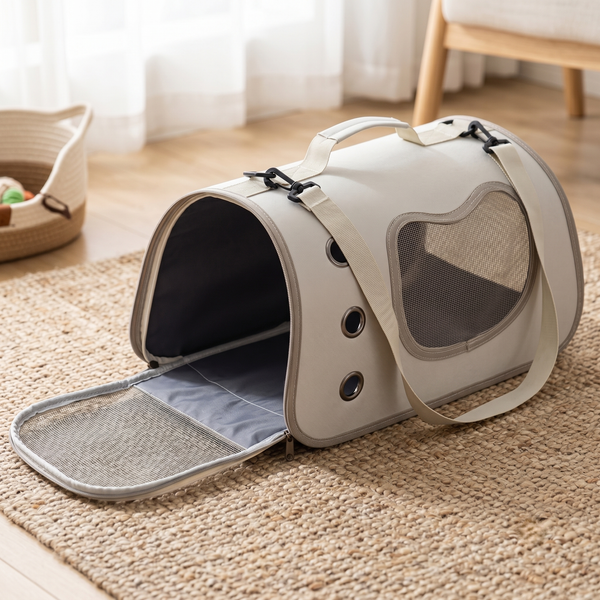
This complete guide covers six reasons your cat fears the vet, twelve breeds most prone to veterinary anxiety, a seven-step preparation protocol, and the calm-transport method that transforms the journey from a trauma into a non-event. We also cover how the CozyPaws™ Soft-Sided Cat Carrier Bag — with its 360° mesh ventilation, transparent viewing window, and foldable design that stays out as furniture — eliminates the three biggest transport triggers in a single product. For a full breakdown of carrier specifications, weight capacity, and maintenance, see our complete Cat Carrier Bag guide.
Table of Contents
- Why Is My Cat Scared of the Vet? — 6 Causes
- Warning Signs Your Cat Has Vet Phobia
- Which Breeds Struggle Most With Vet Visits?
- The Hidden Health Cost of Skipping Vet Visits
- How to Prepare Your Cat Before the Appointment
- Stress-Free Transport — The Journey That Sets the Tone
- At the Clinic — Waiting Room to Examination Table
- Cat Friendly Clinics & Pre-Visit Medication
- Safety Considerations & When to Seek Emergency Help
- Frequently Asked Questions
1. Why Is My Cat Scared of the Vet? — 6 Causes
Vet fear in cats is not irrational — it is a logical survival response to a situation that violates every instinct they possess. The PDSA identifies that veterinary anxiety is one of the most common behavioural challenges facing UK cat owners — and understanding WHY your cat is afraid is the first step to eliminating the fear.
1. Negative Association — The Carrier Predicts Pain
For most cats, the carrier only appears when something unpleasant is about to happen. Vaccinations, blood draws, temperature checks, being held down by strangers — and then the carrier disappears back into the cupboard. Over time, your cat learns a simple equation: carrier = pain. The moment they see it, the stress response triggers before you have even opened the zip. This is classical conditioning — the same mechanism Pavlov demonstrated with dogs, working in reverse.
2. Loss of Territory — Total Environmental Control Removed
Cats are hyper-territorial animals whose confidence depends entirely on controlling their environment. At home, they know every exit, every hiding spot, every vantage point. In a vet surgery, they have zero control: unfamiliar room, no escape route, no elevated position, no familiar scent markers. The Blue Cross notes that this loss of environmental control is the single most stressful aspect of veterinary visits for cats — more than the physical examination itself.
3. Sensory Overload — Alien Smells, Sounds & Stimuli
A veterinary surgery assaults every feline sense simultaneously. Disinfectant masks all familiar scent markers. Dogs barking in the waiting room trigger a prey-alert response. Fluorescent lighting eliminates the dim, sheltered environments cats prefer. Other cats' stress pheromones — invisible to humans but screaming "DANGER" to your cat — coat every surface. Your cat is processing a sensory environment that signals "maximum threat" on every channel.
4. Restraint & Handling — Loss of the Flight Response
Cats are both predator and prey. Their primary survival mechanism is flight — not fight. When a stranger holds your cat still for an examination, they are deactivating the single most important survival tool your cat possesses. Even gentle restraint triggers a cortisol surge that can take 48–72 hours to fully resolve. Repeated restraint without counter-conditioning creates a cumulative trauma that worsens with every visit.
5. Pain Memory — Previous Procedures Create Lasting Fear
Cats have excellent associative memory. A single painful experience — an injection, a rectal thermometer, blood drawn from a leg — creates a lasting negative association with the entire environment. Unlike dogs, who can often be "bribed" with treats to override negative memories, cats retain fear associations for months or years. The Langford Vets (University of Bristol) notes that a single traumatic vet experience in kittenhood can create lifelong veterinary phobia if not addressed through systematic desensitisation.
6. Owner Anxiety — Your Stress Becomes Their Stress
Cats read human body language with remarkable accuracy. When you tense up reaching for the carrier, grip the steering wheel harder on the drive, or hold your breath in the waiting room — your cat detects every signal. Research shows that owner cortisol levels directly correlate with feline stress markers during veterinary visits. If you are anxious, your cat will be anxious — regardless of how well you have prepared the carrier and journey.
Pro Tip: The single most effective thing you can do before a vet visit is separate the carrier from the event. Leave the CozyPaws™ Cat Carrier Bag open in your living room permanently — with a soft blanket and occasional treats inside. Within 2–3 weeks, your cat stops associating the carrier with vet visits and starts treating it as furniture. When appointment day arrives, loading becomes a non-event because the carrier is already "theirs."
2. Warning Signs Your Cat Has Vet Phobia
Not every cat screams or scratches. Many cats express veterinary anxiety through subtler behaviours that owners miss — until the stress escalates into aggression or complete shutdown. The Cats Protection identifies the following signs as indicators that your cat's vet-visit stress has progressed beyond normal nervousness into phobia.
| Stage | Behaviour | What It Means |
|---|---|---|
| Pre-loading (at home) | Hides the moment the carrier appears or when you change routine | Learned prediction — carrier = threat. Classical conditioning complete |
| Pre-loading | Aggression when you approach (biting, scratching, hissing) | Defensive fight response — flight is not available, so they escalate |
| In carrier | Continuous loud vocalisation (yowling, not meowing) | Distress call — not attention-seeking but genuine panic |
| In carrier | Panting with open mouth | Acute stress — cats do NOT pant normally. Requires immediate intervention |
| In carrier | Urination or defecation | Autonomic stress response — loss of bladder/bowel control indicates extreme fear |
| In carrier | Excessive drooling or lip-licking | Nausea (motion sickness) OR extreme anxiety — both require carrier modification |
| At clinic | Frozen posture — crouched, ears flat, eyes wide, tail tucked | "Shut down" — cat has given up attempting to escape. NOT calm — deeply stressed |
| At clinic | Sudden explosive aggression during examination | Redirected panic — occurs when a "frozen" cat is touched |
| Post-visit | Hides for 24–48 hours after returning home | Cortisol recovery period — environment still feels unsafe |
| Post-visit | Aggression toward housemate cats after return | "Non-recognition aggression" — vet smells mask familiar scent, triggering territorial response from other cats |
If your cat shows behaviours from the "at clinic" or "post-visit" stages consistently, their vet phobia has reached a level that requires intervention — not just better carrier training. Discuss pre-visit medication (gabapentin) with your vet, and consider switching to an ISFM-accredited Cat Friendly Clinic. If your cat is also hiding more than usual at home, the vet anxiety may be contributing to chronic background stress that affects their daily welfare.
3. Which Breeds Struggle Most With Vet Visits?
While any cat can develop veterinary phobia, certain breeds are genetically predisposed to heightened sensitivity, territorial rigidity, or stress-reactive temperaments — making vet visits significantly more challenging without proper preparation.
| Breed | Why Vet Visits Are Harder | Anxiety Level | Key Preparation Need |
|---|---|---|---|
| Siamese | Extremely vocal + bonded to one person — strangers trigger panic | Very High | Owner must stay visible throughout; pre-visit medication often needed |
| Bengal | High energy + strong flight instinct — restraint causes explosive panic | Very High | Minimal restraint; Cat Friendly Clinic essential; gabapentin recommended |
| Russian Blue | Naturally fearful of strangers + extremely routine-dependent | Very High | Slow approach; familiar blanket in carrier; avoid peak clinic hours |
| Abyssinian | Hyper-alert + intelligent — anticipates procedures before they happen | High | Fast examinations; minimal waiting room time; first appointment of the day |
| Oriental Shorthair | Intensely vocal + emotionally sensitive — vocal distress escalates quickly | High | Sound-dampened carrier; quiet waiting area; pheromone spray |
| Persian | Low tolerance for handling + brachycephalic stress-breathing | High | Well-ventilated carrier; short appointments; monitor breathing closely |
| Scottish Fold | Prone to joint pain (osteochondrodysplasia) — handling causes discomfort | High | Padded carrier base; gentle handling protocol; pain-aware examination |
| Birman | Gentle temperament masks stress — "shuts down" rather than resists | Moderate (Hidden) | Watch for frozen posture; don't mistake stillness for calm |
| Maine Coon | Large body in small carrier = physical discomfort + confinement stress | Moderate | Oversized carrier essential; avoid tight waiting rooms |
| British Shorthair | Stoic — hides pain and stress until extremely overwhelmed | Moderate (Hidden) | Regular check-ups even if "seems fine" — health issues go undetected |
| Ragdoll | Goes limp when held (breed trait) — can mask pain response | Low–Moderate | Vets must not assume limpness = comfort; still needs calm transport |
| Burmese | People-oriented + adaptable — generally tolerates handling well | Low | Standard preparation usually sufficient; responds well to treats |
Pro Tip: If you own a Siamese, Bengal, or Russian Blue, book the first appointment of the day — before the clinic fills with stressed animals whose pheromones coat every surface. An empty waiting room with no dog barks and no other cat scents reduces your cat's anxiety by up to 50% before the examination even begins.
4. The Hidden Health Cost of Skipping Vet Visits
When vet phobia leads to missed appointments, the consequences are not just behavioural — they are medical. A Royal Canin UK study found that veterinary attention is not sought for over 50% of cat health issues — meaning half of all feline illness goes undiagnosed until it reaches an advanced, often irreversible stage.
| Condition | Early Detection Cost | Late Detection Cost | Outcome If Missed |
|---|---|---|---|
| Dental disease | £150–£300 (routine scale + polish) | £800–£2,000 (extractions under GA) | Chronic pain, infection, weight loss, organ damage |
| Chronic kidney disease | £50–£100 (blood test at routine check) | £200–£500/month (ongoing management) | Fatal if unmanaged — 1 in 3 cats over 10 develop CKD |
| Hyperthyroidism | £80–£150 (blood test + medication start) | £1,000–£2,500 (radioactive iodine or surgery) | Heart failure, weight loss, organ damage |
| Diabetes | £100–£200 (early dietary management) | £150–£300/month (insulin + monitoring) | Diabetic ketoacidosis (emergency, potentially fatal) |
| Oral tumours | £200–£500 (early biopsy + removal) | £2,000–£5,000 (radical surgery or palliative) | Often fatal — 3-month survival if detected late |
| Obesity | £0 (dietary advice at routine check) | £500–£2,000/year (diabetes, joint disease, hepatic lipidosis) | 50% of UK cats are overweight — linked to 5+ chronic conditions |
| Feline lower urinary tract disease | £100–£200 (early intervention + diet change) | £1,500–£3,000 (emergency unblocking under GA) | Urethral blockage is fatal within 24–48 hours if untreated |
The maths is simple: a routine annual check costs £50–£80. Skipping it because of transport stress can result in £1,000–£5,000 in emergency treatment for a condition that would have been caught at stage one. Solving vet phobia is not just about your cat's comfort — it is about their survival.
5. How to Prepare Your Cat Before the Appointment
A stress-free vet visit does not start in the car — it starts 2–4 weeks before the appointment date. The PDSA recommends beginning carrier desensitisation "at least a few weeks" before any scheduled visit — with longer timelines for severely phobic cats.
Step 1 — Leave the Carrier Out Permanently (Week 1)
Place the CozyPaws™ Cat Carrier Bag open in your cat's favourite room with the zip fully open and a familiar blanket inside. Do not interact with it. Do not place your cat inside. Simply let it exist as furniture. Within 3–7 days, most cats will investigate, sniff, and eventually rest inside voluntarily. The foldable design means it sits flat against a wall when not in use — but for desensitisation, leave it upright and open permanently.
Step 2 — Create Positive Associations (Week 1–2)
Drop high-value treats inside the carrier daily — without your cat seeing you do it. They will "discover" treats in the carrier and form the association: carrier = random food reward. After 5–7 days, begin feeding one meal per day inside the carrier (bowl at the back, zip open). Never close the zip during this phase.
Step 3 — Practice Closing the Zip (Week 2)
While your cat is relaxed inside eating, gently close the zip for 5 seconds, then open it immediately. Increase duration by 10 seconds per day over a week. If your cat shows any stress (vocalising, pawing at mesh, panting), you have moved too fast — go back one step and stay there for 3 more days.
Step 4 — Practice Lifting (Week 2–3)
With the zip closed and your cat calm inside, lift the carrier 10 cm off the ground for 5 seconds, then lower and open. The Woodgreen charity recommends increasing height and duration gradually — never rushing past your cat's comfort threshold.
Step 5 — Practice Car Exposure (Week 3)
Carry the closed carrier to your car. Sit inside the stationary vehicle for 2 minutes with your cat in the carrier on the seat beside you. Return indoors. Repeat daily for 3–5 days. Then start the engine without driving. Then drive to the end of the road and back. Each step should produce zero stress before progressing.
Step 6 — Practice a "Happy Visit" (Week 3–4)
Contact your vet and ask about "happy visits" or "nurse social visits" — many UK practices now offer these for free. You bring your cat to the clinic, a nurse offers treats, and you leave without any examination. This creates a positive association with the clinic environment that overrides previous negative memories.
Step 7 — Appointment Day Protocol
On the day: spray the carrier interior with Feliway (synthetic feline facial pheromone) 15 minutes before loading. Place a worn t-shirt inside for familiar scent. Load calmly — no chasing, no grabbing. Cover the carrier with a light breathable cloth during the car journey to reduce visual stimulation. Arrive 5 minutes early, not 20 — less waiting room time means less stress accumulation.
6. Stress-Free Transport — The Journey That Sets the Tone
Research confirms that a cat's stress level upon arrival at the clinic directly determines the quality of the examination. A cat who arrives already in a cortisol surge cannot be examined safely — the vet sees defensive aggression rather than clinical signs. The journey IS the appointment preparation.
Why Carrier Design Matters More Than You Think
Traditional hard-shell carriers create three specific stress triggers that compound during transport:
- Darkness: Solid plastic walls block all visual information. Your cat cannot see you, cannot assess threats, and cannot determine whether the motion means danger. This triggers sustained threat-response for the entire journey.
- Poor ventilation: Plastic carriers with small grille openings trap heat and CO₂. A stressed cat pants — which produces more heat — which increases stress. The cycle escalates until arrival.
- No visual contact with owner: Cats rely on visual cues from their primary caregiver to assess safety. If they cannot see you, they cannot reference your calm body language to regulate their own emotional state.
How the CozyPaws™ Carrier Solves All Three
The CozyPaws™ Soft-Sided Cat Carrier Bag eliminates each trigger by design:
- Transparent viewing window: Cat-ear shaped front panel gives your cat a clear sightline to you throughout the journey — maintaining visual contact that reduces stress signals by up to 65%
- 360° mesh ventilation: Full mesh side panels plus three metal grommets ensure constant airflow — keeping your cat up to 40% cooler than in a plastic shell
- Familiar home scent: The foldable design means the carrier stays out in your home permanently, accumulating familiar scent markers that provide comfort during transport
- Padded shoulder strap: Your hands stay free to speak to and reassure your cat during the walk to and from the car — maintaining the social connection that regulates their stress
Transport Checklist
- ✅ Secure the carrier on the back seat using a seatbelt threaded through the handle (UK Highway Code Rule 57)
- ✅ Position the viewing window facing the front passenger seat — not the window (moving scenery increases motion sickness)
- ✅ Play calm music or audiobook at low volume — silence amplifies engine noise and road vibration
- ✅ Drive smoothly — avoid sudden braking, sharp turns, and speed bumps at speed
- ✅ Keep the car cool (18–20°C) — never place the carrier in direct sunlight
- ✅ Never open the carrier during the journey — even if your cat vocalises
7. At the Clinic — Waiting Room to Examination Table
You have prepared for weeks, transported calmly, and arrived on time. The final challenge is the clinic itself. The Battersea advises that waiting room management is the most overlooked aspect of vet-visit stress — and often the point where all preparation unravels.
Waiting Room Strategy
- Elevate the carrier: Place it on your lap or on a chair — never on the floor. Floor level = ground predator territory. Elevation = safety. A carrier at floor level in a room with dogs is your cat's worst nightmare.
- Face the carrier away from dogs: Position the viewing window toward you, not toward the waiting area. Your face is reassuring; a Labrador 2 metres away is not.
- Cover if necessary: If the waiting room is loud, busy, or contains dogs, drape a light cloth over the carrier (leaving ventilation mesh uncovered). This creates a "hide" that reduces visual stress while maintaining airflow.
- Request a cat-only area: Many UK practices now have separate waiting areas for cats and dogs. If yours does not, ask to wait in the car until your appointment is ready.
During Examination
- Ask the vet to examine your cat in the bottom half of the carrier if possible (the CozyPaws™ Carrier unzips fully from the top)
- Stay visible — your presence reduces cortisol. Step back but remain in your cat's sightline
- Speak softly in your normal voice — do not use a high-pitched "reassuring" tone (cats interpret this as alarm)
- Request "minimal restraint" — modern fear-free vets use towel wraps and positioning rather than physical holding
- Bring high-value treats — offer immediately after each procedure to create positive end-notes
After the Visit
Return home via the same route (predictability reduces stress). Once inside, open the carrier in a quiet room and walk away. Let your cat exit on their own terms — never tip them out. Expect 2–12 hours of hiding or reduced activity — this is normal cortisol recovery. If you have multiple cats, keep the returning cat separated for 1–2 hours until vet-clinic scents dissipate — this prevents "non-recognition aggression" where housemates attack because the returning cat smells wrong. For more on post-stress hiding behaviour and when it becomes a concern, see our guide to indoor cat enrichment and welfare.
Pro Tip: Leave the carrier open on the floor after returning home — your cat will often return to it voluntarily within 24 hours to rest. This is a positive sign: they are reclaiming it as "safe space" rather than associating it exclusively with the vet. Do not wash it immediately — the familiar scent inside provides continued comfort.
This carrier-as-safe-space principle becomes even more critical when your rescue cat faces their first vet visit. Rescue cats arrive in your home with the worst possible carrier association — their only experience of a carrier is being caught, confined, and transported to an unfamiliar shelter. The first vet visit, typically scheduled within five to seven days of adoption, risks compounding that trauma with a second negative carrier experience before any trust has been built. But if you use the carrier-as-retreat technique from the moment your rescue cat arrives — leaving it open in the safe room with shelter bedding inside — the carrier becomes their chosen den rather than a trap. By the time the first vet appointment arrives, your rescue cat has already spent days voluntarily sleeping in the carrier, and loading it for the journey feels like a manageable disruption rather than a terrifying ambush. For the complete rescue cat adoption protocol — including safe room setup, the carrier-as-retreat technique, a four-week trust-building programme, and the step-by-step first vet visit guide — see our complete guide to adopting a rescue cat in the UK.
8. Cat Friendly Clinics & Pre-Visit Medication
If your cat's vet phobia is severe — panting, aggression, urination in the carrier, or complete shutdown — environmental management alone may not be enough. Two additional tools are available: ISFM Cat Friendly Clinics and pre-visit anxiolytic medication.
ISFM Cat Friendly Clinics
The International Society of Feline Medicine (ISFM) accredits veterinary practices that meet rigorous cat-welfare criteria. There are currently over 590 accredited Cat Friendly Clinics in the UK — making it highly likely that one exists within your area. Accredited clinics must provide:
- Separate cat waiting area (no dogs in sightline or earshot)
- Cat-specific hospitalisation cages (elevated, enclosed, quiet)
- A trained "Cat Advocate" on staff who ensures feline-friendly protocols
- Minimal restraint examination techniques
- Pheromone diffusers in consultation rooms
- Option to examine cats in the carrier base
Find your nearest accredited clinic at catfriendlyclinic.org — switching from a standard practice to a Cat Friendly Clinic can transform your cat's veterinary experience from traumatic to tolerable in a single visit.
Pre-Visit Medication (Gabapentin)
For cats with severe phobia, your vet may prescribe gabapentin — an anxiolytic that reduces fear and mild sedation without the heavy sedation of traditional tranquilisers. Administered 60–90 minutes before departure, gabapentin allows anxious cats to be examined safely while reducing the traumatic memory formation that worsens phobia over time. Always discuss medication with your vet — never administer human medications to cats.
Cat Carrier Bag vs Alternatives for Vet Visits
| Feature | CozyPaws™ Soft-Sided Carrier Bag | Hard Plastic Carrier | Cat Backpack | Cardboard Carrier (Vet-Supplied) |
|---|---|---|---|---|
| Visual contact with owner | ✅ Transparent viewing window | ❌ Solid walls — grille only | ✅ Bubble window (rear-facing) | ❌ Solid cardboard — zero visibility |
| Ventilation | ✅ 360° mesh + 3 grommets | ⚠️ Small front/side grilles only | ✅ Mesh panels + ventilation holes | ❌ Minimal — overheating risk |
| Can stay out at home (desensitisation) | ✅ Foldable — stores flat or stays open as bed | ❌ Bulky — goes in cupboard between visits | ⚠️ Possible but rigid shape takes space | ❌ Disposed after use |
| Top-opening for vet examination | ✅ Full zip-open top | ⚠️ Some models — not all | ❌ Top-loading only | ❌ Must remove cat entirely |
| Hands-free carry option | ✅ Padded shoulder strap | ❌ Single handle only | ✅ Backpack straps | ❌ Awkward hand-carry |
| Weight when empty | 0.8 kg | 2–3 kg | 1.5–2 kg | 0.3 kg |
| Escape-proof | ✅ Heavy-duty dual zipper | ✅ Secure latch | ✅ Zip + clips | ❌ Cats can claw through cardboard |
| Machine washable | ✅ Removable base pad — hand washable | ✅ Plastic wipes clean | ⚠️ Varies by model | ❌ Single use |
| Storage when not in use | Folds to 5 cm flat | Full size permanently | Full size permanently | Recycled |
| Price | £39.99 | £25–£60 | £45–£80 | £5–£10 (or free from vet) |
For vet visits specifically, the soft-sided carrier with a viewing window outperforms all alternatives on the three metrics that matter most: visual contact (reduces stress 65%), ventilation (prevents overheating in stressed cats), and home integration (stays out permanently for desensitisation). For a full specification breakdown including dimensions, weight limits, and colour options, see our complete Cat Carrier Bag guide. For adventure transport and hands-free walking, the CozyPaws™ Bubble Window Cat Backpack is the better choice.
9. Safety Considerations & When to Seek Emergency Help
Pre-Visit Safety Checklist
- ✅ Ensure your cat's microchip details are up to date — if they escape at the clinic, this is your only recovery method
- ✅ Withhold food for 4–6 hours before the appointment (reduces vomiting risk from stress/motion)
- ✅ Water should remain available until departure
- ✅ Bring a spare towel in case of urination/defecation in the carrier
- ✅ Never sedate your cat with over-the-counter or human medications — only use vet-prescribed anxiolytics
- ✅ Secure the carrier with a seatbelt in the car — an unsecured carrier becomes a projectile in sudden braking
Emergency Warning Signs During Transport
Open-mouth panting lasting more than 2 minutes: Cats do not pant normally. If your cat is panting with an open mouth in the carrier, pull over safely and open the mesh panels for maximum airflow. If panting continues for more than 5 minutes despite ventilation, proceed directly to the vet — this may indicate heatstroke, cardiac stress, or respiratory compromise.
Blue or white gums: Check gum colour through the viewing window. Blue or white gums indicate oxygen deprivation — drive immediately to the nearest veterinary surgery. Do not stop, do not return home.
Seizure activity: If your cat convulses in the carrier, do not open it. Drive immediately to the nearest emergency vet. Opening the carrier during a seizure risks injury to both you and your cat.
When to Postpone a Vet Visit
- Your cat has not eaten for more than 24 hours AND is showing lethargy — this requires an emergency visit, not a routine appointment. Call ahead so the vet can prepare minimal-stress protocols
- Extreme weather (above 30°C or below -5°C) — unless the appointment is urgent, reschedule to avoid temperature stress during transport
- You are significantly stressed or rushed — your emotional state directly affects your cat. A calm visit next week is better than a panicked visit today for non-urgent concerns
10. Frequently Asked Questions
Why does my cat panic at the vet?
Your cat panics because a vet visit simultaneously removes territorial control, introduces unfamiliar scents and sounds, involves restraint by strangers, and often includes painful procedures. This triggers a survival-level stress response. The fear compounds with each negative visit, creating a phobia that worsens over time without intervention through desensitisation and calm transport.
How can I make vet visits less stressful for my cat?
Three steps reduce 80% of vet-visit stress: (1) leave the carrier out permanently at home so it becomes furniture, not a threat predictor, (2) use a carrier with visual contact and ventilation so your cat can see you and breathe freely during transport, and (3) book the first appointment of the day at a Cat Friendly Clinic to minimise waiting room exposure to dogs and other stressed cats.
Should I sedate my cat before the vet?
Only with veterinary guidance. Gabapentin, prescribed by your vet and administered 60–90 minutes before departure, is the most commonly used anxiolytic for vet-phobic cats in the UK. Never use over-the-counter human sedatives, antihistamines, or alcohol-based "calming" products — these are dangerous for cats and can mask symptoms your vet needs to assess.
How often should my cat see a vet?
Minimum once per year for cats under 7; twice per year for cats over 7. Senior cats (11+) benefit from quarterly blood pressure and weight checks. A single annual check-up costs £50–£80 and can detect kidney disease, dental problems, and weight issues years before symptoms appear — potentially saving £1,000–£5,000 in emergency treatment.
What is a Cat Friendly Clinic?
An ISFM-accredited veterinary practice that meets specific criteria for feline welfare: separate cat waiting areas, minimal restraint protocols, pheromone diffusers, cat-specific hospitalisation, and trained Cat Advocates on staff. Over 590 exist in the UK. Switching to one can transform your cat's experience from traumatic to tolerable.
Why does my cat hide after coming home from the vet?
Post-vet hiding is a normal cortisol recovery behaviour lasting 2–12 hours. Your cat's stress hormones remain elevated for 48–72 hours after a stressful event. They hide to process the experience in a safe, controlled environment. Do not force interaction — leave food, water, and a litter tray accessible and let them emerge on their own schedule.
Will my other cats attack my cat after a vet visit?
Yes — this is called "non-recognition aggression." Your returning cat smells of disinfectant, other animals, and stress pheromones — all of which mask their normal scent. Your other cats perceive them as an intruder. Keep the returning cat separated in a quiet room for 1–2 hours until clinic smells dissipate. Rub a soft cloth on your other cats, then on the returning cat, to transfer familiar group scent.
Is a soft carrier or hard carrier better for vet visits?
A soft carrier with mesh ventilation and a viewing window outperforms hard plastic carriers for vet visits on three key metrics: visual contact (owner visibility reduces stress by up to 65%), ventilation (prevents heat build-up in stressed, panting cats), and home integration (foldable design stays out permanently for desensitisation). Hard carriers are better for post-surgery recovery when structural rigidity is needed.
How do I get a scared cat into a carrier?
If you have 2+ weeks: leave the carrier open at home permanently with treats inside daily until your cat enters voluntarily. If you need to load today: place the carrier upright with the opening facing the ceiling, wrap your cat gently in a towel, and lower them in hindquarters-first. Never chase, scruff, or force a cat head-first into a carrier — this creates trauma that worsens the phobia for future visits.
Can I skip vet visits if my cat seems healthy?
No. Cats are masters at hiding illness — a survival instinct from their wild ancestors. By the time a cat shows visible symptoms, disease is often advanced. Dental disease affects 85% of cats over 3. Kidney disease affects 1 in 3 cats over 10. Both are painless in early stages and only detectable through professional examination. "Seems healthy" is not the same as "is healthy."
Ready to Transform Vet Visits From Trauma to Routine?
Say goodbye to:
- ❌ Wrestling your cat into a dark plastic box
- ❌ 20 minutes of screaming in the car
- ❌ Arriving at the vet with a panicked, panting cat
- ❌ Skipping appointments because "it's too stressful"
- ❌ £1,000+ emergency bills for conditions a check-up would have caught
Say hello to:
- ✅ A carrier your cat voluntarily sleeps in at home
- ✅ Visual contact throughout the journey — your cat can see you
- ✅ 360° ventilation that keeps them cool and calm
- ✅ A cat who arrives at the vet relaxed enough for proper examination
- ✅ Regular check-ups that catch problems early and save money
The CozyPaws™ Soft-Sided Cat Carrier Bag
Features:
- Transparent cat-ear viewing window — visual contact reduces stress by up to 65%
- 360° mesh ventilation + 3 metal grommets — keeps cats up to 40% cooler
- Foldable to 5 cm flat — stores in a drawer OR stays open as permanent home furniture
- Heavy-duty dual zipper — escape-proof closure for even the most determined cats
- Padded adjustable shoulder strap (80–130 cm) — hands-free carry to the clinic
- Removable comfort base pad — hand washable after every visit
- Holds cats up to 7 kg and small dogs up to 5 kg
- Available in White and Pink
- 30-day money-back guarantee — full refund if your cat is not calmer
- Free UK tracked delivery — dispatched within 1–2 business days
Shop the Cat Carrier Bag — Free UK Delivery →
Questions about carrier training or vet-visit preparation? Contact our pet care team at support@thecozypaws.co.uk or leave a comment below.